
The short answer? No. You really need to hold off on applying deodorant right after a laser hair removal session. Your best bet is to wait at least 24 to 48 hours before swiping anything on your underarms. Think of your skin as being extra sensitive post-treatment; it needs some time to breathe and heal without any potential irritants getting in the way.
The 48-Hour Rule: Why Deodorant and Freshly Lasered Skin Don’t Mix
It helps to think of your skin after a laser session as having a mild sunburn. The laser uses concentrated heat to zap the hair follicles, and this process naturally leaves the surrounding skin a bit warm, sensitive, and slightly inflamed. This is completely normal, but it does mean your aftercare game needs to be gentle and on point for a smooth recovery.
Why Your Underarms Need a Break
Slathering on deodorant too soon can introduce a cocktail of ingredients that just don’t play well with vulnerable skin. Many popular deodorants and antiperspirants are packed with stuff that can easily disrupt the healing process.
- Alcohol: It helps the product dry fast, but on post-laser skin, it can sting like crazy and cause even more dryness.
- Fragrances: Those synthetic perfumes are a common culprit for skin irritation and even allergic reactions—the last thing you want on a freshly treated area.
- Aluminum: This is the active ingredient in antiperspirants. It works by blocking sweat ducts, which sounds good in theory, but on healing skin, it can trap heat and bacteria. This can lead to clogged pores and more inflammation.
The golden rule of post-laser care is simple: keep the area clean, cool, and free from anything that could cause irritation. That 48-hour break gives the initial inflammation a chance to calm down and lets the tiny openings around the follicles close up properly.
For a quick reference, here’s a simple timeline to follow.
Post-Laser Deodorant Timeline
| Time After Treatment | Recommendation | Reasoning |
|---|---|---|
| First 24-48 Hours | Strictly avoid all deodorants and antiperspirants. | The skin is at its most sensitive and susceptible to irritation from ingredients like alcohol, fragrance, and aluminum. |
| 48-72 Hours | Introduce a gentle, “clean” deodorant if needed. Look for aluminum-free and fragrance-free formulas. | Your skin is still healing. A mild product is less likely to cause a reaction as the inflammation subsides. |
| After 72 Hours | Gradually return to your regular deodorant, as long as the skin looks and feels completely normal (no redness or sensitivity). | By this point, most of the initial sensitivity has passed, and your skin should be ready for your usual routine. |
This timeline is a great starting point, but always listen to your body.
What if You Have Super Sensitive Skin?
While 24 to 48 hours is the standard advice, if you know your skin is on the sensitive side, you might want to extend that waiting period to 72 hours. It’s always better to be safe than sorry.
This simple pause is a non-negotiable part of your aftercare, just as important as knowing the right time to hop in the shower after your appointment. For more tips on that, you can find a helpful guide on showering after laser hair removal.
What Laser Treatment Actually Does to Your Skin
To really get why you need to hold off on deodorant right after a laser session, it helps to pull back the curtain on what’s actually happening to your skin. Laser treatments are incredibly sophisticated, but at their core, they work by creating a controlled thermal reaction.
It’s all about a highly focused beam of light. That light zaps down into the hair follicle, where it converts to heat and strategically damages the follicle’s ability to grow new hair. You can think of it as a tiny, targeted micro-burn, happening just beneath the surface.
This intentional heat is what triggers a bit of temporary inflammation around each follicle. It’s a completely normal part of the process and explains why you might see some redness or feel a little tender, almost like a very mild sunburn.
The Follicle After Treatment
Your skin needs a chance for that inflammation to settle down and for the tiny openings where the hairs once were to close up and heal. Slathering on products too soon, especially ones loaded with alcohol, fragrances, or other chemicals, can really get in the way of that crucial recovery time.
This infographic gives a great visual of what we’re talking about—the difference between a normal hair follicle and one that’s just been zapped.
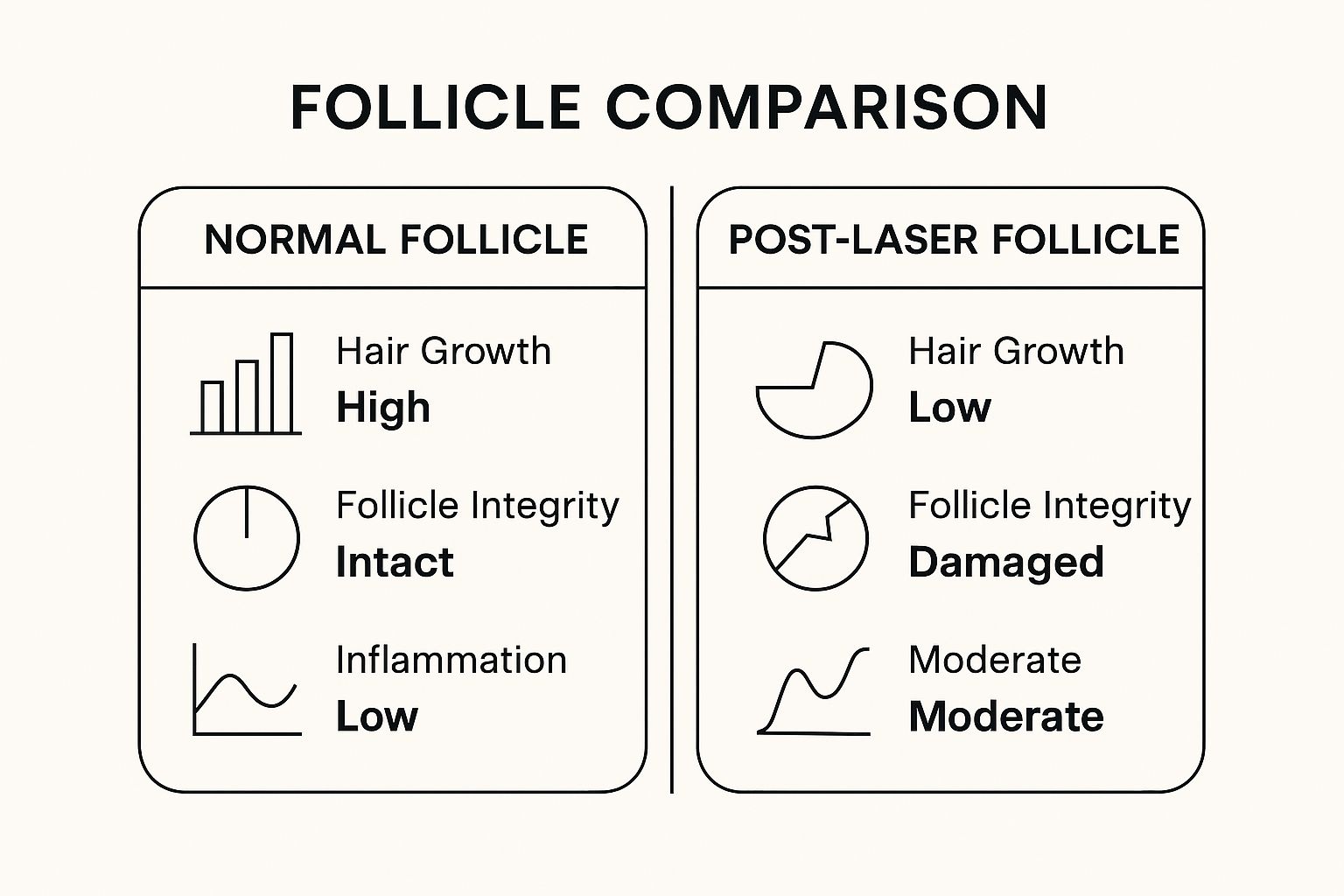
As you can see, the post-treatment follicle is inflamed on purpose. This makes the area much more susceptible to irritation from anything you put on it.
This controlled damage is precisely what leads to long-term hair reduction, but it demands some short-term TLC. Your aftercare is all about creating a calm, clean environment so your skin can heal up perfectly.
Knowing this really drives home how important proper hydration and gentle care are while you recover. If you’re looking to support your skin’s health, it’s worth checking out some tips for choosing effective body lotions for sensitive skin that fit this gentle philosophy. By working with your skin’s natural healing process, you’re setting yourself up for the best possible results.
What to Look For on a Deodorant Label After Laser
Alright, so you’ve made it past the first 48 hours—congratulations! Now you can start thinking about deodorant again. But hold on, don’t just grab your old go-to. Your skin is still in recovery mode, and the last thing you want is to irritate it and mess with your results.
Think of it like this: for the first week, your underarms need the same gentle care you’d give your face after a chemical peel. It’s all about simple, soothing formulas. This is the time to become a master at reading ingredient labels.
The “Not Right Now” List: Ingredients to Avoid
For at least the first week, you’ll want to bench any deodorants with ingredients that are known to be harsh or clog pores. These are the usual suspects to keep an eye out for:
- Drying Alcohols (like Alcohol Denat.): These are added to make products dry fast, but they can seriously dehydrate your healing skin, making it feel tight and angry.
- Synthetic Perfumes/Fragrance: Artificial scents are a huge trigger for irritation and can easily cause redness or itching on freshly treated skin. If you see “fragrance” or “parfum” on the label, put it back.
- Heavy Aluminum Compounds: While aluminum chloride is a powerhouse at stopping sweat, it’s just too much for post-laser skin. It can trap heat and lead to inflammation, which is exactly what we want to avoid.
It’s not just a hunch—research backs this up. One study on skin reactions found that 46.2% of patients with a specific inflammatory condition reported that deodorants made their symptoms worse. This just goes to show how reactive our skin can be. You can see the details of that study here.
The “Yes, Please” List: Safe Ingredients to Look For
Instead of just avoiding the bad stuff, let’s focus on what your skin will actually love right now. You’re looking for a deodorant that’s gentle, calming, and won’t get in the way of the healing process.
Your best bet after laser hair removal is a deodorant that soothes and hydrates. The simpler the formula, the happier your skin will be.
Here’s a quick cheat sheet to help you scan those labels at the store.
Deodorant Ingredient Cheat Sheet Post-Laser
| Ingredient Category | Avoid These (First Week) | Look For These (Safe Options) |
|---|---|---|
| Alcohols | Alcohol Denat., SD Alcohol | Cetyl Alcohol, Stearyl Alcohol (fatty, non-drying types) |
| Antiperspirants | Aluminum Chloride, Aluminum Zirconium | Baking Soda (use with caution), Magnesium Hydroxide |
| Fragrances | “Fragrance,” “Parfum” | Essential oils (sparingly), or better yet, fragrance-free formulas |
| Soothing Agents | (Often absent in standard products) | Aloe Vera, Chamomile, Allantoin, Glycerin, Shea Butter |
Choosing a deodorant with skin-friendly ingredients like aloe vera or chamomile will help calm any lingering redness. Glycerin is another fantastic one to spot—it’s a humectant, meaning it helps pull moisture into the skin to keep it from drying out.
Making a smart choice here ensures your transition back to your daily routine is smooth and comfortable. For more tips on keeping your skin happy after treatment, check out our complete guide to post-laser hair removal care.
Here’s a rewritten version of the section, crafted to sound more human and expert-driven.
The Surprising Bonus: How Laser Hair Removal Can Reduce Body Odor
If the idea of going deodorant-free for a few days makes you nervous, I get it. But here’s something you might not know about laser hair removal—it comes with a fantastic long-term perk that makes the short-term hassle totally worth it. Beyond just getting smooth skin, the treatment itself can actually reduce body odor over time.
It’s not magic; it’s just simple science. That smell we call “body odor” isn’t actually from your sweat. It’s caused by bacteria on your skin feasting on the proteins in your sweat. And where do those bacteria love to hang out? In the cozy, protected environment that hair provides.
Less Hair, Fewer Problems
Laser hair removal works by destroying the hair follicle, which means less hair. And less hair means way less surface area for odor-causing bacteria to cling to and multiply. When you shrink the bacterial population, you get less breakdown of sweat, and—voilà—less body odor. It’s as simple as that.
This isn’t just a theory, either. A clinical study that measured underarm bacteria before and after laser treatments found a major drop in bacterial colonies. The result? A whopping 63.3% of participants noticed a real improvement in their body odor. You can dig into the full study on bacterial reduction here.
By taking away the place where odor-causing bacteria live, you’re not just masking the smell—you’re getting to the root of the problem. This makes worrying about when to wear deodorant after laser hair removal feel a lot less stressful in the long run.
Thinking about it this way really changes the game. That brief pause from deodorant is just a small investment in a future where you might not need to rely on it as much, or at all. It’s a lasting benefit that adds so much value to the treatment, turning a temporary healing period into a long-term win for feeling fresh and confident. You’re not just removing hair; you’re upgrading your underarm’s entire ecosystem.
Safe Ways to Stay Fresh Without Deodorant
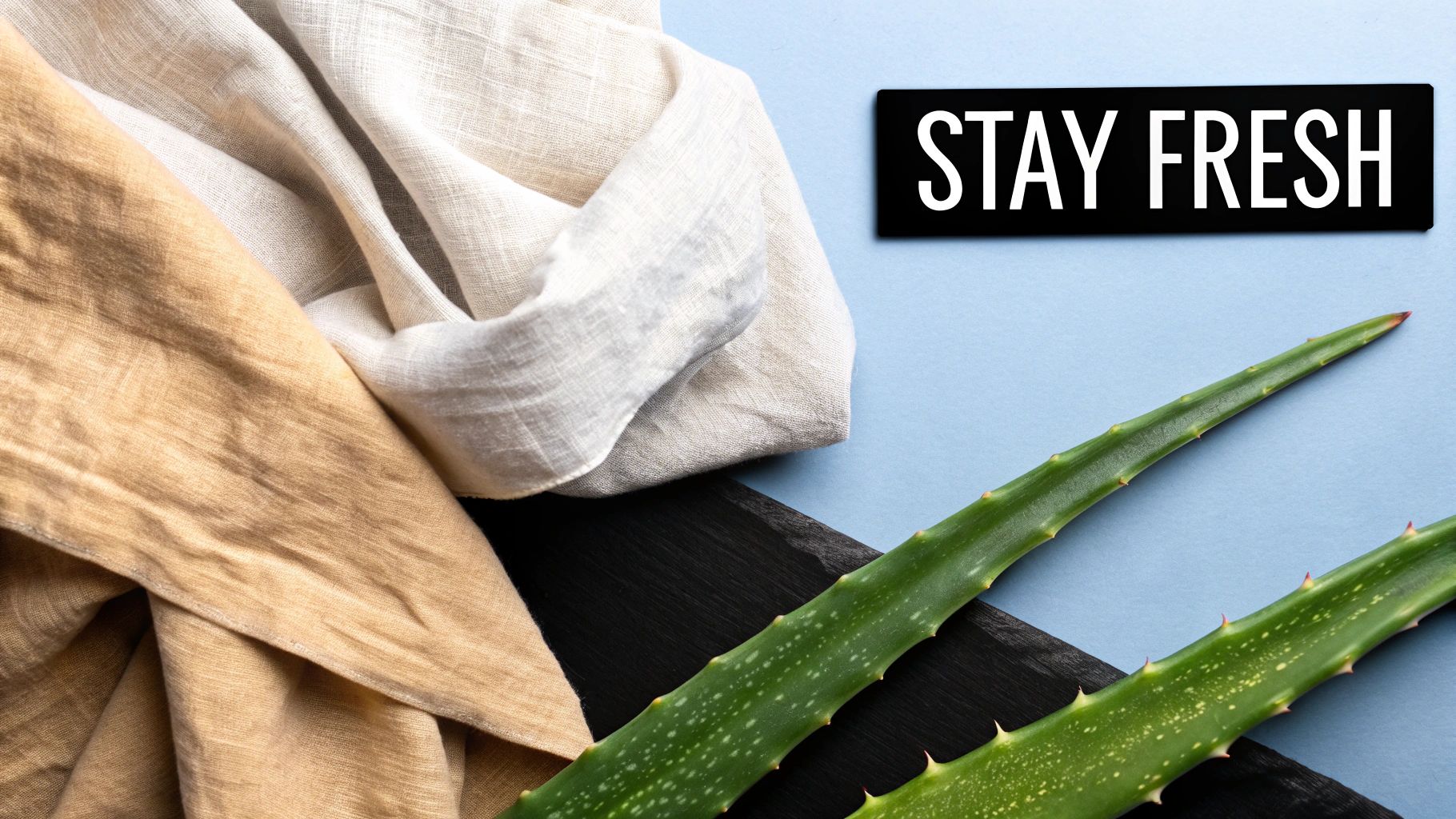
If the idea of skipping deodorant for a day or two feels a little daunting, don’t worry—you have options. The main goal here is to keep your underarms clean and calm without slathering on products that could irritate your freshly treated skin. It all comes down to simple hygiene and making smart choices during this short healing period.
Start by keeping the area clean. A gentle wash with cool or lukewarm water and a mild, fragrance-free soap is perfect. Hot water is a no-go, as it can ramp up inflammation and make your skin feel even more sensitive.
After cleansing, pat the skin completely dry using a soft, clean towel. It’s tempting to rub, but that friction can really aggravate those sensitive follicles. A gentle dabbing motion is all you need.
Soothing and Smart Alternatives
Once your skin is clean and dry, a few simple tricks can help you stay comfortable. These aren’t long-term deodorant replacements, but they’re fantastic for managing moisture and soothing your skin without the harsh ingredients found in most antiperspirants.
- Wear Loose, Breathable Fabrics: Reach for natural fibers like cotton or bamboo. These fabrics let your skin breathe, which helps cut down on sweat buildup and prevents fabric from rubbing against your underarms.
- Apply Pure Aloe Vera Gel: A thin layer of 100% pure aloe vera gel can be a lifesaver. Its natural anti-inflammatory properties are amazing for calming redness and keeping the skin feeling cool.
- Consider a Light Dusting of Cornstarch: If you’re worried about moisture, a tiny pinch of cornstarch can help absorb dampness. Just be sure to use it sparingly to avoid any clumping.
Remember, the primary objective is to let your skin heal without interference. These gentle alternatives are designed to support that process, not replace your deodorant long-term.
It’s also crucial to avoid activities that will make you sweat a lot for at least the first 48 hours. This strategy, combined with the tips above, gives your skin the best chance to recover quickly. For a deeper dive into this, check out our guide on whether you can sweat after laser hair removal.
A Few Common Questions About Post-Laser Underarm Care
After a laser session, it’s totally normal to have a few questions pop up. You want to do everything right, and getting clear answers is the best way to feel confident and avoid any little mistakes that could irritate your skin.
Let’s walk through some of the most common things people ask after their underarm treatment.
What Should I Do If I Accidentally Used Deodorant?
First off, don’t panic. It’s an easy mistake to make when you’re on autopilot in the morning.
If you’ve swiped on some deodorant too soon, the best thing to do is wash it off right away. Hop in the shower or use a soft cloth with cool water and a super gentle, fragrance-free soap. You want to remove every last trace of the product.
Afterward, gently pat the skin dry with a clean towel—no rubbing! Keep the area completely product-free for at least the next 48 hours and just keep an eye out for any unusual redness or irritation.
Are Natural or Crystal Deodorants Okay to Use Sooner?
This is a great question, and it’s easy to assume that “natural” automatically means it’s safe. But when it comes to freshly lasered skin, it’s best to hold off on all deodorants for the first 24-48 hours.
Many natural formulas contain ingredients like baking soda or essential oils, which can be surprisingly harsh on sensitive skin. Even crystal deodorants, which are just mineral salts, can really sting if the skin is at all inflamed. Your safest bet is to simply wait until that initial tenderness is gone.
The golden rule of post-laser care is simple: keep the area clean, cool, and free of any products. Giving your skin this break is the fastest way to a smooth, calm recovery.
When Is It Safe to Shave My Underarms Again?
Shaving is another thing you’ll need to put on pause for a bit. We recommend waiting at least 72 hours after your laser appointment before reaching for the razor.
Your hair follicles are sensitive and need time to heal. Shaving too early can easily lead to irritation, bumps, or razor burn. When you do start shaving again, make sure you’re using a fresh, sharp blade and a soothing shave cream to give your skin as much protection as possible.
At Meljestic Spa, our goal is to make sure your entire laser hair removal experience is comfortable, clear, and gets you the results you want. If you’re ready to start, we’d love to chat. Book a complimentary consultation and let’s get you on the path to flawless skin.


