
If you’ve just had laser hair removal, the last thing you want to do is jump in a pool. The short and simple answer is no, you shouldn’t go for a swim right after your session.
Think of your skin post-treatment like a mild sunburn. It’s sensitive, a little stressed, and needs some time to recover before you expose it to chlorine, salt, or anything else lurking in the water.
Why Waiting to Swim Is So Important
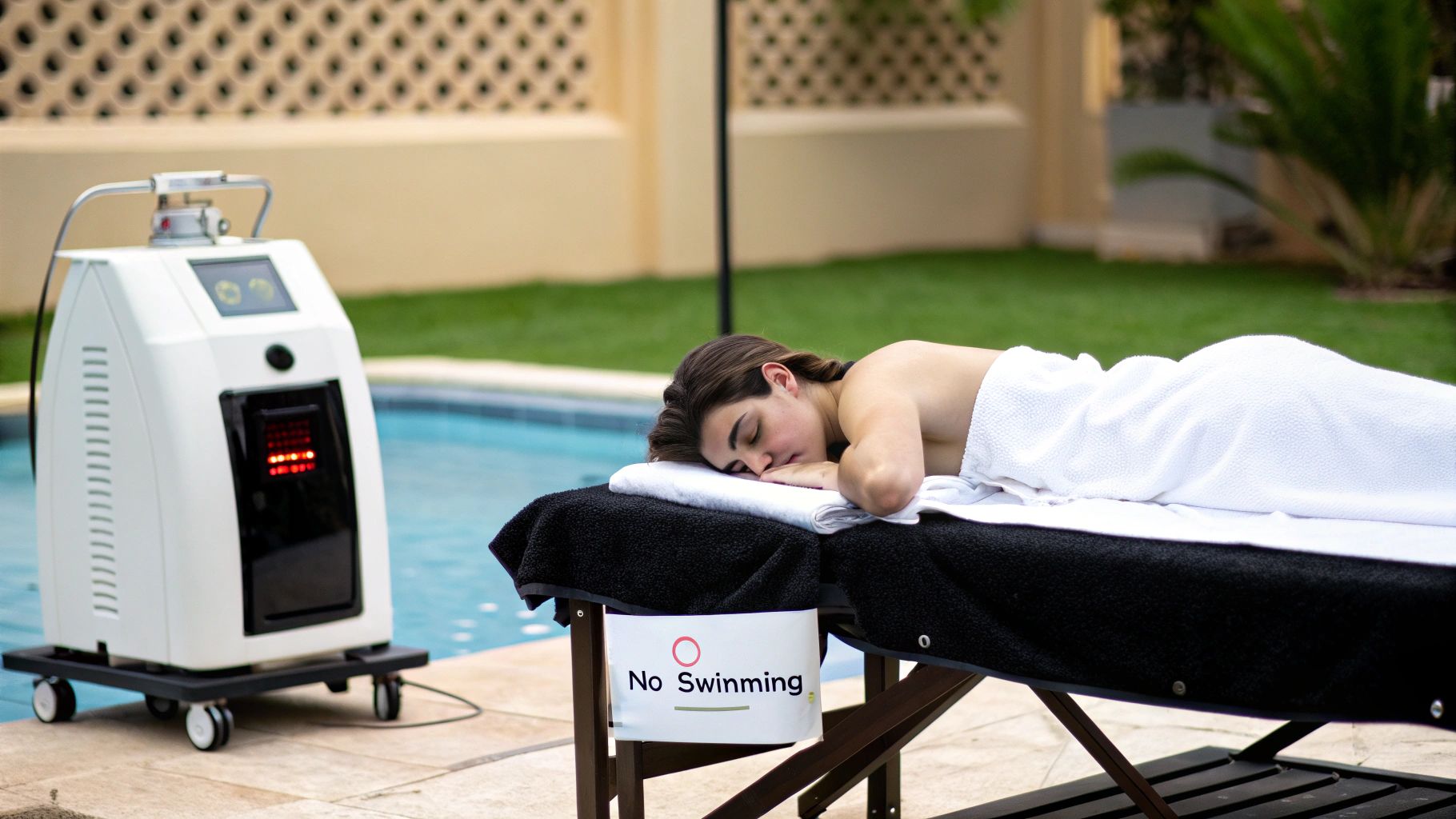
During a laser hair removal treatment, a concentrated beam of light zaps the hair follicle with heat. This is how it stops future hair growth, but it also creates a tiny, controlled injury under the skin’s surface. Your skin becomes inflamed and vulnerable as a result.
The little openings where the hair follicles used to be are now exposed, temporarily weakening your skin’s natural protective barrier.
Diving into a pool or the ocean too soon puts this sensitive skin in direct contact with a whole world of potential irritants. This isn’t just about avoiding a little sting; it’s about preventing real complications that could mess with your final results. The two main culprits you need to avoid are chemical irritation and bacterial infection.
Key Risks of Swimming Too Soon
Chlorine is great for keeping pools and hot tubs clean, but it’s a harsh chemical. On freshly lasered skin, it can cause intense stinging, redness, and even lead to chemical burns or rashes.
What about natural water? While oceans, lakes, and rivers don’t have chlorine, they’re teeming with microorganisms and bacteria. These tiny invaders can easily find their way into those open follicles and cause nasty infections like folliculitis—those itchy, pimple-like bumps that are no fun at all.
The bottom line from the experts is clear: Giving your skin time to heal is a non-negotiable part of your aftercare. This simple step ensures everything heals smoothly and you get the best, smoothest outcome from your investment.
To make it simple, here’s a quick breakdown of how long you should wait before getting back in the water.
Quick Guide to Post-Laser Wait Times for Swimming
| Type of Water | Recommended Wait Time | Primary Risk |
|---|---|---|
| Chlorinated Pools/Hot Tubs | Minimum 48-72 hours | Chemical irritation, stinging, and rashes from chlorine. |
| Oceans, Lakes, & Rivers | Minimum 48-72 hours | Bacterial infection from microorganisms in the water. |
| Cool Baths (No Soaps) | Wait at least 24 hours | Hot water and harsh soaps can irritate sensitive skin. |
This downtime is your skin’s chance to calm down, let the inflammation fade, and for those tiny follicles to close up shop, rebuilding their natural defenses.
Most technicians and dermatologists will give you a specific waiting period, but clinical guidelines generally suggest waiting at least 24 to 72 hours before swimming. Following the expert recommendations for post-laser care is the best way to protect your skin and ensure you get the flawless results you’re looking for.
So, What’s Really Happening to Your Skin After a Laser Session?
To get why jumping back into the water is a huge no-no, you have to picture what’s going on with your skin. Laser hair removal isn’t magic—it’s a targeted blast of heat sent right into your hair follicles. It’s incredibly effective, but that thermal energy leaves the treated area feeling pretty sensitive.
Think of your skin’s top layer as a protective shield. After a laser treatment, that shield is temporarily down for repairs. Your skin is a little inflamed, and the tiny pores where the hair follicles live are left open for a short time. This is all perfectly normal and part of the process.
The catch is that this temporarily vulnerable state makes your skin an easy target. It’s a lot like a mild sunburn; the area is tender, maybe a bit red, and needs to be handled with care. Throwing harsh chemicals or bacteria into the mix during this window is just asking for problems.
Give Your Skin the Downtime It Deserves
This brief recovery period is make-or-break for your treatment’s success. Your body is busy healing the tiny, controlled trauma around each follicle, which is exactly what gets you that smooth, hair-free result. If you interfere with this natural healing process, you can wind up with some nasty side effects.
Giving your skin a break allows it to do its job:
- Calm Down: The redness and swelling will naturally fade away on their own.
- Seal Up: Those open follicles will close, shutting the door on potential infections.
- Rebuild the Barrier: Your skin gets a chance to restore its natural defenses against the outside world.
The healing phase is where the real work happens. Rushing back to the pool or ocean can seriously compromise your results and lead to issues like rashes, lingering redness, or even folliculitis—a painful infection of the hair follicles.
Seriously, patience is everything here. Letting your skin recover fully is the best way to protect your investment and get the amazing results you’re paying for. For a complete rundown on what to do during this crucial time, check out our guide on post-laser hair removal care. Following these simple steps will make all the difference.
The Real Risks of Pools and Hot Tubs
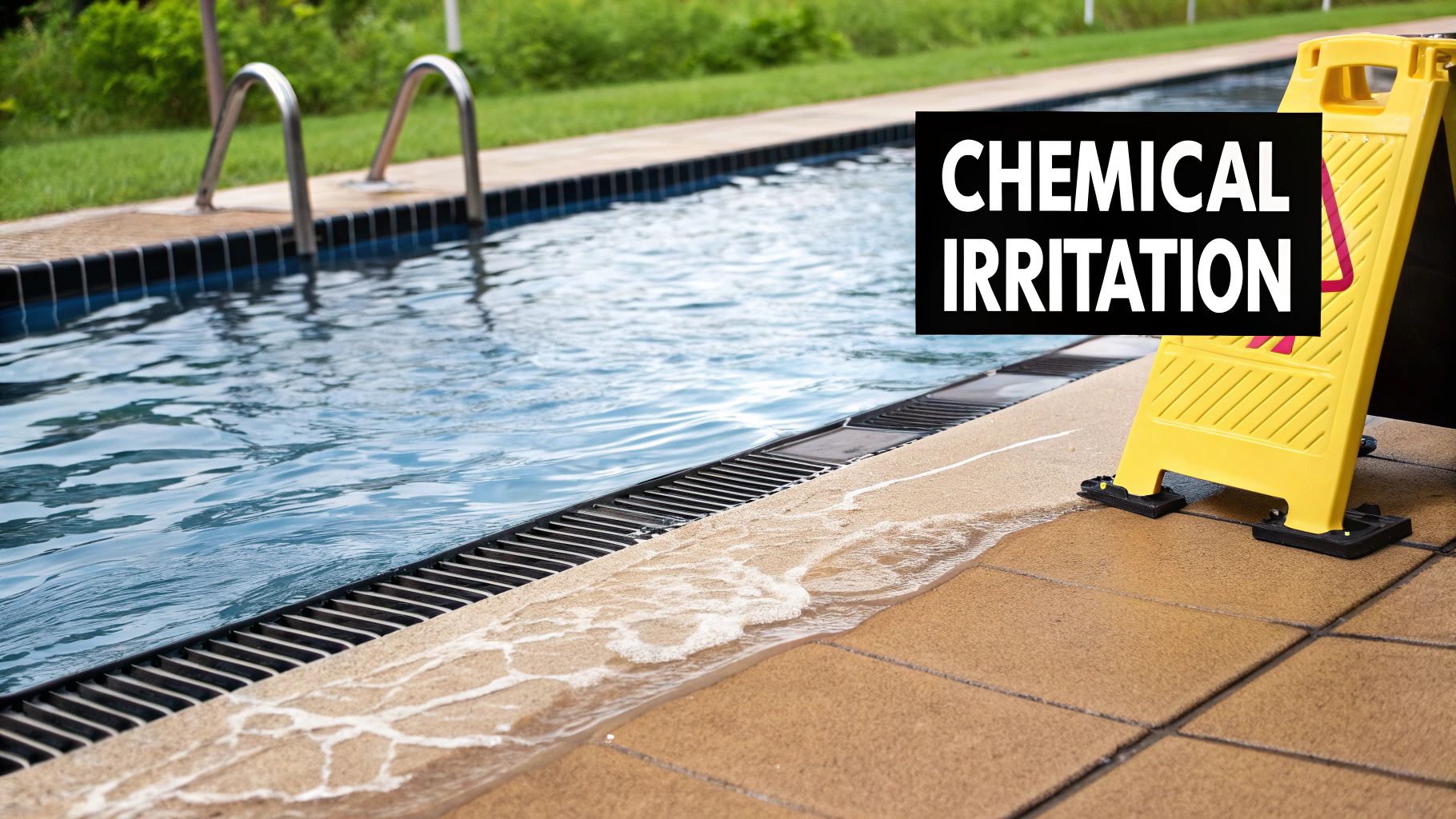
A refreshing dip in the pool might sound like the perfect way to relax, but for skin that’s just been treated with a laser, it’s a minefield of potential problems. Think of your skin post-treatment as being incredibly sensitive and a bit vulnerable. Now, introduce it to chlorine.
Chlorine is a powerful chemical designed to kill germs, but it’s not exactly gentle. On your healing skin, it can trigger some serious irritation. We’re not talking about a minor sting; jumping in too soon can lead to painful rashes, lasting redness, and even chemical burns that can set your recovery way back.
The Double Danger of Hot Tubs
Hot tubs are even trickier, presenting a two-pronged threat to your skin.
First, there’s the heat. Your skin is already working hard to cool down and recover from the laser’s thermal energy. Soaking in hot water cranks up that inflammation, which can make any mild discomfort feel much worse and interfere with the natural healing process.
Second, that warm, bubbling water is a paradise for bacteria. Despite the chemicals, microorganisms can flourish. Exposing those tiny, open follicles to a bacterial soup is practically inviting an infection like folliculitis to move in.
Dermatological guidelines are crystal clear on this: strict aftercare is non-negotiable. Skipping it by swimming in chlorinated water too early significantly boosts your risk of side effects like blistering, pigmentation changes, and even scarring.
The combination of intense heat and bacteria makes hot tubs a definite no-go. It’s the same reason you need to avoid activities that cause heavy sweating—you want to keep the area cool and calm. You can learn more about the connection between sweat, heat, and aftercare in our detailed guide.
Protecting your investment means giving your skin the environment it needs to heal properly, and that’s far away from the chemically-treated, bacteria-friendly waters of pools and hot tubs.
Navigating Natural Waters Like Oceans and Lakes
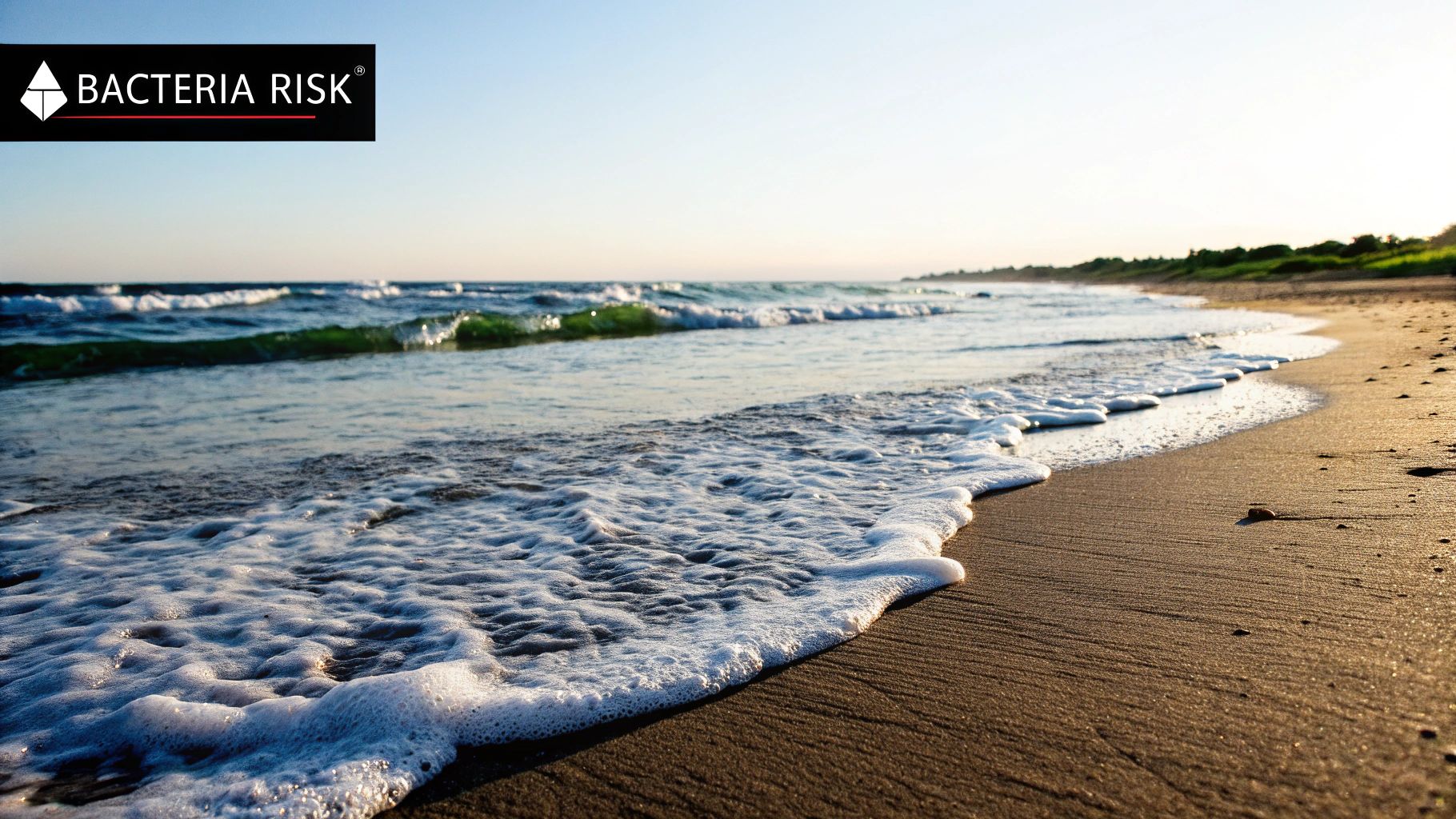
After learning to avoid chlorinated pools, it’s natural to wonder if a dip in the ocean or a lake is a safe bet. They seem more organic, right? The truth is, these natural bodies of water come with their own set of risks for skin that’s just been treated.
It’s a common myth that “natural” means clean or sterile.
Take the ocean, for example. We often hear about saltwater’s cleansing properties, but the sea is teeming with microorganisms. Your skin is extra vulnerable after laser treatment, with open hair follicles that are essentially tiny entry points. Exposing them to ocean bacteria is asking for trouble and can easily lead to an infection.
Plus, the salt itself is harsh. On skin that’s already sensitive and tender from the laser, saltwater can cause some serious stinging and irritation, potentially setting your healing process back.
Why Freshwater Poses an Even Greater Risk
Lakes and rivers can be even more problematic. Unlike the constantly moving ocean, freshwater bodies, especially when warm, can be a breeding ground for a higher concentration of bacteria.
Exposing compromised skin to these environments is a direct invitation for complications. One of the most common issues we see is folliculitis—a nasty, itchy infection of the hair follicles that looks like a sudden acne breakout or a red rash.
The bottom line is simple: all water is off-limits until your skin has had a chance to recover. Your protective barrier needs time to rebuild.
Listen to your technician’s specific advice, but the general rule of thumb is to wait at least 48 to 72 hours. This simple precaution is the best way to ensure your recovery is smooth and free of any painful complications.
Once you get the all-clear from your specialist, you can start planning that beach day. Maybe even check out a guide to Captain Cook snorkeling for some inspiration. Just be sure to put your skin’s health first.
Your Safe Return to Swimming Timeline
So, you’ve just had laser hair removal and you’re dreaming of the pool. Before you grab your swimsuit, let’s talk about the timeline. Getting back in the water isn’t a race; it’s a process. Think of your skin as needing a little time to recover from a workout—you wouldn’t push it too hard right away, and the same goes here. Rushing back to the water can set you back, leading to nasty irritation or even infection.
Let’s walk through the healing process step-by-step, so you know exactly what to expect and when you can safely make a splash.
The Critical First 48 to 72 Hours
This is the non-negotiable “no-go” zone for swimming. For the first two to three days after your treatment, your skin is at its most vulnerable. The laser has targeted the hair follicles, and right now, they are open and sensitive.
During this window, your only job is to keep the treated area clean, dry, and cool. That means no swimming, period. This rule applies to everything: chlorinated pools, saltwater oceans, lakes, and definitely hot tubs. Even a hot bath is off the table; a cool or lukewarm shower is your best friend right now. If you’re wondering about the specifics, our guide on showering after laser hair removal has all the details you need.
Days 3 to 7: The Monitoring Phase
Once you’ve passed the 72-hour mark, most of the initial redness and slight swelling should be fading away. Now you get to play detective. Your mission is to simply observe your skin. Is it looking and feeling calm? Is the sensitivity gone?
If you’re still seeing noticeable redness, bumps, or any tenderness when you touch the area, that’s your skin’s way of saying, “Not yet!” Give it a little more time. Keep protecting it from the sun and use a simple, soothing moisturizer like aloe vera gel to help things along.
This visual timeline is a great way to picture your recovery journey.
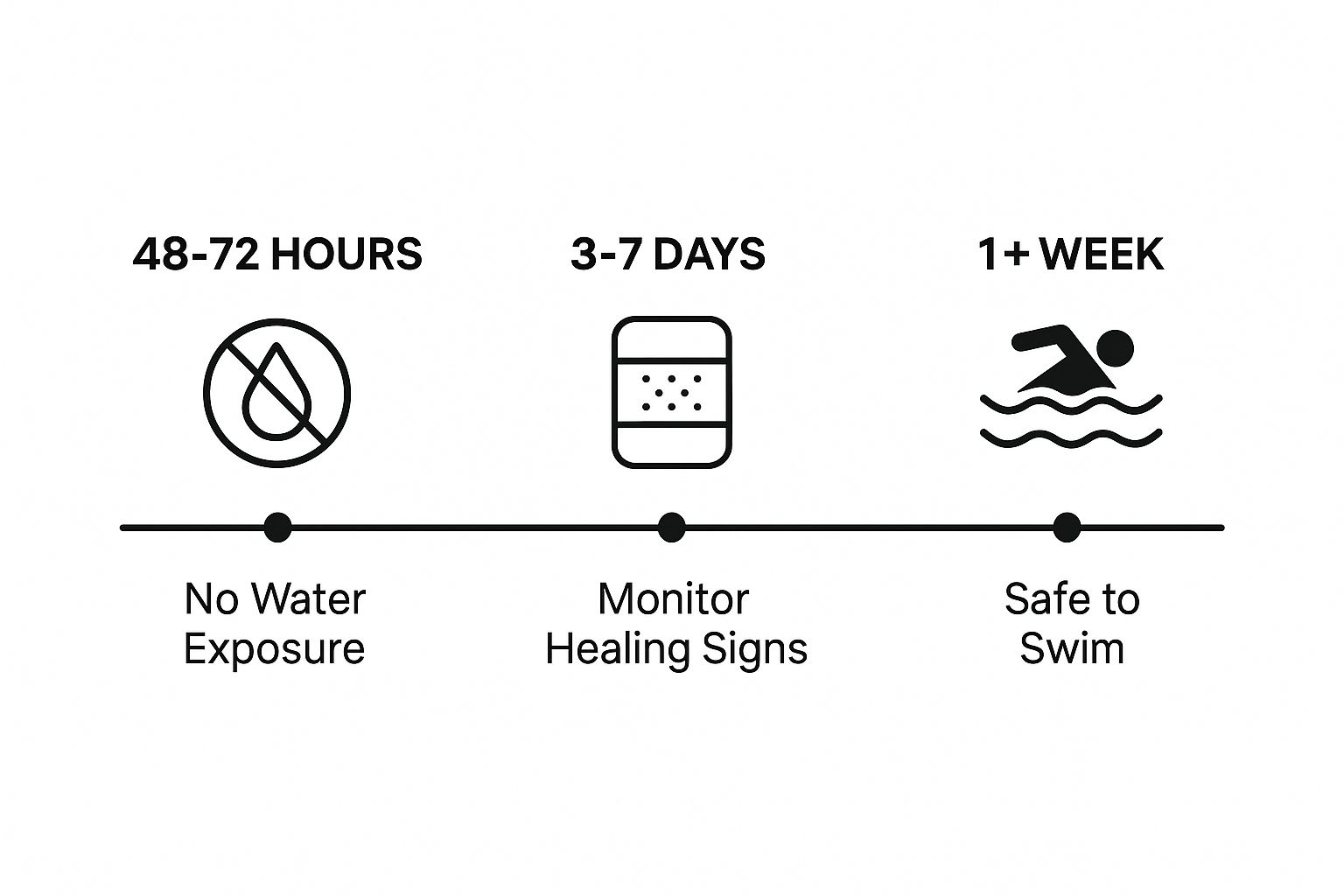
As you can see, it’s all about gradual progress. You move from complete avoidance to careful observation before you’re truly in the clear.
One Week and Beyond: Getting Back in the Water
After a full week has gone by, and your skin is completely back to normal, you’re likely good to go. By this point, the hair follicles have closed up, and your skin’s natural protective barrier has had time to repair itself.
Before you take that first dip, run through this final mental checklist.
Your Final Pre-Swim Checklist:
- Is all the redness completely gone?
- Is the skin smooth, with no lingering bumps or swelling?
- Does the area feel normal to the touch, not tender or sensitive?
If it’s a “yes” across the board, then welcome back to the water! Just one last tip: your skin will be more sensitive to UV rays for a few weeks, so make sure to apply a high-SPF, broad-spectrum sunscreen before you head out.
To make it even simpler, here’s a quick summary of what to do and when.
Post-Laser Aftercare and Swimming Checklist
Follow this simple checklist to ensure your skin heals perfectly before you head to the pool.
| Timeframe | Action Item | Primary Goal |
|---|---|---|
| First 48-72 Hours | Avoid all swimming and hot water. | Prevent infection and irritation in open follicles. |
| Days 3-7 | Monitor skin for redness or sensitivity. | Ensure the initial healing phase is complete. |
| Week 1+ | Perform a final check for any irritation. | Confirm skin is fully recovered and ready for water. |
| Before First Swim | Apply broad-spectrum, high-SPF sunscreen. | Protect sun-sensitive skin from UV damage. |
Sticking to this timeline is the best way to guarantee a smooth, trouble-free recovery so you can enjoy your silky-smooth results.
Your Top Questions About Laser Aftercare and Water
Even with the best instructions, it’s natural to have a few “what if” questions pop up after your laser session. When it comes to something as simple as getting wet, the rules can feel a little fuzzy. Let’s clear up the confusion so you can feel completely confident in your aftercare routine.
We’ll walk through the most common scenarios, from taking that first post-treatment shower to protecting your skin for a day at the beach.
So, Can I Shower or Take a Bath After My Appointment?
Yes, you can absolutely shower after your appointment, but it’s best to give your skin a few hours to calm down first. When you do hop in, think “cool and quick.” Keep the water lukewarm, not hot, because heat can crank up any redness or irritation on your freshly treated skin.
Stick to a gentle, soap-free wash and skip the loofah or scrub brush on the area. Afterwards, just pat your skin dry with a clean, soft towel—no vigorous rubbing.
Baths are a different ballgame. You’ll want to avoid soaking in a tub for at least 48 hours. Submerging your skin in hot water for a long time can really get in the way of the healing process.
What if My Skin Still Feels Sensitive After a Few Days?
If you’re past the typical 72-hour mark and your skin still feels tender, red, or overly sensitive, that’s your body telling you it needs a little more TLC. This is definitely not the time to go for a swim or expose it to anything harsh.
Just stick to the basics for a bit longer:
- Keep applying a simple, soothing moisturizer. Aloe vera gel is a classic for a reason.
- Make sure the treated area sees zero direct sunlight.
- Wear soft, loose-fitting clothes that won’t rub or chafe.
Everyone heals at their own pace. The single most important rule of aftercare is to listen to your skin. If the sensitivity feels intense or you see any signs of blistering, don’t wait—call your laser provider right away.
How Should I Prep My Skin for That First Swim Back?
Once you’ve got the green light and your skin feels totally back to normal, your number one job before hitting the water is sun protection. For several weeks after treatment, that skin is going to be extra vulnerable to UV damage, so sunscreen is your new best friend.
Before you head out, slather on a broad-spectrum sunscreen with an SPF of 30 or higher. For sensitive, post-procedure skin, a mineral-based sunscreen with zinc oxide or titanium dioxide is often the gentlest and most effective option. These create a physical block on the skin’s surface and are less likely to cause irritation. Apply a generous layer about 20-30 minutes before you go outside, and don’t forget to reapply every couple of hours, especially after towel-drying.
At Meljestic Spa, our experts are with you for the entire journey, from the first zap to your final, detailed aftercare plan. If you’re ready for silky-smooth skin without the worry, schedule your complimentary consultation with us today.


