
Yes, you can—but not right away. It's absolutely crucial to avoid any sweat-inducing activities for at least 24 to 48 hours after your appointment.
Think of it this way: your skin has just been through an intense process. The hair follicles are temporarily open and your skin is sensitive, making it a prime target for the bacteria that naturally comes with sweat. Waiting a couple of days is the single best thing you can do to prevent irritation and get that smooth, hassle-free result you're after.
Why Your Skin Needs a Break from Sweat
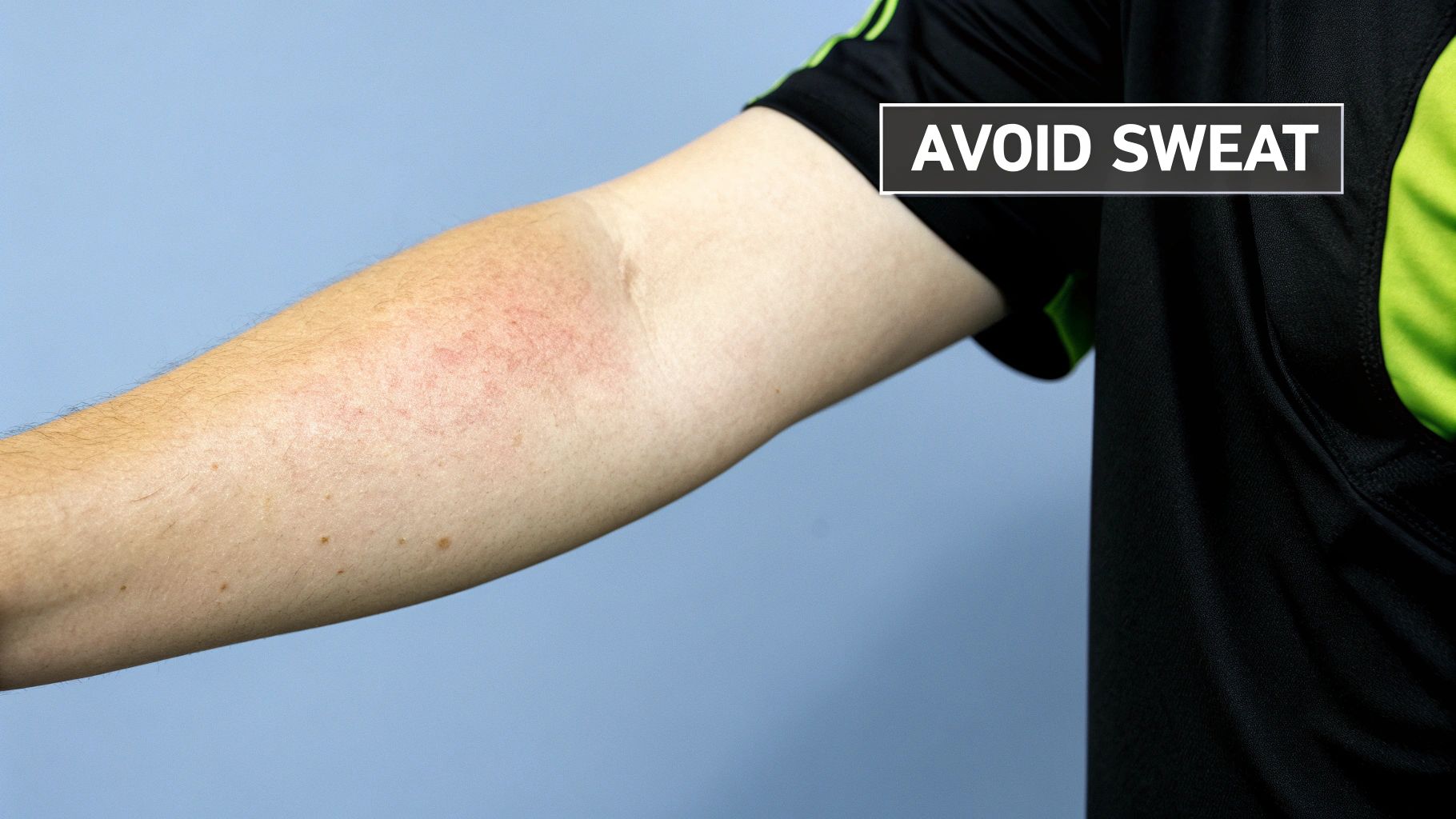
Immediately after a laser session, your skin feels and acts a lot like it has a mild sunburn. The laser uses concentrated heat to zap the hair follicles, which leaves the skin a little inflamed and the pores wide open for a short time. This is a normal, controlled part of the treatment, but it does mean your skin needs a brief window to heal and close up shop.
When you hit the gym or even just rush around on a hot day, your body temperature rises and you start to sweat. The sweat itself isn't the enemy here—it’s the bacteria that sweat carries to the skin's surface. When that bacteria finds its way into those open, vulnerable follicles, it creates the perfect storm for some pretty annoying side effects.
Potential Risks of Sweating Too Soon
Trying to jump back into your routine too quickly and ignoring that 48-hour rule can unfortunately lead to a few frustrating issues that might even mess with your results.
- Folliculitis: This is a big one. When sweat and bacteria clog up those sensitive follicles, you can end up with small, red bumps that look a lot like a breakout.
- Increased Irritation: The salt in your sweat can really sting and aggravate skin that’s already feeling warm and tender from the laser treatment.
- Rashes and Blisters: In more extreme cases, the combination of excess heat and moisture can trap bacteria against the skin, leading to rashes or even tiny blisters.
The golden rule of laser aftercare is simple: keep the treated area cool, clean, and dry. This gives the follicles time to close up naturally and lets the initial redness and inflammation calm down on their own, setting you up for the best possible outcome.
To make things crystal clear, here’s a quick guide on what to steer clear of in those first two crucial days.
Post-Laser Aftercare What to Avoid in the First 48 Hours
The first 48 hours are all about letting your skin recover peacefully. Here’s a simple table summarizing what to put on pause.
| Activity | Recommendation | Reason |
|---|---|---|
| Intense Exercise | Avoid for 48 hours | Raises body temperature and causes heavy sweating. |
| Hot Showers/Baths | Avoid for 48 hours | Heat can worsen skin sensitivity and redness. |
| Saunas/Steam Rooms | Avoid for 48 hours | Creates a warm, moist environment ideal for bacteria. |
By following these simple guidelines, you’re helping ensure your skin heals quickly and your laser hair removal results are flawless.
Why You Need to Avoid Sweat After Laser Hair Removal
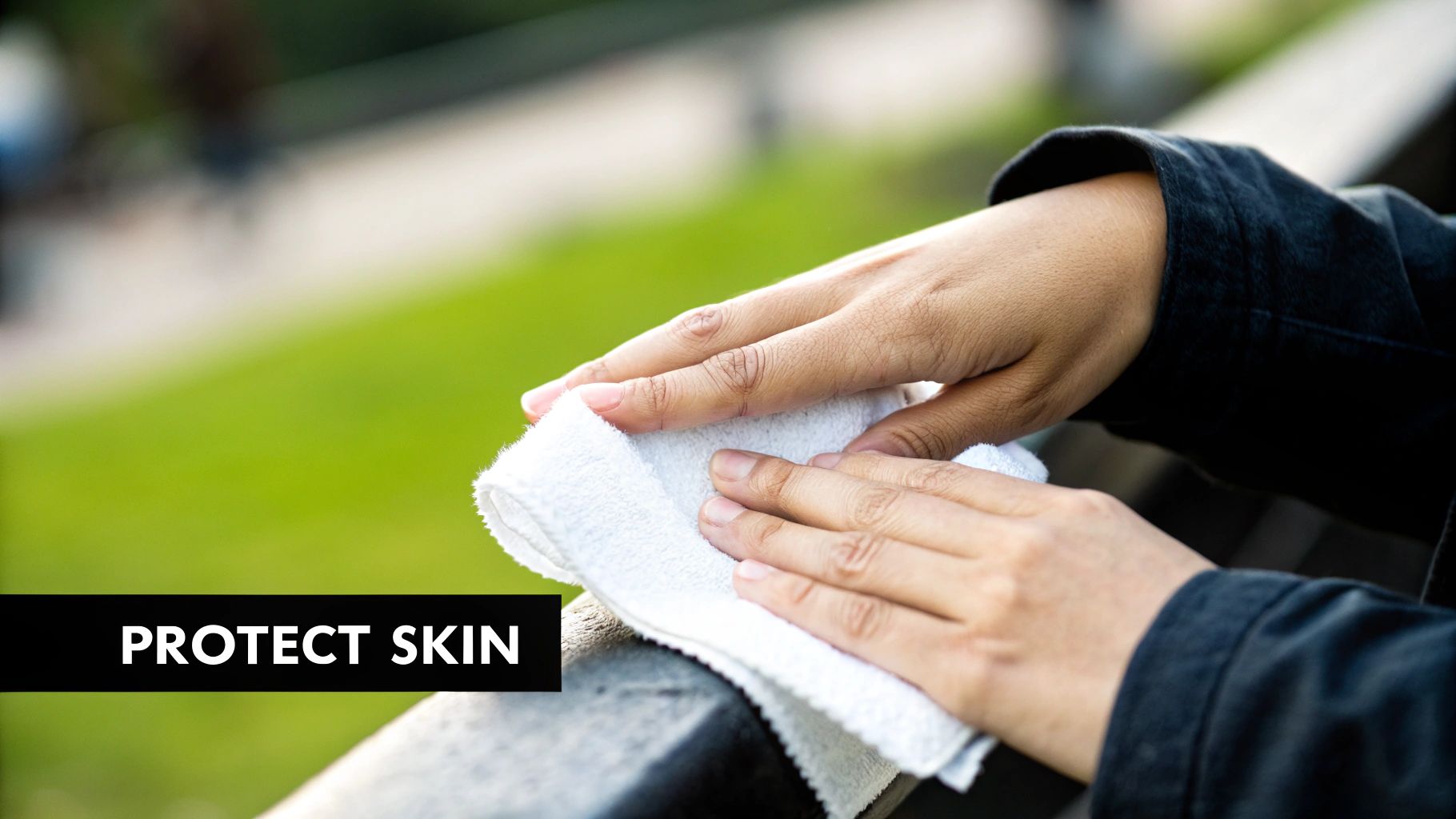
To get why sweating is a big deal, you have to picture what’s happening to your skin during the treatment. The laser delivers a highly focused beam of heat straight into each hair follicle. This is essentially a tiny, controlled injury designed to stop the follicle from growing more hair.
The immediate result? Your skin is left with thousands of microscopic wounds where the follicles were treated. These little channels are open, sensitive, and incredibly vulnerable for a short time.
Now, imagine adding sweat to the mix. Sweat creates a warm, damp environment, which is basically a paradise for the normal bacteria living on your skin. Usually, this bacteria is no problem at all. But when those follicles are open, sweat can carry it right down into the skin. That’s when the trouble starts.
Folliculitis: The Most Common Culprit
The most frequent issue we see from sweating too soon is folliculitis. It’s just a technical term for an infection of the hair follicles. You'll recognize it as small, red, and often itchy bumps that can easily be mistaken for an acne breakout. While it's typically minor, it’s definitely not comfortable and gets in the way of a smooth, quick recovery.
The golden rule of post-laser care is simple: keep bacteria out of the treated follicles. Giving yourself a sweat-free window of 24-48 hours is the single best thing you can do to prevent irritation and infection. It’s what protects your investment and gets you those flawless results.
It's a common misconception that laser hair removal affects your ability to sweat, but that's not the case. The laser is designed to target the pigment in your hair follicles, leaving your sweat glands—which are located much deeper in the skin—completely untouched. Your body has an estimated 2 to 4 million sweat glands, and they’ll all be working just fine after your session.
Proper https://meljesticspa.com/post-laser-hair-removal-care/ is about more than just dodging a workout. It's about nurturing your skin when it's most fragile. The procedure temporarily weakens the skin's natural protective barrier, so giving it some extra support is key. If you're interested in learning more, this guide on how to repair a damaged skin barrier offers some great insights for a speedy recovery.
How Laser Hair Removal Interacts with Sweat Glands
One of the biggest questions people have is whether the laser zapping away hair also takes out their sweat glands. It’s a valid concern, but the technology is thankfully much smarter than that.
Think of the laser as a highly specialized tool, programmed to seek out one thing and one thing only: the dark pigment, or melanin, found deep within the hair follicle. It’s this pigment that absorbs the laser’s energy.
Because your sweat glands don't contain this target pigment, the laser energy passes right by them without causing any harm. This precision ensures your body's natural air conditioning system stays fully operational. You'll sweat just as you always have once you're fully healed.
It's All About Depth and Targeting
The key is that the laser is carefully calibrated to penetrate to a very specific depth in the skin—just deep enough to reach the hair follicle and no further. Your sweat glands are simply out of the line of fire.
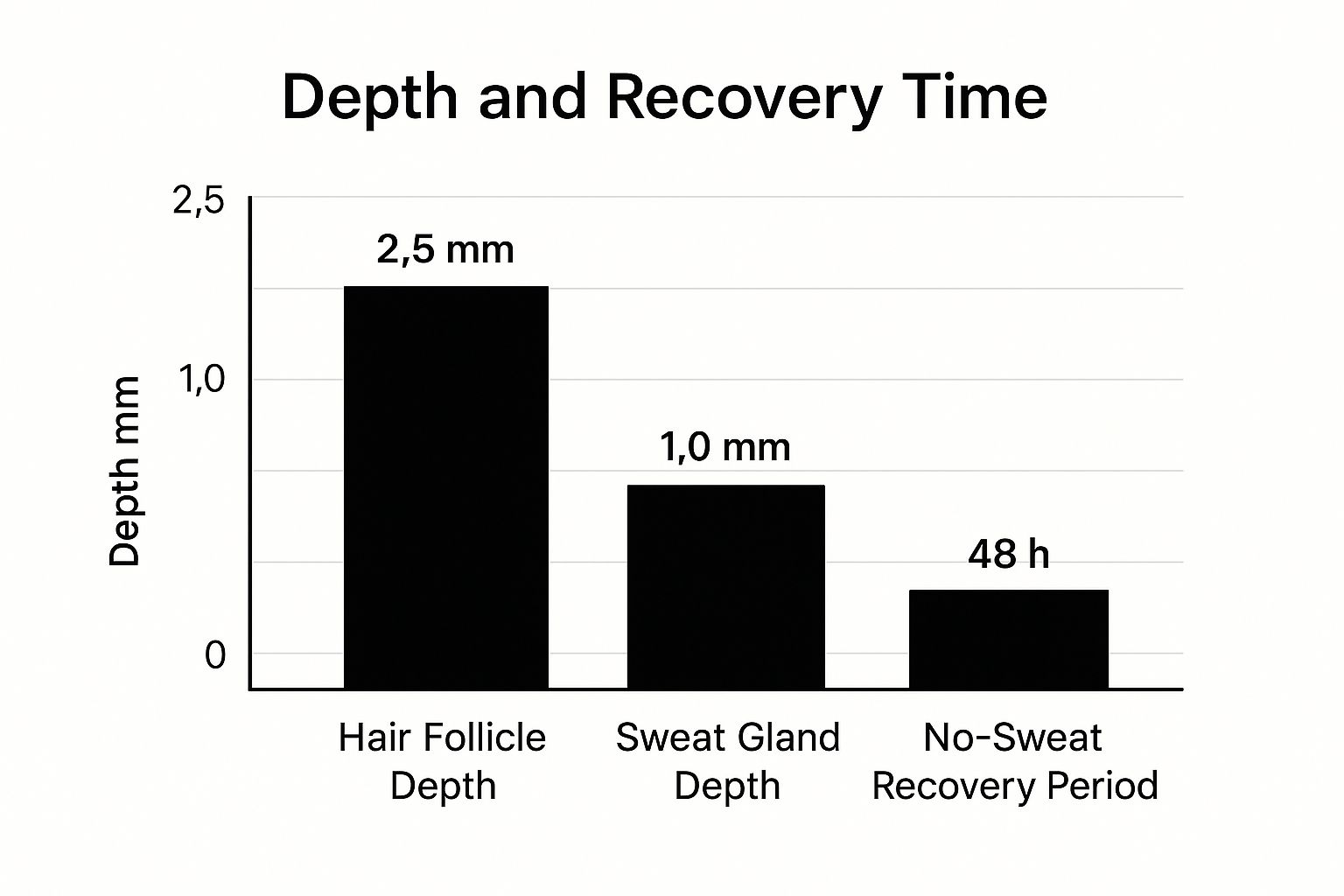
As you can see, the hair follicle is a much deeper structure than the sweat gland, which makes it nearly impossible for the laser to affect the gland unintentionally.
What’s really interesting, though, is that while the goal is to leave sweat glands alone, some clinical studies have found unexpected side effects. One fascinating piece of research showed that a certain laser used for underarm hair removal actually increased sweat production in some patients. This completely flips the myth that lasers reduce sweating on its head and shows just how complex our skin's response can be. You can dive into the details by reading the full research findings.
The bottom line is this: The laser used for hair removal has one job—to stop hair growth. It’s not designed to destroy sweat glands, so your body's essential functions are safe.
So, while you can absolutely sweat normally in the long run after your treatments, it’s all about timing. Avoiding sweat in the immediate aftermath is crucial for a smooth and safe healing process.
It’s a super common question: if a laser can zap away hair for good, can it do the same for sweat?
The short answer is no, and the reason is pretty fascinating. It all comes down to using the right tool for the right job.
Why Your Hair Removal Laser Ignores Sweat Glands
Think about the laser used for your hair removal sessions. It's a highly specialized piece of equipment with one very specific mission: to seek and destroy the pigment (melanin) in your hair follicles.
The laser emits a beam of light that the dark melanin eagerly absorbs. This absorption creates a tiny, targeted burst of heat that damages the follicle, preventing it from growing hair again. Your sweat glands, however, are a completely different story. They don't contain this pigment and sit at a different depth in your skin, so the hair removal laser passes right over them without a second thought.
A Tale of Two Lasers
Now, there are lasers designed to treat excessive sweating, a medical condition known as hyperhidrosis. But these are entirely different machines.
These medical-grade lasers are engineered with the sole purpose of targeting and disabling sweat glands. They use different wavelengths and energy levels to reach the precise depth needed to permanently reduce sweat.
Key Takeaway: Cosmetic laser hair removal is designed only to disable hair follicles by targeting pigment. Medical laser treatments for hyperhidrosis are clinical procedures built to disable the sweat glands themselves. They are not the same technology.
To put it into perspective, clinical studies on medical lasers for hyperhidrosis show they can reduce sweat production by up to 78%. They work by precisely eliminating the glands responsible for sweat. You can learn more about these specialized medical procedures from the International Hyperhidrosis Society's overview of laser therapy for excessive sweating.
This is why your standard hair removal sessions will have absolutely no impact on your body’s natural ability to cool itself down. The technology simply isn't designed for it.
Laser Hair Removal vs. Laser Sweat Reduction: A Comparison
To make the distinction even clearer, let's break down the key differences between these two laser technologies. While both use light energy, their targets, mechanisms, and ultimate goals are worlds apart.
| Feature | Cosmetic Laser Hair Removal | Medical Laser for Hyperhidrosis |
|---|---|---|
| Primary Target | Melanin (pigment) in the hair follicle | Water in the eccrine and apocrine sweat glands |
| Goal | To disable the hair follicle and prevent hair growth | To permanently destroy sweat glands and reduce sweating |
| Technology Used | Alexandrite, Diode, Nd:YAG lasers | Specific wavelengths (e.g., 1064nm, 1440nm) calibrated for sweat glands |
| Treatment Type | Cosmetic procedure | Medical procedure for a diagnosed condition |
| Outcome | Smooth, hair-free skin | Significant and lasting reduction in sweat production |
Ultimately, the laser used for your hair removal is a cosmetic tool fine-tuned for one job, leaving your essential sweat glands completely untouched.
Your Practical Aftercare Plan for a Smooth Recovery
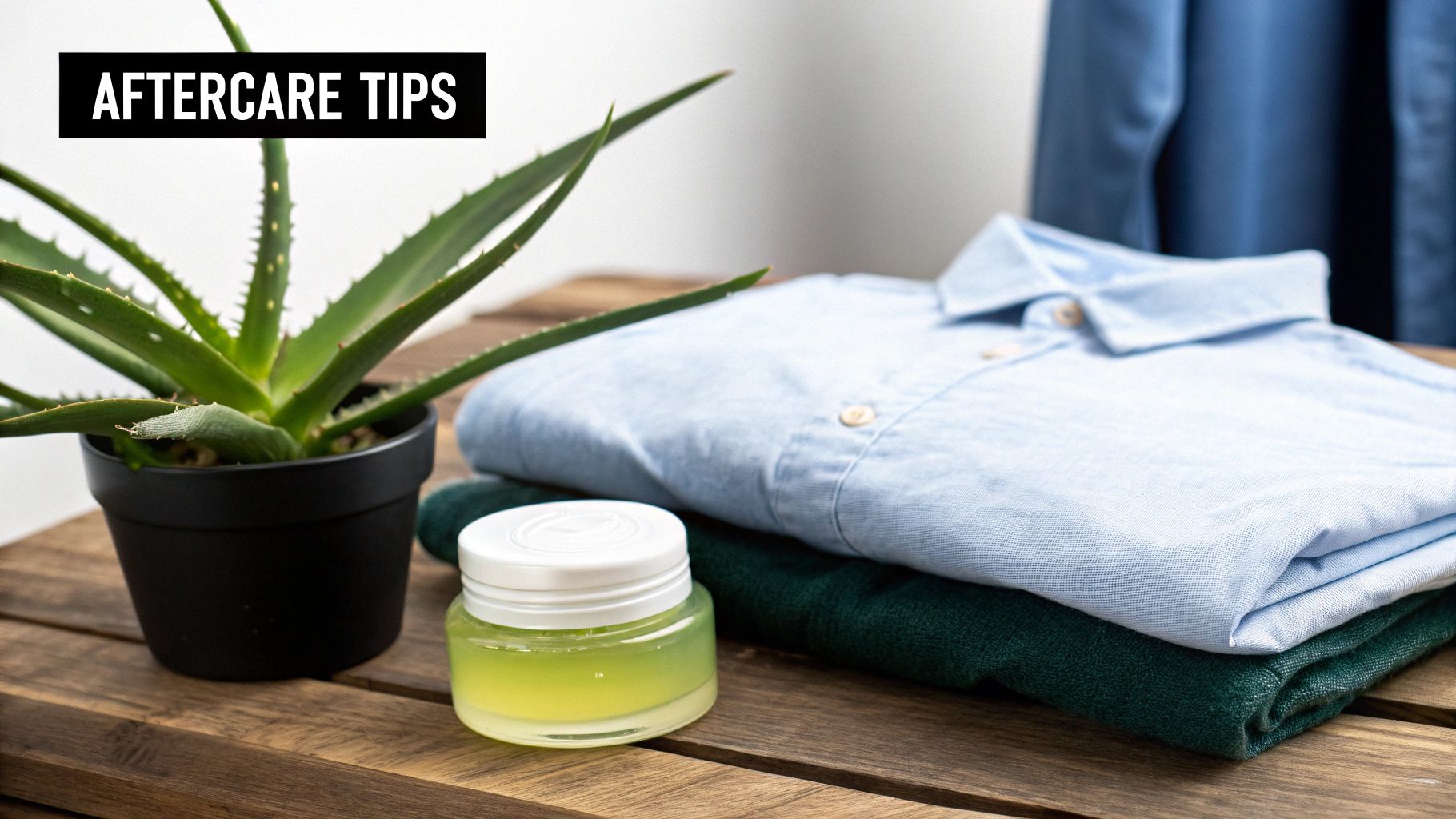
Knowing the risks is half the battle; the other half is having a solid game plan for taking care of your skin. The most crucial window is the first 48 hours after your session. Think of this as a mandatory rest day for your skin, where the goal is simple: keep the treated area cool, clean, and happy.
It's often the small, simple adjustments that have the biggest impact. Your wardrobe is a great place to start. For the next couple of days, loose, breathable fabrics like cotton are your best friends. They let your skin breathe and prevent heat from getting trapped. Tight leggings or synthetic gym clothes? They'll have to wait.
This "keep it cool" philosophy extends to your daily habits, too. Hot showers and long, steamy baths are off the table for now. Instead, opt for lukewarm water to avoid irritating your skin. For a deeper dive, check out our guide on whether you can shower after laser hair removal.
Soothing and Protecting Your Skin
When you do wash the area, be gentle. Use cool water and pat your skin dry with a soft towel—absolutely no rubbing. You want to avoid any unnecessary friction while your skin is in this delicate state.
If you feel any warmth or see some redness (which is totally normal!), pure aloe vera gel is a fantastic, natural soother. Its anti-inflammatory properties work wonders to calm things down. Just be sure to avoid any lotions with heavy perfumes or thick creams for the first day, as they can easily clog your sensitive follicles.
Here’s a quick checklist to make it easy:
- Breathe Easy: Stick to loose, natural fabrics like cotton that don't chafe or trap heat.
- Cool It Down: Use lukewarm water for showers and always pat your skin dry gently.
- Soothe Naturally: Apply 100% pure aloe vera gel to ease any redness or discomfort.
- Hold the Deodorant: If you had your underarms treated, skip antiperspirants for at least 24 hours.
The whole game is about keeping heat and bacteria away from your healing skin. By following these simple steps, you're giving your skin the perfect environment to recover beautifully, which ultimately means you get the best results from your treatment.
And for those of you itching to get back to your workout routine, remember that managing your body temperature is key. Some general tips for effective recovery post-activity can be really helpful for learning how to cool your body down properly and keep that sweat to a minimum.
Common Questions About Laser Hair Removal and Sweating
Alright, let's get into the nitty-gritty. We've covered the "why," so now let's tackle the "how" and "when" of handling sweat after your laser session. These are the practical questions everyone has, and getting clear answers will make your recovery smooth and stress-free.
When Can I Work Out After Laser Hair Removal?
This is probably the most common question we hear. As a rule of thumb, you should wait at least 24 to 48 hours before hitting the gym or doing any strenuous exercise. Think of it as giving your skin a much-needed break.
The heat from the laser needs time to fully dissipate from your skin, and the treated follicles need a chance to begin healing. Pushing it too soon with a sweaty workout invites bacteria into those vulnerable follicles, which can lead to irritation or even an annoying breakout of folliculitis. A gentle walk on a cool day is likely fine, but always listen to your body. If the area feels sensitive, warm, or tender, it's telling you to rest a bit longer.
What Should I Do If I Sweat Accidentally?
Life happens! If you get caught in a warm room or find yourself sweating within that first 48-hour window, don't panic. The key is to act quickly.
As soon as you can, gently cleanse the area with cool water and a simple, fragrance-free soap. Then, pat the skin completely dry with a soft, clean towel. Whatever you do, don't rub! Rubbing will only create friction and make potential irritation worse. A thin layer of pure aloe vera gel can be wonderfully soothing afterward.
The goal isn't to live in fear of sweating, but to take swift, simple action if it happens. A quick, cool rinse is usually all it takes to prevent any potential issues from developing.
Can I Use Deodorant After Underarm Treatment?
For underarm treatments, it's best to skip the deodorant and antiperspirant for at least 24 hours. Your skin is extra sensitive right after a session, and the chemicals, alcohol, and fragrances in most products are just asking for trouble. They can easily irritate the skin and clog the open follicles.
After that first day, once the skin has calmed down and any initial redness is gone, you can usually go right back to your normal routine.
While you're waiting for your skin to heal, you might also be curious about what comes next in the process. For more on that, check out our guide on how to speed up shedding after laser for tips on getting the smoothest possible results.
At Meljestic Spa, we’re here to make sure your laser hair removal journey is safe, comfortable, and effective. If you have any more questions or are ready to book your complimentary consultation, visit us at https://meljesticspa.com.


