
Yes, you can absolutely get a chemical peel, even with sensitive skin. The secret isn’t about avoiding peels altogether—it’s about choosing the right one. Forget the old-school idea of harsh, aggressive treatments; today’s best formulas are more like a gentle polish for a delicate surface, not a painful stripping agent.
Rethinking Peels for Sensitive Complexions
The thought of putting acid on already-reactive skin can sound pretty scary, I get it. But the reality is much more sophisticated and gentle than you might think.
Imagine carefully lifting away the dull, papery outer layers of an onion to reveal the fresh, smooth layer just underneath. That’s exactly what a good chemical peel for sensitive skin aims to do. It’s not about causing irritation, but about kickstarting a controlled, gentle renewal process.
The whole game changes when you select peels specifically designed for skin that’s easily upset. These formulations are all about minimizing irritation while still giving you those visible improvements in texture and tone you’re looking for.
Shifting Focus to Gentle Exfoliation
The demand for these gentler treatments has exploded. In fact, the global chemical peel market was valued at around USD 2.18 billion in 2024 and is expected to climb to USD 3.23 billion by 2032, a surge largely driven by people wanting effective, non-invasive options.
The smartest approach for sensitive skin is using peels that work right at the surface. They gently dissolve the “glue” holding dead skin cells together without diving too deep and setting off an inflammatory reaction.
This focus on gentle-but-effective renewal means you no longer have to choose between calm skin and a radiant complexion.
Understanding this core principle is the first step to safely adding a peel into your routine. Of course, protecting your skin barrier is about more than just the peel itself; it’s also about using hypoallergenic products for sensitive skin and being conscious of the ingredients in your entire skincare lineup. With the right know-how, you can confidently get that glow without compromising your skin’s health.
How Gentle Peels Work Without Causing Irritation
To feel truly confident about trying a chemical peel, it helps to understand what’s actually happening to your skin—especially when it’s on the sensitive side. The process is far more strategic and less aggressive than the name suggests. Think of it as a carefully controlled exfoliation that puts your skin’s health first.
Imagine the dull, dead cells on your skin’s surface are like old bricks on a wall, held together by a kind of “mortar” made of cellular bonds. Gentle peels use mild acids as a smart solvent, dissolving only that top layer of mortar.
This allows the old bricks—the dead skin cells—to lift away naturally. The real key here is that this action happens right at the surface, without disturbing the healthy, living skin underneath. It’s precision work, not a brute-force stripping of your skin barrier.
The Science of Gentle Acids
Not all acids are created equal. Their molecular structure plays a huge role in how they interact with the skin, which is why choosing the right type of acid is so critical for sensitive complexions.
The most common gentle exfoliants fall into a few key families:
- Alpha Hydroxy Acids (AHAs), like Lactic Acid.
- Beta Hydroxy Acids (BHAs), such as Salicylic Acid.
- Polyhydroxy Acids (PHAs), like Gluconolactone.
Lactic Acid, for instance, has a larger molecule size than its more intense cousin, Glycolic Acid. Because it’s bigger, it can’t penetrate the skin as deeply or as quickly. This slower, more superficial action makes it much less likely to cause irritation while still being incredibly effective at surface renewal and even boosting hydration.
The core principle is controlled exfoliation. Gentle peels work on the outermost layer of the epidermis, known as the stratum corneum, to reveal a fresher, brighter surface without triggering a deeper inflammatory response.
From an expert’s point of view, chemical peels for sensitive skin are all about superficial or “light” peels. These treatments use mild acids that get the job done without going too deep and causing unnecessary irritation. It’s a smart, targeted approach that respects the skin’s limits.
Managing Irritation Across Your Routine
Knowing how to minimize potential irritation is a valuable skill that goes far beyond just peels. The same principle—using ingredients that respect your skin’s barrier—applies to other powerful treatments, too.
For example, a similar logic is behind techniques like retinol sandwiching, which involves buffering a potent ingredient with moisturizer to soften its impact.
Ultimately, the goal of a gentle peel is to prompt your skin’s natural renewal cycle, not to force it into submission. By carefully dissolving the bonds holding onto dead cells, these peels help you achieve a smoother, more radiant complexion without the downtime or discomfort of more aggressive treatments. It’s this precise, intelligent approach that makes them such a great choice for sensitive skin.
Choosing the Right Chemical Peel for Your Skin Type
When you have sensitive skin, picking a chemical peel isn’t about finding a one-size-fits-all solution. It’s more like being a detective for your own face—carefully matching the right kind of acid to your unique concerns. You wouldn’t use a sledgehammer to fix a watch, right? The same principle applies here. Let’s break down the best options that get you results without sending your skin into a tailspin.
We’ll be looking at the three heroes of gentle exfoliation: Lactic Acid, Mandelic Acid, and the newer Polyhydroxy Acids (PHAs). Each has its own specialty, so you can zero in on the perfect fit, whether you’re trying to boost hydration, calm down redness, or tackle pesky blemishes.
This infographic gives a great visual of the improvements people with sensitive skin typically see after a course of gentle peels.
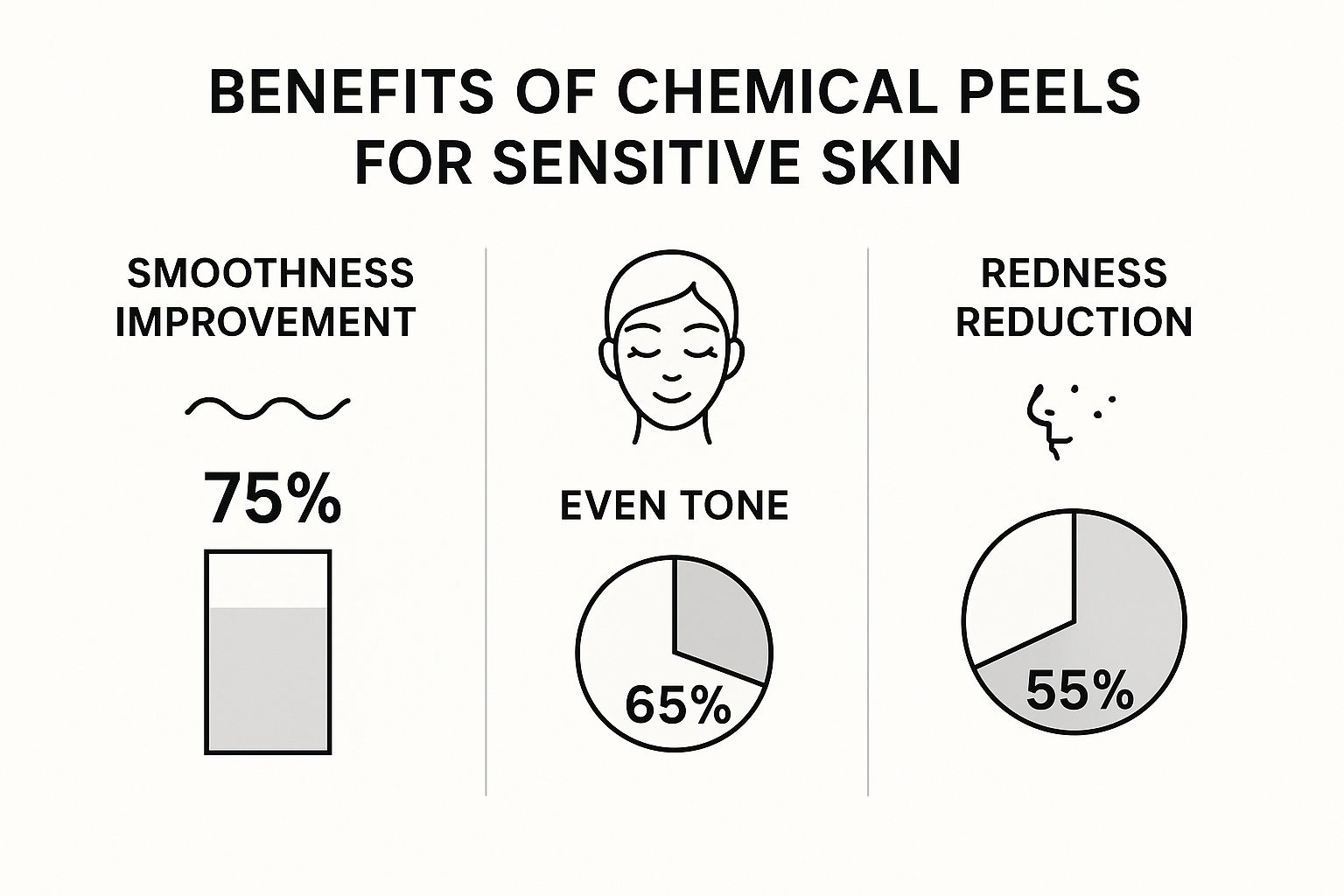
As you can see, while a smoother texture is the most common win, a more even tone and less redness are also huge benefits.
Lactic Acid Peels for Hydration and Glow
If your skin is both sensitive and thirsty, a Lactic Acid peel is often the perfect place to start. This acid is an Alpha Hydroxy Acid (AHA) derived from milk, and its molecules are a bit larger. That means it works its magic right on the surface without diving too deep, which is exactly what you want to avoid irritation.
The real beauty of Lactic Acid is its double-duty nature. It’s a humectant, which is a fancy way of saying it helps your skin grab onto and hold moisture. So, it exfoliates and hydrates all at once.
- Primary Benefit: Gently lifts away dead skin while pulling in moisture.
- Best For: Anyone with dry, dull, and sensitive skin looking for that dewy, radiant glow.
- What to Expect: You might feel a slight tingle during the treatment, but afterward, you’ll just see a brighter, plumper complexion with very little, if any, redness.
Mandelic Acid Peels for Acne and Redness
For those of us battling sensitivity plus breakouts or stubborn redness, Mandelic Acid is a true lifesaver. This AHA comes from bitter almonds and has an even bigger molecular structure than Lactic Acid, making it one of the gentlest exfoliants out there.
Because it’s also oil-soluble, it can get inside pores to clear out congestion. At the same time, its natural anti-inflammatory and antibacterial properties help soothe redness and keep new breakouts from forming. It’s this one-two punch that makes it a go-to for sensitive, acne-prone skin. If you’re exploring ways to manage breakouts, you can learn more about how professional treatments like an acne facial can work alongside a peel routine.
Mandelic Acid is all about balance. It effectively targets blemishes and inflammation but does so without compromising your skin’s delicate moisture barrier—a non-negotiable for reactive skin.
PHA Peels: The Ultra-Gentle Exfoliant
Meet the new kid on the block: Polyhydroxy Acids (PHAs), like gluconolactone. These are often called the next generation of acids for good reason. Their molecules are the largest of the bunch, meaning they work exclusively on the very top layer of your skin.
This makes PHAs exceptionally gentle, to the point where they’re often suitable even for those with rosacea or eczema. As a bonus, they also offer antioxidant protection and actually help strengthen your skin’s barrier over time.
Comparing Gentle Chemical Peels for Sensitive Skin
Still weighing your options? This table offers a quick side-by-side comparison to help you pinpoint the best peel for your sensitive skin’s needs.
| Peel Type | Primary Benefit | Best For | Potential Sensation |
|---|---|---|---|
| Lactic Acid | Hydrating Exfoliation | Dryness, dullness, fine lines | Mild tingling |
| Mandelic Acid | Anti-Inflammatory | Acne, redness, uneven tone | Very mild tingling |
| PHA Peel | Barrier Support | Extremely sensitive skin, rosacea | Almost none |
By understanding these subtle but important differences, you can feel confident choosing a peel that will work with your skin, not against it. The goal is always a happy, healthy complexion and beautiful results without the drama.
How to Prepare Your Skin for a Peel
A great chemical peel experience—especially for those of us with sensitive skin—doesn’t start on the day of the treatment. The real work begins weeks before. Think of it like prepping a canvas before you paint; you want a smooth, strong, and calm surface to get the best results.
This prep phase is absolutely crucial for sensitive skin. It’s all about minimizing any chance of irritation and getting your skin ready to respond beautifully to the peel. The main goal here is to strengthen your skin’s natural moisture barrier. A healthy, robust barrier is your best defense against redness and reactivity, ensuring the peel can do its job without causing unnecessary drama.
Your Two-Week Pre-Peel Plan
About two weeks out from your planned peel, it’s time to make some temporary changes to your daily skincare routine. The game plan is simple: dial back on anything potentially irritating and double down on ingredients that soothe, hydrate, and strengthen.
This is when you’ll need to hit pause on your more powerful products. Giving your skin a break from these actives is key to preventing it from being over-sensitized before the peel.
Products to Stop Using 1-2 Weeks Before Your Peel:
- Retinoids: This means both prescription-strength tretinoin and over-the-counter retinol.
- Harsh Exfoliants: Put away the physical scrubs, cleansing brushes, and any other acid-based exfoliants (like AHAs and BHAs).
- Benzoyl Peroxide: A go-to for acne, but it can be far too drying right before a peel.
- Vitamin C Serums: While great for your skin, potent vitamin C formulas can sometimes be too stimulating pre-peel.
So, what should you be using instead? Shift your entire focus to barrier repair. Your routine should be pared down to the gentle essentials: cleansing, moisturizing, and sun protection. Look for products loaded with ceramides (the fatty acids that hold your skin cells together), hyaluronic acid for a deep drink of water, and niacinamide to help calm inflammation and bolster your skin’s defenses.
I like to call this a “skincare reset.” You’re essentially putting your skin on a simple diet of cleansing, moisturizing with barrier-loving ingredients, and applying sunscreen. This creates the calm, stable environment your skin needs to be fully prepared.
The Essential Patch Test
If you’re using an at-home peel, the patch test is your single most important safety step. Don’t skip it. It’s a quick, easy preview of how your skin will handle the peel solution before you commit to applying it all over your face.
Here’s how to do it properly 48 hours before your full application:
- Choose a Spot: Pick a small, out-of-the-way area, like just behind your ear or under your jawline.
- Apply the Product: Use a cotton swab to dab a tiny amount of the peel solution onto that spot.
- Wait and Observe: Let it sit for the time recommended in the product instructions. If no time is given, 30-60 seconds is a good rule of thumb. Then, rinse it off completely.
- Monitor for Reactions: Keep an eye on that spot for the next 48 hours. You’re looking for any signs of trouble—things like severe redness, swelling, blisters, or intense itching.
If the area is calm and happy after two days, you’re good to go. A few minutes of your time for a patch test can save you from a world of trouble and ensure your peel experience is a great one.
Professional vs. At-Home Peels: What’s the Right Choice?
https://www.youtube.com/embed/iJLThAQ9Z80
Deciding between a professional peel at a spa and a product you can use at home is a big fork in the road, especially when you have sensitive skin. Each option has its own set of pros and cons, so really understanding what you’re signing up for is the key to getting the results you want without causing a flare-up.
I like to think of it like this: getting a professional peel is like hiring a personal trainer. You get an expert who can assess exactly what you need, create a customized plan, and use powerful techniques in a safe, controlled environment. An at-home peel is more like following a workout app—it’s super convenient and much easier on the wallet, but your success really hinges on your own knowledge, careful product choice, and consistency.
When to See a Professional
For a few key situations, going the professional route is absolutely the smartest and safest bet. Having a licensed aesthetician in your corner provides a crucial safety net. They can pinpoint the perfect peel for your skin’s unique quirks and apply it with an expert hand.
You should seriously consider booking a professional peel if you:
- Are a total newbie to chemical exfoliation and don’t know where to begin.
- Are managing a skin condition like rosacea, eczema, or persistent acne.
- Need to tackle more significant issues like stubborn hyperpigmentation or uneven texture.
- Want a truly personalized treatment designed just for you.
A professional can properly gauge your skin’s sensitivity level and check your barrier health before they even start, tweaking the formula and process as they go. That kind of expert oversight just isn’t something you can replicate in your bathroom.
The Case for At-Home Peels
Don’t get me wrong, at-home chemical peels for sensitive skin can be fantastic. They are perfect for maintaining your glow and providing gentle, steady exfoliation between spa visits. They’re also much more accessible, fitting into your schedule and budget without much fuss.
This approach is becoming more popular everywhere. In the Asia Pacific market alone, the demand for peels is projected to grow at a CAGR of around 5.6%, which includes both professional services and the at-home products people love. If you’re curious, you can read the full research on the chemical peel market to see how the industry is expanding.
An at-home peel could be a great fit for you if:
- You’re already comfortable using acids and know exactly what your skin can handle.
- You’re just looking for gentle upkeep in between your professional appointments.
- You want a budget-friendly way to keep your skin looking bright and fresh.
Ultimately, it all comes down to your comfort level, your skin’s current condition, and what you hope to achieve. If you’re leaning towards getting expert advice and a truly tailored experience, exploring professional facials and peels is a fantastic place to start.
Your Essential Post-Peel Care Routine
What you do after getting a chemical peel for sensitive skin is every bit as important as the treatment itself. Your skin is in a fragile, regenerative state, and it’s counting on you to provide a calm, supportive environment so it can heal beautifully. This is where you lock in all the benefits of the peel and ensure a smooth, comfortable recovery.
Don’t worry, your aftercare routine doesn’t need to be complex. Simplicity is key. The entire game plan boils down to three things: cleanse gently, moisturize religiously, and protect your skin from the sun like it’s your job. By breaking it down day-by-day, you can easily sidestep common issues like irritation or hyperpigmentation and get the glowing results you’re after.
Days 1-2: Soothe and Protect
Right after your peel, expect your skin to feel a bit tight, maybe with a little pinkness. That’s totally normal. For the first 48 hours, your only goal is to be as gentle as humanly possible.
Wash your face with cool water and a mild, soap-free cleanser that doesn’t foam up. When you’re done, pat your skin dry with a soft towel—no rubbing, ever. Then, apply a thin layer of a simple, nourishing moisturizer. Look for ingredients like ceramides or hyaluronic acid to help rebuild your skin’s barrier.
Think of it this way: Your skin is working overtime to repair itself. Your job is to create a peaceful, protected bubble for it to do its thing. That means no makeup, no active ingredients, and nothing that could cause friction.
Days 3-5: Resist the Urge to Peel
Around this time, you’ll probably start to see some light flaking. I know how tempting it is to “help” the process along, but please, resist! Picking, pulling, or scrubbing at the shedding skin is a fast track to irritation, and it can even cause scarring or dark spots. Just let it happen on its own schedule.
Stick with your gentle cleansing and moisturizing routine. You might find yourself reaching for that moisturizer a bit more often, and that’s perfectly fine. Continue to steer clear of:
- Heavy workouts that make you sweat a lot.
- Saunas, steam rooms, or super hot showers.
- Any kind of exfoliation, whether it’s a scrub, a brush, or another acid.
Days 6-7: The Slow Return to Normal
By the end of the first week, the majority of the visible peeling should be over, revealing that fresh, smooth skin underneath. This new skin is still incredibly delicate, so sun protection is your absolute top priority. Keep applying a broad-spectrum SPF 30 or higher every single day, no exceptions.
You can now start to slowly reintroduce your usual skincare products. I always recommend starting with something simple like a hydrating serum before even thinking about other active ingredients. Give it at least a full week, maybe two, before bringing back any retinoids. Most importantly, listen to your skin. If you feel any stinging or notice any redness, take that as a sign to go back to your basic, soothing routine for a few more days.
Common Questions About Peels for Sensitive Skin
Even when you’ve done all your homework, it’s completely normal to have some lingering questions before jumping into a new treatment. Let’s walk through some of the most common concerns about chemical peels for sensitive skin so you can feel totally confident moving forward.
How Often Can I Get a Peel?
With sensitive skin, the golden rule is “less is more.” We’re aiming for gentle, steady progress, not overwhelming your skin barrier.
- Professional Peels: If you’re seeing an aesthetician for a superficial peel, you should plan on scheduling them every 4-6 weeks. This gives your skin the perfect amount of time to heal completely and build on the results.
- At-Home Products: Those super gentle peels you can do at home might be fine every 1-2 weeks. But always—and I mean always—follow the instructions on the box and pay close attention to how your skin responds.
Will a Peel Make My Redness Worse?
This is a fantastic question, and the answer is: the wrong peel absolutely can. A strong glycolic acid peel, for instance, could easily cause a major flare-up for someone prone to redness or rosacea. This is exactly why choosing the right acid is the most critical step.
On the other hand, the right peel can actually help reduce redness over time. Ingredients like mandelic acid and certain azelaic acid formulas have wonderful anti-inflammatory properties that can soothe irritation while they work. If you have a condition like rosacea, talking to a professional before trying any kind of peel is an absolute must.
It’s a huge misconception that peels are supposed to be harsh and irritating. A gentle peel designed for sensitive skin should feel totally manageable. You might feel a slight tingle or a bit of warmth for a few minutes—that just means it’s active. It should never, ever feel like it’s burning.
If you’re also concerned about texture from past breakouts, it might be worth exploring how other treatments like microneedling for acne scars can work alongside a peel regimen to smooth and renew your skin. At the end of the day, true pain or intense discomfort is a red flag, not a sign that the peel is working.
Ready to find a personalized peel that truly understands your sensitive skin? The expert team at Meljestic Spa is here to guide you. Book your complimentary consultation today and let’s find your path to calm, glowing skin. Visit us at https://meljesticspa.com to get started.


