
Absolutely. Chemical peels are a fantastic tool for tackling sun damage. They work by applying a specialized acid solution that lifts away the outermost, damaged layers of skin. This process unveils the healthier, smoother skin underneath, effectively reducing things like sun spots, fine lines, and uneven texture.
How Chemical Peels Restore Sun-Damaged Skin
Think of years of sun exposure like a layer of grime building up on a beautiful painting. Over time, the colors look dull, the details are hidden, and the surface just isn’t smooth anymore. A chemical peel is a lot like a professional art restoration—it carefully removes that accumulated damage to reveal the painting’s original vibrancy. That’s exactly what chemical peels for sun damage do for your skin.
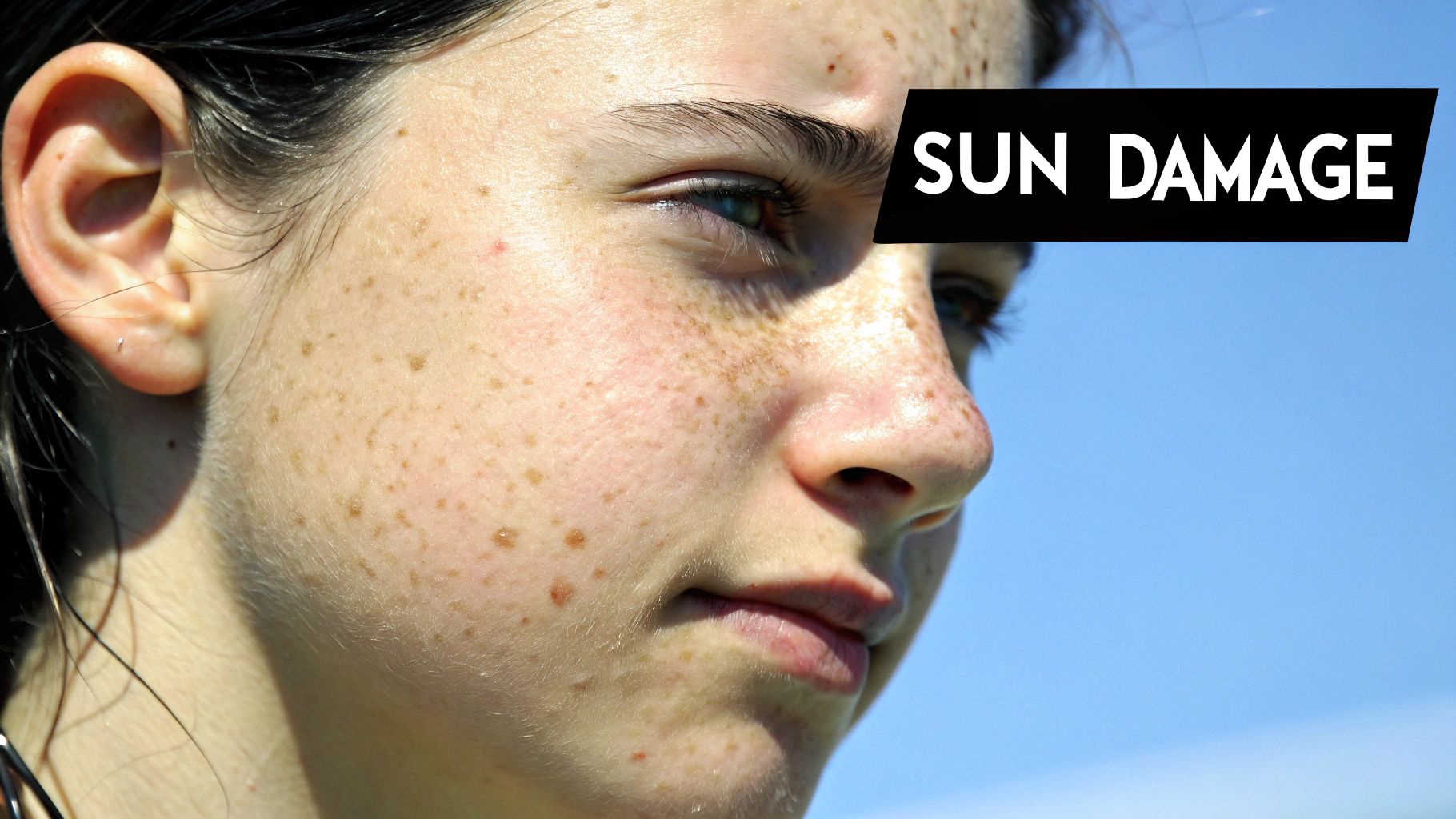
During the treatment, a specific chemical solution is applied to the skin. This solution gets to work dissolving the “glue” that holds all those dead and damaged skin cells together at the surface. By breaking down this outer layer, the peel kickstarts a controlled exfoliation, signaling your body’s natural healing response to jump into action.
The Science of Skin Renewal
This controlled “injury” is actually the secret to the skin’s rejuvenation. As the dull, sun-beaten skin starts to flake away in the days after your treatment, your body is busy creating fresh, new skin cells. Even better, it ramps up the production of two proteins that are absolutely crucial for keeping skin youthful.
- Collagen: This is the scaffolding of your skin, giving it firmness and strength. Sun damage is notorious for breaking down collagen, which is what leads to fine lines and sagging.
- Elastin: This protein is all about bounce and elasticity, allowing your skin to snap back. UV exposure weakens these elastin fibers, causing a loss of tone.
By prompting your skin to build new collagen and elastin, a chemical peel does more than just slough off the visible damage. It helps rebuild a stronger, more resilient foundation from the inside out.
A chemical peel is more than a surface-level fix. It’s a regenerative process that encourages your skin to repair itself, leading to a smoother texture, more even tone, and a noticeable reduction in the visible signs of photoaging.
What Kind of Sun Damage Can Peels Correct?
One of the best things about chemical peels is how versatile they are. They can be tailored to address a whole spectrum of issues caused by UV radiation, so it’s never a one-size-fits-all approach.
For example, someone dealing with minor discoloration and a slightly rough texture might see incredible results from a series of light peels. For more stubborn pigmentation and deeper lines, a medium-depth peel can offer a more dramatic improvement. To get a better feel for the whole experience, you can learn more about the complete chemical peel process and what to expect.
Here’s a quick rundown of what peels are great at targeting:
- Hyperpigmentation: This covers everything from sun spots and age spots (solar lentigines) to general blotchiness.
- Uneven Skin Tone: Peels are fantastic for creating a more uniform, glowing complexion.
- Fine Lines and Wrinkles: They are especially effective on those little lines that pop up around the eyes and mouth from years in the sun.
- Rough Skin Texture: The treatment smooths out skin that has started to feel leathery or coarse.
- Actinic Keratosis: Peels can effectively treat these precancerous, scaly patches caused by sun exposure.
While chemical peels are a powerful option, they’re just one piece of the puzzle. You can explore the 8 best skin treatments for sun damage to see what other avenues are available. Having a solid grasp of how peels work will help you make the best choice for your skin.
Choosing the Right Peel for Your Sun Damage
Trying to pick the right chemical peel for sun damage can feel overwhelming. It’s a lot like being handed a toolbox for a repair job when you’re not sure what each tool does. You wouldn’t use a tiny screwdriver for a major structural issue, and the same logic applies here. The type of peel you choose has to match the level of sun damage you’re looking to correct.
Each peel works at a different depth, offering a unique trade-off between intensity, downtime, and the final results. They aren’t a one-size-fits-all solution. We generally group them into three main levels—light, medium, and deep—based on how far they penetrate the skin. This depth directly impacts the kind of sun damage they can effectively treat, from faint spots to more set-in wrinkles.
Light Peels for Superficial Concerns
Think of a light peel, often called a “superficial peel,” as a quick refresh for your skin’s surface. It’s like giving a slightly scuffed wooden table a good polish to bring back its immediate shine and smoothness. These peels work exclusively on the epidermis, the outermost layer of your skin, making them a fantastic choice for mild sun damage.
They are usually formulated with gentler acids you might already be familiar with:
- Alpha-Hydroxy Acids (AHAs), like glycolic or lactic acid.
- Beta-Hydroxy Acids (BHAs), most commonly salicylic acid.
- Jessner’s solution, a well-known mix of salicylic acid, lactic acid, and resorcinol.
Because they’re so gentle, light peels are perfect for tackling things like minor hyperpigmentation, a dull complexion, and a slightly rough texture. A series of these peels can steadily improve your skin’s clarity and tone with almost no downtime. You might see a bit of redness, but you can usually get right back to your day.
Medium Peels for Moderate Sun Damage
When sun damage has settled in a bit deeper, a medium-depth peel is usually the best approach. Let’s go back to that wooden table. Imagine it now has some light scratches and water stains. A simple polish won’t cut it anymore; you need to sand down a thin layer to get to the fresh, unblemished wood underneath. That’s exactly how a medium peel works, reaching deeper to correct more stubborn issues.
These peels penetrate through the epidermis and into the upper part of the dermis. The workhorse here is typically Trichloroacetic Acid (TCA), which is incredibly effective for treating:
- Noticeable sun spots and age spots.
- More pronounced fine lines and wrinkles.
- Uneven skin tone and moderate hyperpigmentation.
- That rough, leathery texture from years of sun exposure.
The results you get from a medium peel are far more dramatic than what a light peel can offer. The trade-off is a longer recovery, usually about five to seven days, where your skin will actively peel and flake. This downtime is a crucial part of the process as your body generates a healthier, smoother, and more evenly toned surface.
The infographic below gives a great visual of how peel depth and recovery time are related.
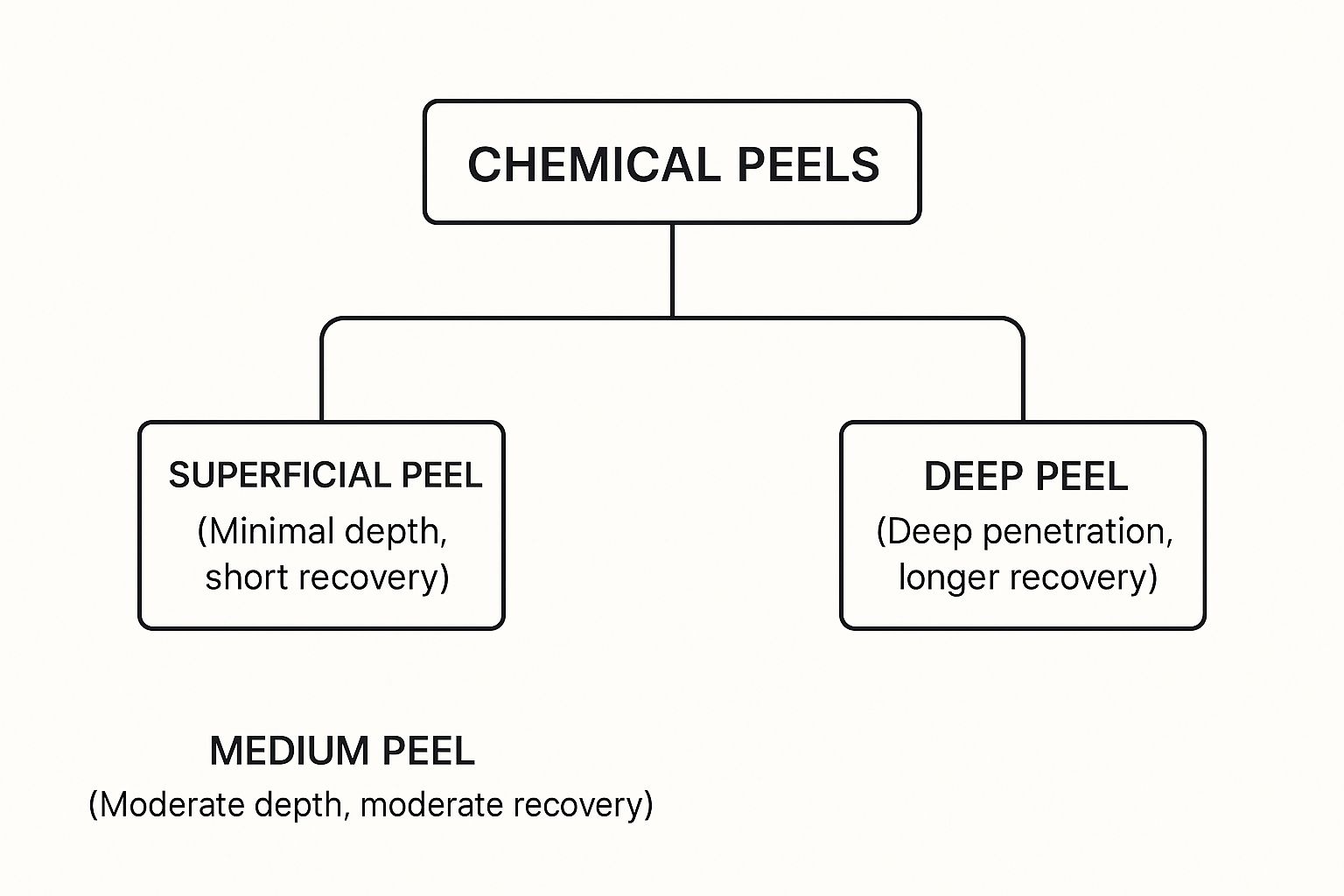
As you can see, deeper peels deliver more significant change but require a real commitment to recovery.
Deep Peels for Severe Photoaging
A deep peel is the most intensive treatment available and is strictly for severe, long-term sun damage. Finishing our analogy, this is like completely refinishing an old piece of furniture with deep gouges and years of neglect. It’s a powerful, one-and-done procedure that offers incredible results but requires serious downtime and careful consideration.
Deep peels use a potent chemical called Phenol to reach the lower dermal layers of the skin. They are designed to address:
- Deep-set wrinkles and creases.
- Severe hyperpigmentation and blotchiness.
- Precancerous growths like actinic keratosis.
- Scars left behind by sun damage.
Recovery from a deep peel can take two weeks or more, and the post-procedure care is extensive. Because of their intensity, these peels are much less common and should only ever be performed by a highly qualified professional after a thorough evaluation. Even lighter peels require careful consideration for certain skin types, which you can learn more about in our guide to chemical peels for sensitive skin.
To help you visualize the differences, here is a quick comparison of the three peel types.
Comparison of Chemical Peels for Sun Damage
| Peel Type | Best For Treating | Common Chemical Agents | Typical Downtime | Expected Outcome |
|---|---|---|---|---|
| Light | Mild discoloration, dullness, fine lines, rough texture | AHAs (Glycolic, Lactic), BHAs (Salicylic), Jessner’s Solution | 0-2 days | Brighter, smoother skin tone; subtle improvement |
| Medium | Moderate sun spots, wrinkles, uneven skin tone, actinic keratosis | Trichloroacetic Acid (TCA) | 5-7 days | Significant reduction in pigmentation and wrinkles; smoother texture |
| Deep | Severe wrinkles, deep scars, precancerous growths, severe photoaging | Phenol | 14+ days | Dramatic, long-lasting improvement in skin texture and tone |
This table lays out the fundamental trade-offs. The right choice depends entirely on your skin’s condition and your goals.
The global popularity of chemical peels speaks volumes about how well they work. The market, currently valued at USD 2.09 billion, is expected to hit USD 2.8 billion by 2030. Light peels make up the largest piece of that pie, mostly because their excellent safety profile and minimal downtime make them a go-to for the mild-to-moderate sun damage so many of us have. You can discover more about the growing demand for chemical peels and see what’s driving this trend.
What to Expect: Your Chemical Peel Journey from Start to Finish
Thinking about a chemical peel for sun damage can feel a little intimidating, but knowing what’s involved from start to finish really helps. Let’s walk through the entire experience, from the first conversation to the final, glowing reveal. This isn’t just a one-day treatment; it’s a structured process designed to get you the best, safest results possible.

The journey actually begins before any peel solution touches your skin. It all starts with a detailed consultation. This is your chance to sit down with a professional, talk about your skin goals, and have them properly assess your sun damage. We’ll also go over your medical history to make sure a peel is the right—and safest—choice for you.
What Happens During the Peel Itself?
When you come in for your appointment, the actual procedure is pretty quick and efficient. Your aesthetician will be with you every step of the way, making sure you’re comfortable.
Here’s a breakdown of the key stages:
- A Deep Clean: First, your skin is thoroughly cleansed to get rid of any makeup, oil, or dirt. This creates a perfectly prepped canvas, ensuring the peel solution can do its job evenly.
- Protecting Delicate Areas: We’ll apply a protective balm to shield sensitive spots like the corners of your eyes, nose, and mouth.
- Applying the Solution: Using a soft brush or applicator, the chemical solution is carefully painted onto your skin. Your aesthetician works with precision to get even coverage over the entire treatment area.
- The Tingling Sensation: As the peel gets to work, you’ll probably feel some tingling, stinging, or a bit of warmth. Don’t worry, this is totally normal! It’s just a sign that the active ingredients are exfoliating your skin. The solution only stays on for a few minutes, depending on the peel’s strength.
- Neutralizing and Soothing: Once the time is up, the peel is either neutralized with a special solution or simply washed away. We’ll finish with a calming moisturizer and, most importantly, a high-SPF sunscreen to protect your fresh, sensitive skin.
The Post-Peel Recovery Timeline
After the treatment, the real magic starts to happen. Your skin will go through a healing process, and understanding the day-by-day timeline will help you know exactly what to expect.
The post-peel period isn’t about hiding away; it’s an active healing phase. What you do during these days directly impacts the quality of your results, making aftercare just as important as the procedure itself.
Here’s a typical timeline for what you can expect after a light-to-medium peel:
- Day 1-2 (The Sunburn Phase): Your skin will probably look and feel like you got a moderate sunburn—a bit red, tight, and maybe slightly swollen. Gentle cleansing and keeping your skin moisturized are your top priorities.
- Day 3-5 (The Peeling Phase): This is when the exfoliation really kicks in. You’ll notice your skin starting to flake and peel away, revealing the smoother, newer skin underneath. It is absolutely critical not to pick or pull at the peeling skin. Let it shed naturally to avoid scarring or dark spots.
- Day 5-7 (The Final Reveal): By now, most of the heavy peeling should be over. Your new skin will look brighter, feel smoother, and have a more even tone. Any lingering pinkness will continue to fade over the next few days.
While chemical peels are fantastic for this kind of renewal, they’re not the only way to exfoliate. For those looking for a less chemical-based approach, it can be helpful to learn about mechanical exfoliation with microdermabrasion as a comparison.
By day seven, most people are back to their regular routines and can wear makeup again. Just remember, daily sunscreen is non-negotiable from here on out to protect your beautiful results and prevent new damage.
How to Prepare for Your Peel and Protect Your Results
Getting incredible results from a chemical peel for sun damage isn’t just about what happens in the treatment room. It’s a partnership between you and your provider. Think of it this way: the peel itself is just one part of the process. How you prep your skin beforehand and nurture it afterward is just as crucial to the final outcome.
Proper prep work ensures the peel can do its job safely and evenly, while solid aftercare is all about protecting that investment and helping your skin heal beautifully. Skipping these steps can seriously short-change your results or even lead to complications. Let’s walk through exactly what you need to do before and after your appointment to ensure your skin renewal is a massive success.
Your Pre-Peel Preparation Checklist
In the weeks leading up to your peel, you’ll need to make a few tweaks to your daily routine. The main goal here is to get your skin into a calm, healthy state so it’s perfectly primed for the controlled exfoliation to come.
Here’s your game plan:
- Hit Pause on Actives: About one week before your appointment, stop using any products with strong active ingredients. This means putting away your retinoids (like retinol or tretinoin), AHAs, BHAs, and any physical face scrubs. They can make your skin too sensitive for a professional treatment.
- Be a Sunscreen Devotee: This is an absolute must. For at least two weeks before your peel, you need to be militant about sun protection. Tanned or, even worse, sunburned skin simply cannot be treated safely. Wear a wide-brimmed hat, find shade whenever possible, and be diligent with your daily sunscreen.
- Schedule Hair Removal Carefully: Hold off on waxing, threading, or using any depilatory creams on the area being treated for at least a week prior. These hair removal methods can create tiny breaks in the skin, leaving it vulnerable to irritation from the peel solution.
- Hydrate, Hydrate, Hydrate: Drink plenty of water and keep your skin consistently moisturized with a simple, gentle cream in the days before your peel. Well-hydrated skin just responds better to treatment and heals much more efficiently.
Protecting Your Results: The Post-Peel Aftercare Routine
Once the peel is finished, your skin enters a delicate, regenerative phase. It’s essentially brand new skin, which means it’s extra sensitive and highly susceptible to the elements. Your post-peel care is all about protecting this fresh canvas and giving it the support it needs to recover.
“Listen and carefully follow your dermatologist’s instructions for post-procedure skincare… It’s important to take special care to keep skin safe from sun damage as it will be more sensitive immediately following your procedure.”
Follow these steps to lock in your results and keep your skin happy:
- Cleanse Gently: For the first few days, wash your face only with a mild, soap-free cleanser and lukewarm water. Hot water and abrasive washcloths are off-limits, as they’ll just cause irritation. When you’re done, gently pat your skin dry with a clean, soft towel.
- Moisturize Generously: Your skin is going to feel tight and dry as it begins to shed. This is normal! Apply a rich, nourishing moisturizer or a recommended healing balm multiple times a day. This not only soothes discomfort but also creates a protective barrier that helps the healing process along.
- Hands Off! Don’t Pick or Pull: This is the golden rule of peel aftercare. As your skin starts to flake and peel, you will be tempted to pick at it. Don’t. Let the dead skin slough off naturally on its own timeline. Forcing it can lead to scarring and hyperpigmentation—the very things you were trying to fix.
- Make Sunscreen Your Best Friend: Your new skin is incredibly vulnerable to UV radiation. You have to apply a broad-spectrum sunscreen with an SPF of 30 or higher every single morning, without fail, even if you’re just staying inside. If you’re outdoors, reapply it every two hours to prevent new sun damage and protect your gorgeous results.
Are You a Good Candidate for a Chemical Peel?
While chemical peels for sun damage are a fantastic tool in our skincare arsenal, they aren’t a one-size-fits-all fix. Figuring out if a peel is right for you means taking an honest look at your skin tone, the specific concerns you want to target, and your skin’s overall health. Knowing who gets the best results—and who needs to be more cautious—is the first, most important step toward a safe and successful treatment.
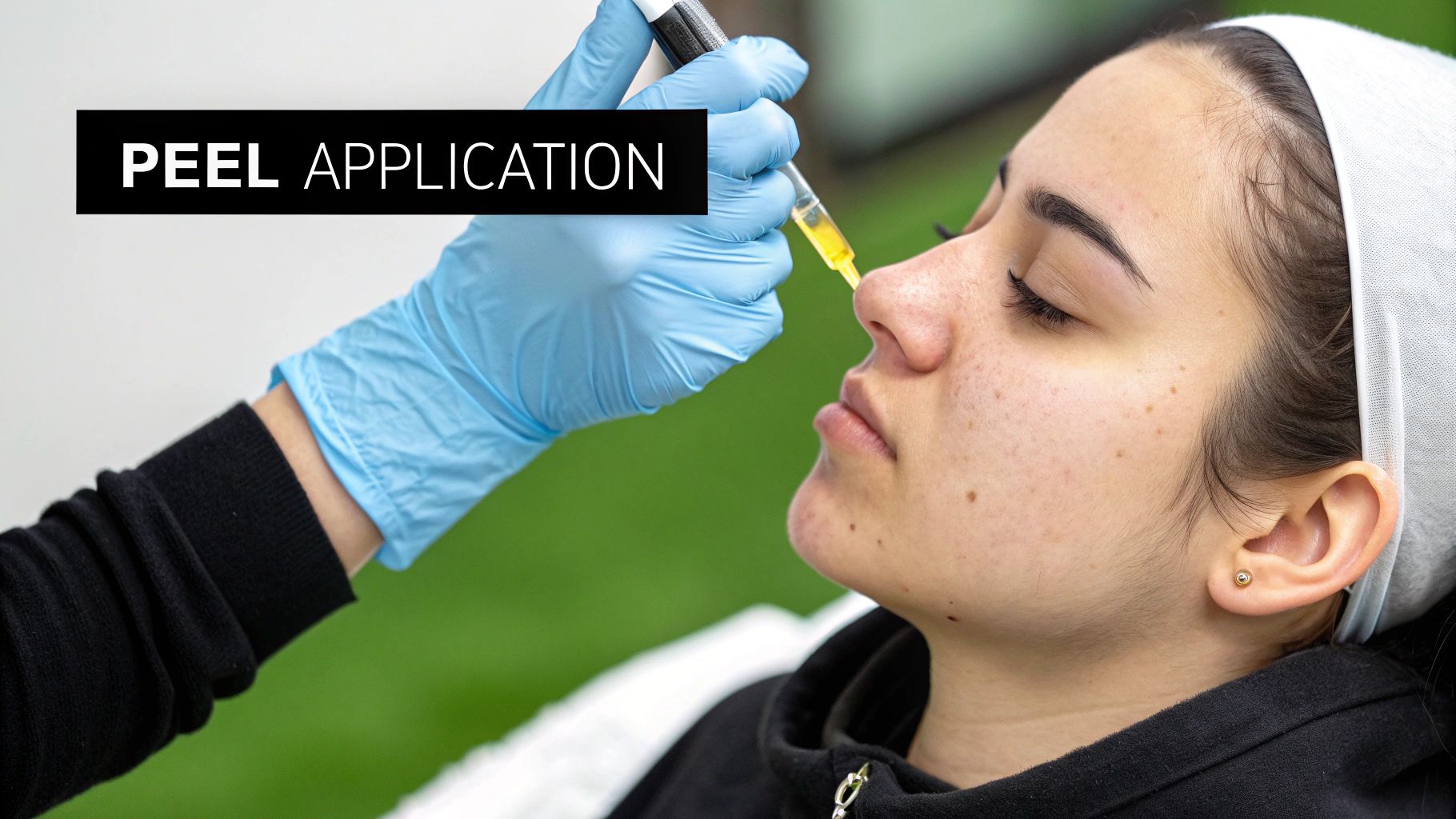
So, who is the ideal candidate? Generally, it’s someone with fair to medium skin, what we often classify as Fitzpatrick scale types I, II, or III. These skin tones simply have a lower risk of developing post-inflammatory hyperpigmentation, which is when the skin darkens as a reaction to the treatment. If you’re seeing the direct effects of too much sun, you’re likely a prime candidate.
You’ll see incredible benefits from a chemical peel if you’re struggling with:
- Sun spots (solar lentigines) that give your skin a blotchy look.
- An uneven skin texture that feels rough or almost leathery to the touch.
- Those pesky fine lines and wrinkles, especially the ones creeping in around the eyes and mouth.
- A generally dull complexion that’s lost its glow.
Factors That Require Extra Caution
Even though peels are very safe for most people, certain things can dial up the risk of complications. That’s why being completely open with your aesthetician about your skin’s history and your health is non-negotiable. A professional consultation is the only way to be sure a peel is the right move for your unique skin.
For example, people with very dark skin tones need to approach peels carefully. It’s not that they can’t be done, but there’s a higher chance of pigmentation issues popping up afterward. This happens because darker skin has more active melanocytes—the cells that produce pigment—and the peeling process can sometimes send them into overdrive.
Your safety is always the top priority. A thorough skin analysis by a professional isn’t just a suggestion; it’s a necessity. It ensures the peel we choose matches not just your goals, but also your skin’s specific needs and limitations.
You might also need to hold off on a peel if you have any of the following:
- Active skin infections, like cold sores or cystic acne.
- A personal history of keloids or other types of abnormal scarring.
- Recent use of certain powerful acne medications, such as isotretinoin.
- Extremely sensitive skin or conditions like rosacea or eczema in the area you want treated.
The Growing Demand for Safe Treatments
It’s no surprise that non-invasive procedures are booming in popularity—they work. The global chemical peel market was valued at USD 2.18 billion and is on track to hit USD 3.23 billion by 2032. This surge is fueled by people just like you, looking for reliable ways to reverse sun damage without the long recovery times. Learn more about the market surge for non-invasive treatments. By carefully evaluating who is a good candidate, professionals like myself can ensure these treatments continue to have an excellent safety record.
Common Questions About Peels for Sun Damage
It’s completely normal to have questions before trying a new skin treatment. When it comes to chemical peels for sun damage, a few key concerns usually pop up. Getting clear answers is the best way to feel confident and ready, so let’s walk through some of the most common ones.
Does a Chemical Peel for Sun Damage Hurt?
This is probably the number one question I get, and the answer really comes down to the peel’s intensity. For a light, superficial peel, most people just feel a slight tingle or a bit of a sting while the solution is on the skin. It’s temporary and very manageable.
Now, medium-depth peels are a step up. You can expect a more noticeable burning or warming sensation for a few minutes. Don’t worry, though—your esthetician will be right there with a cooling fan to keep you comfortable. Afterward, your skin will feel tight and a little sensitive, a lot like a sunburn. That’s a good sign; it means the peel is doing its job.
How Many Peels Are Needed to Correct Sun Damage?
There’s no magic number here. It really depends on the extent of your sun damage and the type of peel we’re using.
- Light Peels: Think of these as a series. To tackle mild discoloration and texture issues, you’ll likely need a course of 3 to 6 treatments, spaced a few weeks apart. The results build on each other.
- Medium Peels: These are more powerful. A single treatment can make a huge difference in clearing up sun spots and softening fine lines. Some clients come back for a follow-up peel about a year later to maintain or enhance their results.
Ultimately, your skincare professional will work with you to create a plan that fits your skin’s specific needs and what you want to achieve.
What Are the Potential Risks and Side Effects?
Most of what people call “side effects” are actually just the normal, expected parts of the healing process. Things like redness, dryness, a bit of swelling, and, of course, the peeling itself are all signs that your skin is renewing from within.
The most serious risks are incredibly rare, and they’re almost always avoided by choosing a qualified, experienced professional. Your job is to follow their aftercare instructions to the letter—that’s your best defense against any complications.
With the stronger peels, there is a very small risk of things like infection, scarring, or changes in your skin tone (hyperpigmentation or hypopigmentation). This is why following your aftercare routine, especially being militant about sun protection, is so crucial. It’s what ensures you get a safe, beautiful result.
The demand for these treatments speaks volumes about their effectiveness. In fact, chemical peels make up about 12% of all cosmetic procedures in the United States. Driven by the need to address UV-related skin damage, the market is projected to hit USD 2.5 billion by 2033. You can read the full analysis on the chemical peel market to get a deeper look at its growth.
At Meljestic Spa, our goal is to empower you with knowledge. If you’re ready to see how a professional chemical peel can help turn back the clock on sun damage and bring back your skin’s glow, we’d love to talk. Schedule a complimentary consultation with our expert team, and let’s build a personalized plan for you.