
Tired of shaving every other day, or wondering if laser is actually worth it? There are more options than most people realize, and the right one depends on your skin tone, hair type, pain tolerance, and how permanent you want the results to be. Here are 10 hair removal methods compared honestly, starting with the one we recommend most.
1. Meljestic Spa Laser Hair Removal (Our Top Pick) , Long-Lasting Results from Licensed Providers
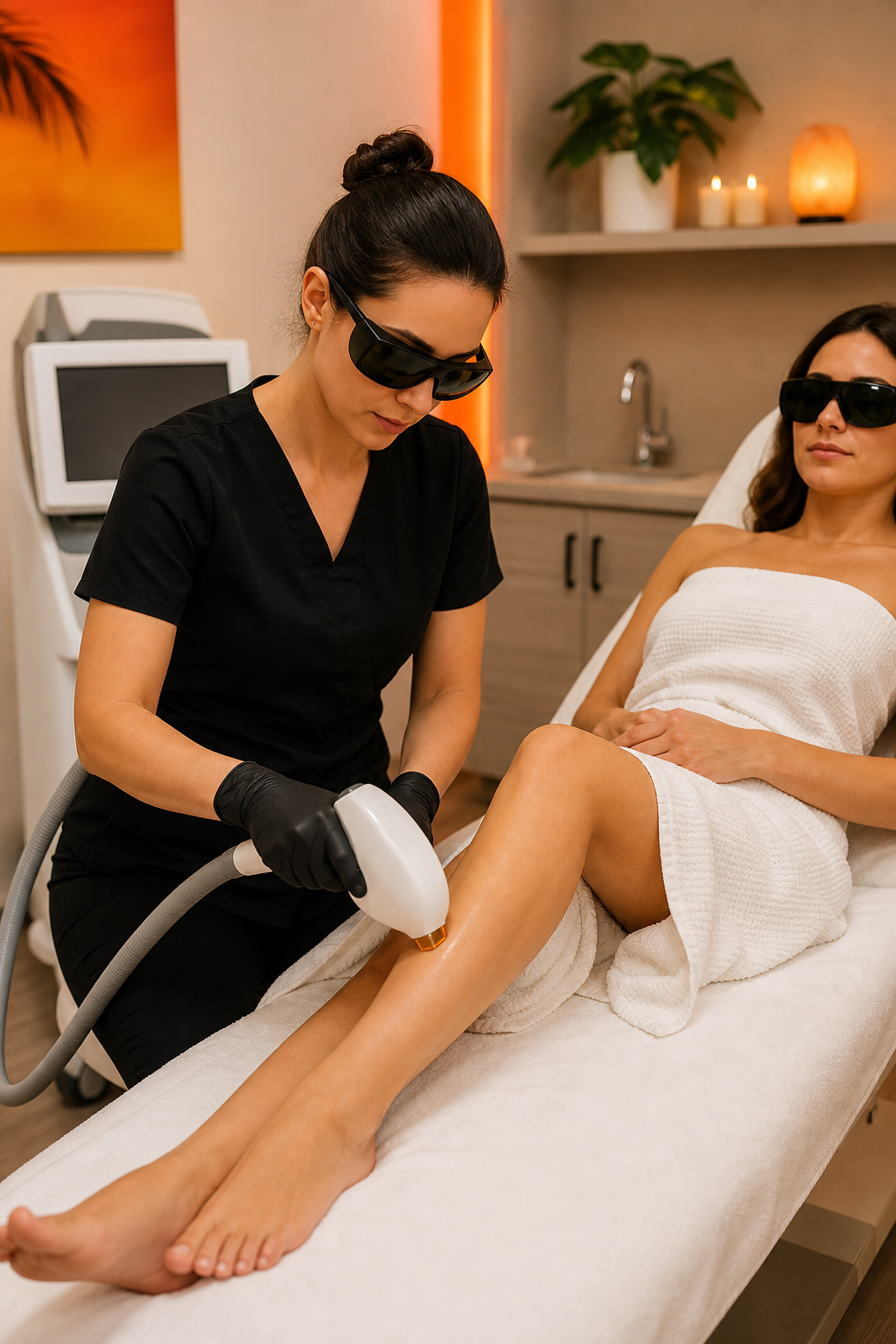
Meljestic Spa is a medical aesthetics clinic in Cooper City serving Pembroke Pines, Davie, Weston, and the broader Broward County area. Their laser hair removal is performed by trained, licensed providers, which matters more than most people expect.
Here’s why the provider quality changes everything. The research on laser technology shows a real tension between wavelength, skin type, and results. Diode lasers at 810 nm work well for Fitzpatrick I-IV skin tones but carry a pain rating around 6/10. The Nd:YAG at 1064 nm is the go-to for darker skin tones but is less effective on fine or light hair. Picking the wrong device for your skin is how you get burns or poor results. A trained provider at Meljestic Spa assesses your Fitzpatrick type and hair color before any treatment starts.
Most clients need 6 to 8 sessions spaced roughly 4 to 6 weeks apart. After a full treatment course, the American Academy of Dermatology reports that patients typically see 80 to 90 percent hair reduction. Two weeks after each session, treated hairs start shedding on their own. Redness and slight warmth for a day or so after treatment is normal.
The one honest limitation: laser works best when there’s clear contrast between hair color and skin tone. Very light blonde, gray, or white hair has less melanin for the laser to target. If that describes you, electrolysis (option 3 below) is a better fit.
For South Florida clients who spend time outdoors year-round, laser also reduces ingrown hairs, which is a significant bonus for anyone dealing with post-shave bumps on the bikini line or legs. Book a consultation at Meljestic Spa to find out which laser is right for your skin.
2. At-Home Laser and IPL Devices , Convenient but Limited Power

At-home IPL (intense pulsed light) devices are the most popular alternative to in-office laser, and some of them genuinely work. The catch, as skin care professionals generally note, is that the energy level in home devices is much lower than what you get in a clinical setting.
IPL operates at 690 nm. According to comparative data on laser technologies, it has the lowest documented pain rating of any hair removal device at 1/10, which makes it genuinely comfortable. But it’s limited to Fitzpatrick I-IV skin types. If you have a medium to deep complexion, most consumer IPL devices aren’t safe to use, and the instructions will tell you so.
Results from consistent home use are real. Some devices show visible thinning in as few as 3 weeks, with more significant reduction around 6 to 8 weeks in. The key word is consistent. Users who skip sessions or stop after a few treatments usually see hair return.
The shorter wavelength of IPL actually feels gentler than longer-wave diode lasers, which surprises a lot of people. It challenges the assumption that more powerful always means less comfortable. Still, treatment-speed data is missing from almost all consumer device specs, so side-by-side comparison of how quickly each device covers a given area is nearly impossible to verify.
Good for: lighter-skinned clients who want gradual, low-maintenance reduction at home. Not good for: darker skin tones, very fine or light hair, or anyone expecting clinical-strength results.
3. Electrolysis , The Only FDA-Recognized Permanent Hair Removal
Electrolysis is the only method the FDA recognizes as permanently removing hair. A fine probe is inserted into each individual follicle, and a small electrical current destroys it at the root. No melanin required, which means it works on any hair color and any skin tone, including the gray, blonde, and white hair that laser can’t reliably target.
The downside is time. Because each follicle is treated one at a time, large areas like the back or legs take many sessions over months. For small areas, like the upper lip or chin, electrolysis is very usable. It’s also the gold standard for people dealing with hormonally driven facial hair, as it addresses the follicle directly rather than just reducing it.
Expect some discomfort, a brief stinging sensation with each pulse. Most people tolerate it well on small areas but find it tedious on larger ones. If your goal is complete, permanent removal and you have light or fine hair that laser won’t touch, electrolysis is worth the investment in time.
4. Waxing , Fast Full-Body Coverage with Weeks of Smoothness
Waxing pulls hair from the root using warm wax applied in the direction of hair growth, then removed against it. Results typically last 3 to 6 weeks depending on your growth cycle. It’s one of the faster ways to clear large areas like the legs or back in a single session, which is why it stays popular despite not being permanent.
There are real side effects to know about. Repeated waxing of the same area can cause post-inflammatory hyperpigmentation, especially in darker skin tones, showing up as darker patches in the armpits or bikini line. Dermatologists also note that waxing over tretinoin-treated skin can literally lift the top layer of skin off, leaving what looks like a burn. If you use any retinoid, stop it at least 3 days before a wax appointment.
One nuance worth knowing: waxing the same hairs over and over for years can gradually reduce regrowth. This happens because repeated trauma to the follicle weakens it over time, similar to traction alopecia on the scalp. It’s not the same as permanent removal, but it’s a real effect that builds slowly.
Waxing works on all skin tones and most hair types, which gives it an advantage over laser for some clients. Coarse hair responds especially well. The main caveat for South Florida clients: freshly waxed skin is more sensitive to sun, so apply SPF right after and keep the area shaded for at least 24 hours.
5. Threading , Precise Shaping for Facial Hair and Brows
Threading uses a thin cotton thread twisted and rolled across the skin to pull multiple hairs out from the follicle at once. It’s fast for experienced practitioners. A full brow shape takes just a few minutes, and it’s far more precise than waxing for detailed facial work.
It’s one of the better options for facial hair removal, particularly for brows, upper lip, and chin. As dermatologist Dr. Shah noted in a widely shared breakdown of hair removal techniques, threading can pull multiple hairs at the same time in a much more controlled way than tweezing alone, making it more efficient for facial shaping without the skin-lifting risk that waxing carries.
There’s no heat and no chemicals involved, which makes it a good choice for anyone with sensitive skin, rosacea, or active acne in the treatment area. Results last roughly 2 to 4 weeks.
Threading is limited to the face and smaller areas. It’s not usable for the legs, back, or arms, so think of it as a precision tool rather than a full-body solution. And like all non-permanent methods, it requires regular appointments to maintain results.
6. Depilatory Creams , Quick and Painless Surface Removal
Depilatory creams work by dissolving the sulfur bonds in keratin, the protein that gives hair its structure. The active ingredient is typically a salt of thioglycolic acid, which keeps the formula at a high pH so it can break down hair at or just below the skin surface. You apply it, wait a few minutes, then wipe or rinse the dissolved hair away.
Research has shown that depilatory creams can cause a transient minor inflammatory response in skin tissue, more so than shaving. The effect is temporary, but it’s a reason to patch-test before applying to large areas, especially on sensitive skin.
The usable upsides are real. Because the cream dissolves slightly below the surface rather than cutting at the skin level, regrowth feels smoother than shaving and takes a bit longer to become visible. There’s no risk of nicks or cuts. And the tapered hair tip that grows back doesn’t have the sharp, blunt edge that a razor leaves.
The limitations are clear: they’re not effective on thick or coarse hair, which tends to grow back patchily. The fragrance added to mask the chemical smell is a common allergen. Anyone with eczema, rosacea, or a compromised skin barrier should skip these. And results last days, not weeks.
7. Epilation , Pulling Multiple Hairs at Once for Longer Smoothness
An epilator is a handheld device with rotating tweezers that grab and pull multiple hairs from the root simultaneously. It’s like waxing, but you do it at home with a machine, and you can use it anywhere on the body. Results typically last 3 to 4 weeks.
The first few uses are genuinely uncomfortable for most people. Hair that grows back after epilation comes in finer than before because the follicle is being repeatedly stressed. Regular users often report that after a few months, both the pain and the regrowth density decrease noticeably.
The main advantage over waxing is cost over time. The device is a one-time purchase and you can use it at home on your own schedule. There’s no heat, no chemicals, and no appointment needed. The disadvantage is that it requires a minimum hair length to grip, so you can’t epilate the day after shaving.
Epilators are a solid middle ground for anyone who wants longer-lasting results than shaving but isn’t ready for laser or electrolysis. Not recommended for very sensitive skin or areas with a lot of ingrown hair history, since pulling at the root can worsen that problem.
8. Shaving , The Most Accessible Option for Daily Maintenance
Shaving cuts hair at the skin surface. It doesn’t affect growth rate or thickness, despite decades of the opposite claim. Clinical studies debunked that myth back in 1928. What you see after shaving is the blunt base of the hair, which looks coarser and can feel stubbly, but the follicle itself is untouched.
Shaving in the direction of hair growth, using a moisturizing shaving cream, and replacing blades every 5 to 7 uses significantly reduces razor bumps and skin irritation. One to two blades is actually a safer choice than multi-blade razors for sensitive skin, which runs counter to what most razor marketing suggests.
Shaving is the most accessible option, zero cost beyond a razor, no wait time, no appointment. The trade-off is frequency. Most people need to shave every 1 to 3 days to stay smooth. For anyone in Broward County who’s outdoors year-round, that daily upkeep adds up fast.
It’s best used as a maintenance method between professional treatments rather than a permanent strategy.
9. Sugaring , A Natural Alternative to Waxing
Sugaring uses a paste made from sugar, lemon, and water. The paste is applied against hair growth and removed in the direction of growth, which is the reverse of traditional waxing. That difference in technique is why sugaring tends to cause fewer ingrown hairs. The hair is pulled out following its natural growth direction, so it breaks less and exits the follicle more cleanly.
Because the paste is water-soluble, cleanup is easier than wax and there’s less residue on the skin. The formula is also simpler, no resins or synthetic fragrances, which makes it a better option for people who’ve had allergic reactions to traditional wax formulas. Results last about the same as waxing, 3 to 5 weeks.
The limitation is availability. Skilled sugaring practitioners are less common than waxing specialists, and the technique takes real training to get right. DIY sugaring at home is possible but difficult to control. Temperature, consistency, and application angle all affect the result.
Sugaring works on most skin tones and hair types. Like waxing, it’s not permanent, but repeated sessions over time do gradually reduce regrowth density.
10. Prescription and Medical Treatments , Options for Hormonal Hair Growth
Some hair growth isn’t purely cosmetic. Conditions like PCOS (polycystic ovary syndrome) and hirsutism cause hair to grow in areas associated with male hormone activity, such as the chin, jaw, and chest in people who typically wouldn’t have hair there. Shaving or waxing manages the surface, but it doesn’t address the hormonal cause.
In those cases, a dermatologist or physician may prescribe spironolactone, a medication that blocks the effect of testosterone on hair follicles. This can slow down hormonal hair growth, particularly on the face. It’s often combined with laser hair removal for the most complete result. The combination addresses both the active growth signal and the follicle producing the hair.
There are also topical prescription creams that slow facial hair regrowth by inhibiting an enzyme involved in hair growth. They don’t remove hair, but used alongside laser or threading, they extend the time between treatments.
If you suspect hormonal hair growth is a factor for you, the right first step is a medical consultation, not a salon appointment. A provider can run bloodwork, confirm a diagnosis, and build a treatment plan that addresses the root cause. Meljestic Spa’s licensed providers can help guide you toward the right combination of laser treatment and medical referral when appropriate.
How to Choose the Right Hair Removal Method for Your Skin and Goals
The right method depends on four things: your skin tone, your hair color, how permanent you want the result, and your budget over time. This table maps those variables to the best-fit option.
If you’re in South Florida and spending time in the sun year-round, laser hair removal is the most usable long-term investment. It reduces regrowth, eliminates ingrown hairs, and requires minimal maintenance once you complete the initial sessions. Brides preparing for their wedding day often schedule a series of sessions starting 6 months out, which leaves plenty of time to complete the full course before photos.
For anyone with hormonal hair growth or a skin condition that affects candidacy, start with a consultation before booking any treatment. The best choice is always the one matched to your specific skin and goals, not just the most popular option.
Frequently Asked Questions
Does shaving make hair grow back thicker?
No. Shaving does not make hair grow back thicker, darker, or faster. This myth was debunked by clinical research nearly a century ago. What you’re seeing after shaving is the blunt, coarser base of the hair shaft, not a change in the follicle itself. The follicle is never touched by a razor. If you want to actually slow regrowth, methods like waxing, epilation, or laser hair removal affect the root directly.
How many laser hair removal sessions do I need?
Most people need 6 to 8 sessions spaced 4 to 6 weeks apart for optimal results. Hair grows in cycles, and the laser only targets follicles in the active growth phase during each session. After a full course, most clients see 80 to 90 percent reduction. Some areas affected by hormonal changes may need occasional maintenance sessions afterward. A licensed provider can give you a more specific estimate based on your hair type and treatment area.
Which hair removal method is best for dark skin tones?
Electrolysis is safe and effective on all skin tones, including darker complexions. For laser, the Nd:YAG 1064 nm wavelength is the clinical standard for darker skin because it bypasses surface melanin and targets the follicle more safely. IPL devices are generally not recommended for medium to deep skin tones. Waxing, sugaring, and threading work on all skin tones with no device calibration needed. A licensed provider should assess your Fitzpatrick type before any laser treatment.
Can I wax or thread between laser sessions?
No. Between laser sessions, you should not wax, tweeze, thread, or sugar the treated area. All of those methods remove the hair follicle, which is exactly what the laser needs to be present during the next treatment to work. Shaving between sessions is fine, and actually recommended, because it cuts the hair at the surface without disturbing the root. Depilatory creams are also acceptable between sessions.
Is laser hair removal painful?
Most clients describe it as a snapping sensation, similar to a light rubber band against the skin. The first session tends to feel the most intense since more active follicles are being targeted. With each subsequent session, fewer follicles remain and the sensation decreases. Cooling systems and topical numbing creams help with sensitive areas like the bikini line and underarms. Pain tolerance varies, but the majority of people find it manageable.
What should I do to prepare for laser hair removal?
Shave the treatment area about 2 days before your appointment, leaving a small amount of stubble for the laser to target. Avoid waxing or plucking for at least 4 weeks prior. Skip retinoids, AHAs, and BHAs on the area for several days before treatment. Most importantly, avoid sun exposure and tanning for at least 2 weeks before and after sessions. Tanned or sunburned skin increases the risk of pigmentation changes from laser energy.
Conclusion
For most people in South Florida, professional laser hair removal offers the best combination of long-term results, convenience, and skin safety when performed by a licensed provider. If you’re ready to stop shaving every few days or dealing with waxing appointments every month, Meljestic Spa in Cooper City is a strong starting point. Book a consultation to get your skin assessed and find out exactly which treatment plan fits your goals.


