
Before you can follow the right instructions for laser hair removal, it helps to know what’s actually happening beneath your skin. It’s not magic—it's science. The treatment uses a highly focused beam of light that zeroes in on the pigment in your hair. This light generates heat, which strategically damages the hair follicle to stop or slow down future growth.
Think of it as a long-term strategy for hair reduction, not an instant, one-and-done solution.
How Laser Hair Removal Actually Works
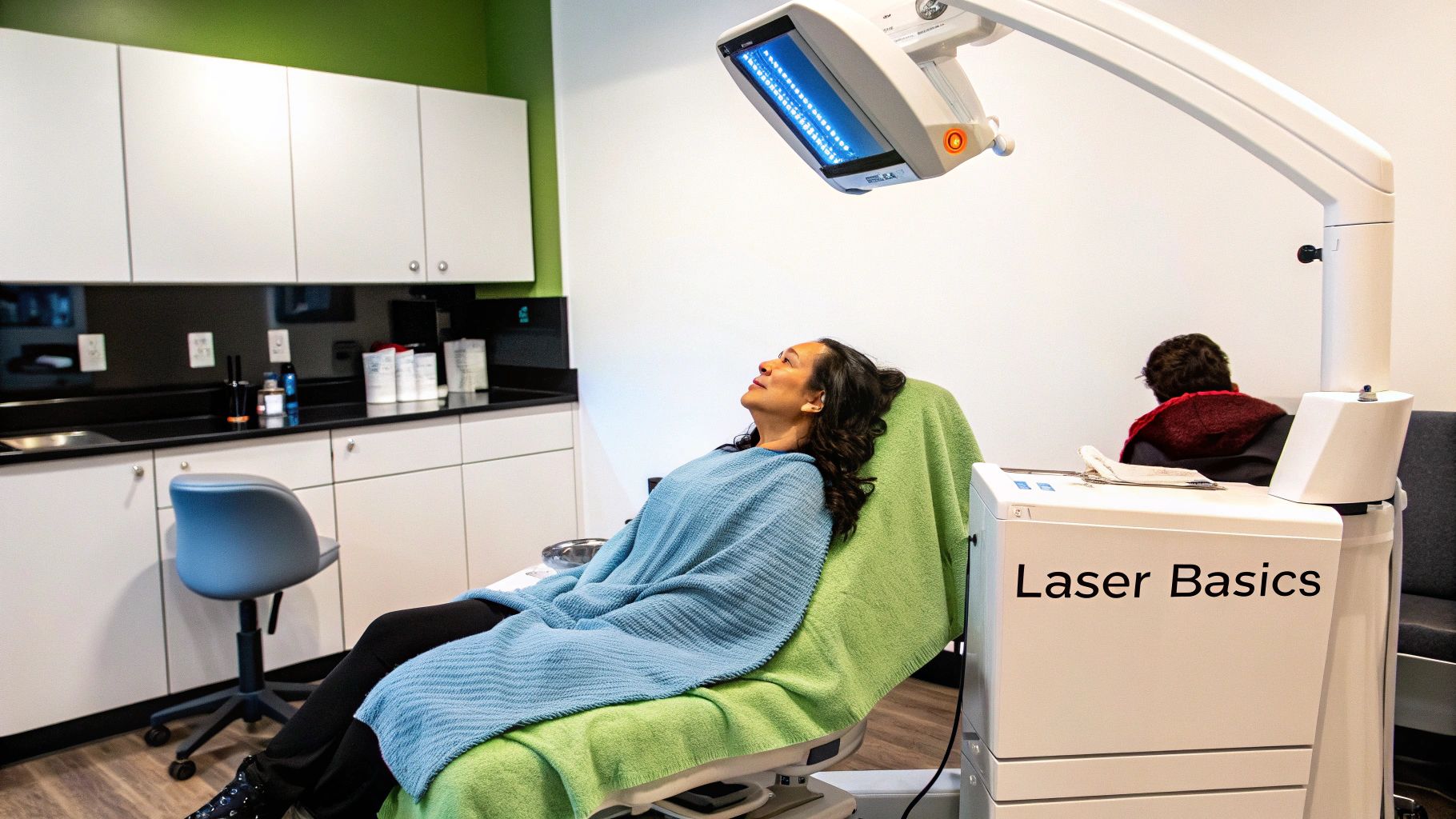
The scientific principle behind the treatment is called selective photothermolysis. It sounds complicated, but the concept is pretty straightforward: the laser is calibrated to a specific wavelength of light that melanin, the pigment in your hair, just loves to absorb.
When that concentrated light hits the hair, the melanin soaks up the energy and instantly converts it to heat. This heat travels right down the hair shaft into the follicle—that little sac under the skin where the hair is made. The burst of heat essentially disables the follicle, making it unable to produce new hair. If any hair does grow back, it's usually much finer and lighter.
Why You Need to Target the Growth Cycle
Have you ever wondered why you need multiple sessions? It all comes down to the hair growth cycle. Your hair goes through three phases, and the laser is only effective during one of them.
- Anagen (The Growth Phase): This is when the hair is actively growing and firmly connected to its follicle. It’s the perfect time for the laser to strike because it has a direct path to the follicle's root.
- Catagen (The Transitional Phase): Here, the hair separates from the follicle and stops growing.
- Telogen (The Resting Phase): The old hair sheds, and the follicle takes a break before starting a new cycle.
At any given time, only about 20% of your hair is in that prime anagen phase. That’s why we schedule sessions 4-6 weeks apart—to catch the next batch of follicles as they enter their growth stage. Sticking to this schedule is absolutely key to getting smooth, long-lasting results.
The Right Laser Makes All the Difference
Not all lasers are the same, and using the right one for your skin and hair color is critical for both safety and results. An experienced technician knows exactly which device to use. If you're looking for more local expertise, our guide on the best laser hair removal in Cooper City can help.
Here’s a quick rundown of the most common technologies we use:
- Alexandrite: This is the go-to for lighter skin tones (Fitzpatrick types I-III) with dark hair.
- Diode: A really versatile laser that works well on a wide range of skin types.
- Nd:YAG: This is the gold standard and safest option for darker skin tones (Fitzpatrick types IV-VI). It’s designed to bypass the melanin in your skin and target the follicle directly, minimizing any risk.
This focus on personalized, safe technology is why the treatment is so popular. The global laser hair removal market was valued at USD 1.33 billion in 2024 and is expected to hit USD 5.31 billion by 2032. People want effective treatments they can trust. When you understand the science, you can really appreciate why the prep and aftercare steps we recommend are so vital for your success.
Your Pre-Treatment Preparation Checklist
Getting fantastic results from your laser hair removal sessions starts long before you walk through our spa doors. How you prepare your skin is just as important as the treatment itself—it’s all about creating the perfect canvas for the laser to do its work safely and effectively.
The biggest rule of thumb? Stay out of the sun. You’ll need to avoid any direct sun exposure and skip the tanning beds for at least four to six weeks before your appointment. When your skin is tan, it has more melanin, which can essentially trick the laser. Instead of targeting the hair follicle, the laser's energy can be drawn to your skin, which significantly raises the risk of burns or pigmentation problems.
The Six-Week Rule for Hair Removal
Another crucial piece of the puzzle is leaving the hair root completely undisturbed. The laser needs a target, and that target is the pigment within the hair follicle. If the root isn't there, the treatment simply won't work.
This is why you have to put a complete stop to any hair removal methods that pull the hair out from the root for a solid six weeks leading up to your session. That means:
- No waxing
- No plucking or tweezing
- No threading
- No depilatory creams
Shaving is the only exception. In fact, it’s exactly what you should be doing.
Your 24-Hour Countdown
As your appointment gets closer, the prep work becomes a bit more immediate. About 24 hours before your session, it's time to shave the entire area you're having treated. This gets rid of the hair above the skin, allowing the laser to focus all its energy directly on the follicle beneath the surface. Shaving right before you come in can leave your skin a little too sensitive, so giving it that 24-hour buffer is ideal. For a deeper dive, our comprehensive pre-treatment guide has you covered.
On the day of, make sure the treatment area is completely clean and product-free. That means no lotions, creams, deodorants, or perfumes. These can form a barrier that might interfere with the laser or even cause an unexpected skin reaction.
Key Takeaway: Your results are directly tied to how well you follow these pre-treatment steps. Protecting your skin from the sun and keeping the hair follicle intact are the two most important things you can do for a safe and successful outcome.
To make it even simpler, here's a timeline you can follow to stay on track.
Laser Hair Removal Preparation Timeline
| Timeframe | Action Required | Reason |
|---|---|---|
| 6 Weeks Before | Stop waxing, plucking, and threading. Avoid sun exposure. | Preserves the hair follicle for the laser to target. |
| 4 Weeks Before | Consistently use a broad-spectrum SPF 30+ on the area. | Prevents tanning, which increases the risk of burns. |
| 1 Week Before | Stop using any exfoliating products (scrubs, AHAs/BHAs). | Prevents skin from becoming overly sensitive. |
| 24 Hours Before | Shave the treatment area completely. | Removes surface hair so the laser can target the root. |
| Day of Appointment | Arrive with clean, product-free skin. | Prevents interference from lotions, oils, or deodorants. |
Sticking to this schedule will help ensure everything goes smoothly from start to finish.
This visual guide breaks down the most immediate pre-treatment steps for you.
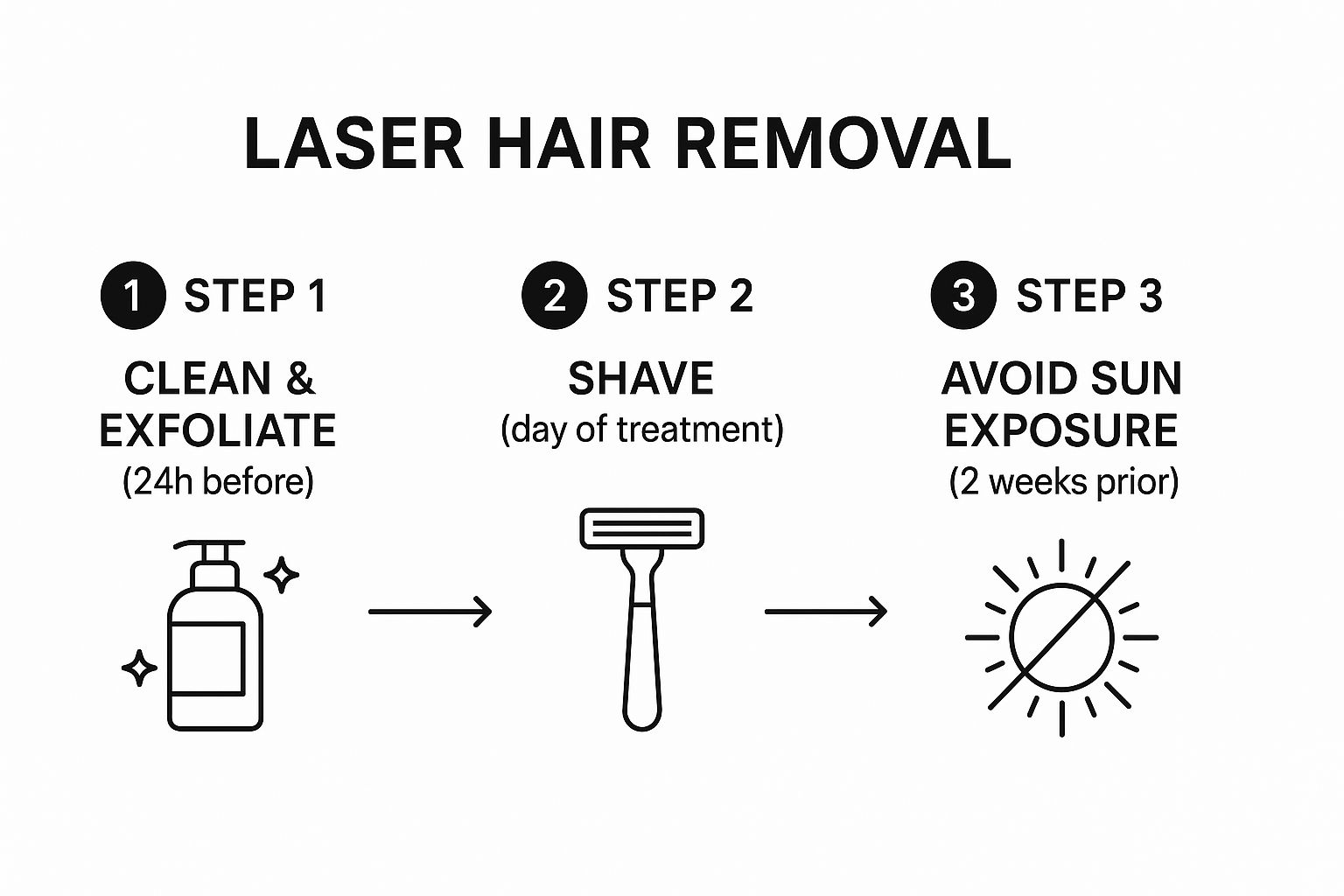
As you can see, the final prep is all about getting your skin ready for the laser. A clean, freshly shaven, and protected surface is truly the gold standard for laser hair removal. Following these steps isn't just a suggestion—it's the best way to get the smooth, lasting results you're looking for while keeping your skin safe. You can also explore industry reports on laser hair removal best practices on Fortune Business Insights for a broader understanding of treatment standards.
What Happens During a Treatment Session
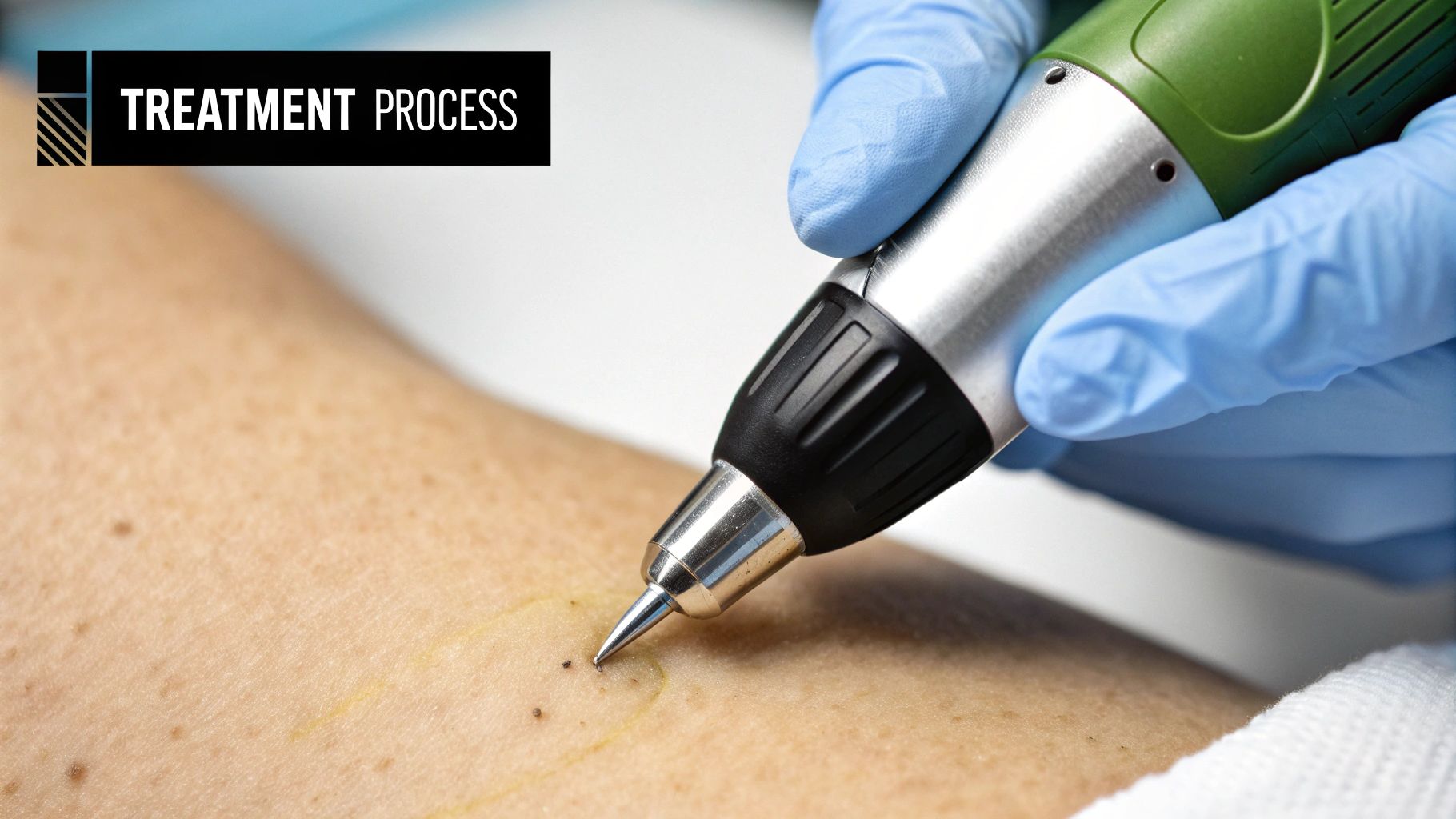
Walking into your first laser appointment can feel a little intimidating, but knowing what's coming takes all the mystery out of it. Let’s walk through a typical session together, from the moment you step into the room to the final, soothing touch.
Your appointment will always start with a quick check-in. Your technician will double-check that you followed all the pre-treatment care, ask about any recent sun exposure, and give you a moment to ask any last-minute questions. From there, they’ll cleanse the treatment area to get rid of any oils or lotion, making sure the laser has a clear shot at the hair follicles.
Getting Prepped for the Laser
With your skin clean and ready, you'll be handed a pair of specialized protective eyewear. This is a non-negotiable safety step. The laser emits an incredibly intense light, and these goggles protect your eyes completely. Your technician will be wearing a pair, too.
Next, you'll likely feel a cool, clear gel being applied to your skin. This gel actually serves two key purposes: it helps the laser's handpiece glide effortlessly over the surface, and it keeps your skin cool and comfortable during the treatment. While not all laser systems use it, many of the newer ones do to make the experience better all around.
But What Does It Feel Like? Most people describe the sensation as a tiny, warm snap—kind of like a small rubber band flicking against your skin. It's a very quick feeling that's over in an instant as the technician moves to the next spot.
The Treatment Process Itself
Once you're prepped, the actual treatment begins. The technician will place the laser's handpiece firmly against your skin and deliver a pulse of light. You’ll hear a quiet beep, feel that quick snap, and they'll immediately lift and move to the next section, working methodically to cover the entire area.
How long you're on the table really depends on the size of the area you're treating.
- Small Areas: The upper lip or underarms are incredibly fast, often taking just five to ten minutes.
- Medium Areas: A bikini line or your forearms might take closer to 20 minutes.
- Large Areas: A full back or both legs can take up to an hour to complete properly.
After the last pulse, the technician will wipe away any leftover gel and usually apply a calming aloe vera gel or a soothing anti-inflammatory cream. This helps take down any initial redness and feels amazing on the skin. This efficiency and long-term payoff are why it's one of the most popular aesthetic procedures in the United States, with over 271,000 treatments performed recently. You can dive deeper into the laser hair removal market trends on Market Data Forecast.
Before you leave, your tech will go over the aftercare instructions one more time and get your next appointment on the books, usually for four to six weeks out.
Essential Aftercare for a Smooth Recovery
The laser part is over, but your job isn't quite done. How you care for your skin in the hours and days after your appointment is just as important as the treatment itself. This is where you lock in those great results and make sure your skin bounces back beautifully.
Don't be alarmed if you see a bit of redness or some slight swelling around the hair follicles. That's actually a good thing! It’s a sign the laser hit its mark. To take the heat down, a simple cool compress or a layer of pure aloe vera gel works wonders for calming the skin.
Your First 48 Hours
The first two days are when your skin needs the most TLC. It's extra sensitive during this window, so the goal is to avoid anything that creates heat or friction.
Think of it as giving your skin a mini-vacation. For the next 48 hours, you'll want to steer clear of:
- Hot Showers & Baths: Keep the water lukewarm. Your skin will thank you.
- Saunas & Steam Rooms: The intense heat is the last thing your sensitive skin needs.
- Heavy Workouts: Skip any exercise that makes you sweat heavily, as this can irritate the open follicles.
- Pools & Hot Tubs: Chlorine and other chemicals can be incredibly harsh on freshly treated skin.
When you dry off, be gentle. Pat the skin with a soft towel instead of rubbing it. The right fabric can make a big difference, and if you're curious, you can find helpful info on the best towels for sensitive skin.
Expert Tip: For the first 24 hours, hold off on applying makeup, deodorant, or any lotions with strong fragrances to the treated areas. This gives the follicles time to settle down without irritation.
Managing the Shedding Phase
Over the next few weeks, you'll start to see what looks like stubble. Don't panic—this isn't new growth. It's the treated hairs making their way out of the follicle. This shedding process is a fantastic sign and usually kicks in about 5-14 days post-treatment.
I know it’s tempting, but whatever you do, don't pluck, tweeze, or wax these hairs. Pulling them out can mess with the hair follicle and compromise the results of your next session.
What you can do is gently exfoliate. Starting about three days after your treatment, you can use a soft washcloth or a mild scrub in a circular motion. This helps encourage the shedding process and keeps ingrown hairs at bay. For more tips on this, check out our guide on https://meljesticspa.com/how-to-speed-up-shedding-after-laser/.
Long-Term Skin Protection
Your long-term care plan boils down to one simple, non-negotiable rule: sun protection. After laser treatments, your skin becomes much more susceptible to UV damage, which can lead to sunburn and hyperpigmentation.
Make it a daily habit to apply a broad-spectrum sunscreen with SPF 30 or higher on all treated areas. And yes, I mean every single day, rain or shine. This is the single best thing you can do to protect your investment and maintain healthy, even-toned skin for the long haul.
Your Treatment Journey: What to Expect and When
Getting that lasting, silky-smooth skin from laser hair removal is absolutely a process, not a one-and-done appointment. I always tell my clients to think of it as a journey. The results you'll see are cumulative, with each session building on the last to give you that significant, long-term hair reduction you're after.
The real key to how this all works comes down to the hair growth cycle. Not all of your hair follicles are active at the same time; they rotate through phases of growing, transitioning, and resting. Laser hair removal is only effective when the hair is in its active growth phase, which we call the anagen phase. This is when the hair is connected to the follicle, allowing the laser's energy to travel down and do its job.
Why You'll Need More Than One Session
Here's the thing: at any given time, only about 10-20% of your hair in any area is actually in that anagen phase. This is the single biggest reason why one session just won't cut it. We schedule your appointments several weeks apart to catch the next group of follicles as they enter their active growth stage.
I like to use a gardening analogy. You can only pull the weeds you can see. You have to go back a few weeks later to get the new ones that have sprouted. It's the same systematic approach with laser hair removal—we target every new cycle of growth to get the most comprehensive results.
A Note on Realistic Expectations: A full series of treatments aims for a 70-90% reduction in hair. While some people get very close to total clearance, it's important to understand this is about a massive reduction, not a 100% permanent guarantee that a stray hair will never pop up again.
Your Treatment Timeline
The exact number of sessions you'll need and the time between them really depends on the area we're treating and your personal hair growth patterns. Areas where hormones play a big role, like the face, can sometimes be a bit more stubborn and require patience.
Here’s a general timeline to give you an idea:
- Facial Areas (like the upper lip or chin): We'll typically have you come in every 4 to 6 weeks, as the hair cycle here is a bit quicker.
- Body Areas (like legs, back, or bikini): For these larger zones, we usually space appointments 6 to 8 weeks apart.
Most of my clients are thrilled with their results after about 6 to 8 sessions, though some might need an extra one or two. What you'll see is that after each treatment, the hair that does grow back comes in finer, lighter, and much more sparse. Eventually, there's very little left to see.
Even after you've finished your initial series, it's common to pop in for a quick touch-up maybe once a year. Life happens, and hormonal shifts can sometimes wake up a few dormant follicles. Knowing this from the start helps you stay the course and really appreciate the incredible, long-lasting smoothness you're working toward.
Your Laser Hair Removal Questions, Answered
Even after doing your homework, it’s completely normal to have some questions before diving into laser hair removal. Let's walk through some of the most common things people ask, so you can feel confident and ready for your first appointment.
Is Laser Hair Removal Painful?
This is, without a doubt, the question I hear most often. The good news? It’s far more comfortable than most people expect. Clients usually describe the sensation as a tiny, warm snap—like a rubber band flicking against the skin for just a split second.
Modern lasers have come a long way. Most now have integrated cooling systems that blast cold air onto the skin right as the laser pulses, which makes a huge difference. If you're treating an especially sensitive spot, like the bikini line, we can always apply a numbing cream beforehand to take the edge off. Any redness you might see afterward is usually gone within a few hours.
How Soon Will I See Results?
You’ll likely notice a change much faster than you think. In the one to three weeks following your very first session, you'll see the treated hairs start to shed. That’s your first sign that it's working!
But the real magic—that long-term, significant reduction in hair—happens over the full course of your treatments. The laser only works on hair that's in its active growth phase, which is why a series of sessions is so crucial to catch every single follicle at the right time. After each appointment, you’ll see the hair that does grow back become finer, lighter, and much more sparse.
What Are the Most Common Side Effects?
Thankfully, the most common side effects are very mild and short-lived. It's typical to see a bit of redness and some slight swelling around the treated follicles, which can look a little like goosebumps. This is just a sign that the treatment was effective and it almost always calms down within a day.
A Quick Word on Safety: More serious issues like burns or changes to your skin color are incredibly rare. The key is to ensure your treatment is done by a certified, experienced professional who knows how to use the right laser settings for your specific skin tone and hair type. This isn't the place to bargain-hunt; your technician's qualifications are everything.
Can I Get Laser Hair Removal Over a Tattoo?
This one is a hard no, and it's non-negotiable. The laser is designed to target pigment, and it can't distinguish between the dark pigment in a hair follicle and the dark ink of your tattoo.
Applying the laser directly over a tattoo can cause painful burns, blisters, and can permanently distort or ruin the art. Any reputable technician will be extremely careful to cover your tattoos completely, creating a safe border to protect both your skin and your ink.
Ready to start your journey to smoother skin with professionals who prioritize your safety and results? At Meljestic Spa, we provide expert care tailored to your unique needs. Schedule your complimentary consultation today by visiting us at https://meljesticspa.com.


