
Laser hair removal is one of the most requested aesthetic treatments in South Florida, and for good reason. Living in Cooper City means year-round sun, outdoor activities, and a lot of skin on display. If you’re tired of waxing, shaving, or threading, here’s exactly what to expect before, during, and after your first session at Meljestic Spa.
How Laser Hair Removal Actually Works
The technology behind laser hair removal is simpler than it sounds. A concentrated beam of light targets the melanin (pigment) inside each hair follicle. When the follicle absorbs that light energy, it converts to heat. That heat damages the follicle enough to slow or stop future hair growth.
The scientific term for this is selective photothermolysis. According to research published in StatPearls via the National Library of Medicine, lasers used for hair reduction emit light in wavelengths between 600 and 1200 nanometers, which melanin absorbs selectively. This means the surrounding skin stays largely unaffected while the follicle takes the hit.
There’s an important nuance here. Melanin concentration is much higher in the hair shaft itself than in the follicle wall. So the hair shaft absorbs the laser energy first, then distributes heat outward to the follicle’s stem cells. That’s what actually stops the hair from growing back.
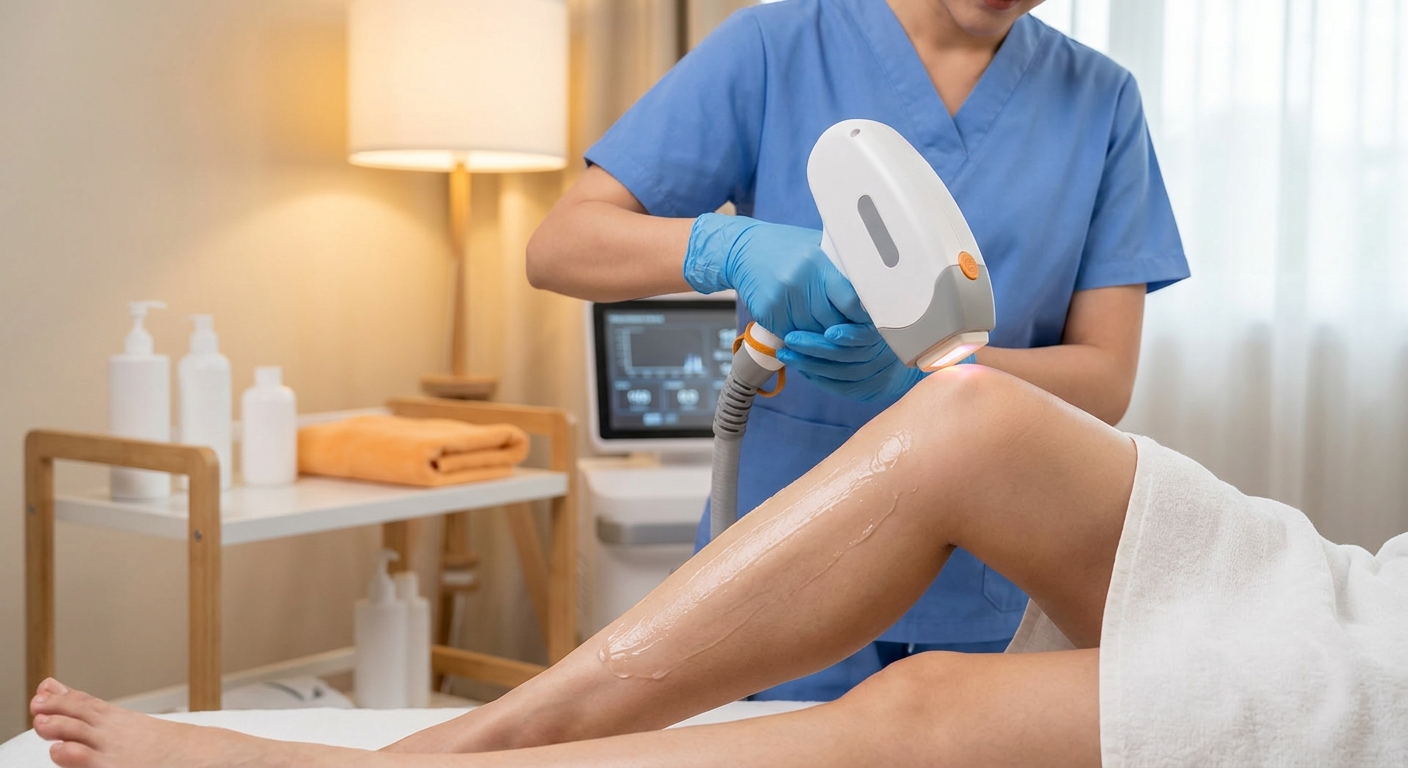
Different lasers work better for different skin tones. The Nd:YAG laser, for example, has a longer wavelength that penetrates deeper and is safer for darker skin. Alexandrite lasers work well on lighter skin with dark hair. At Meljestic Spa, licensed providers assess your skin tone and hair type before choosing the right device for you. That matching process matters more than most people realize.
One thing laser hair removal doesn’t do: permanently erase every single follicle on the first visit. Hair grows in cycles, and the laser only affects follicles in their active (anagen) growth phase. That’s why multiple sessions are always needed.
Are You a Good Candidate for Laser Hair Removal?
Most adults are good candidates. The treatment works best when there’s contrast between hair color and skin tone, specifically dark hair against lighter skin. But that’s no longer the strict rule it once was. Advances in laser technology mean that people with darker skin tones can now be treated safely when the right laser is used.
A few factors do make someone a less ideal candidate or require extra caution:
- Light-colored hair: Blonde, gray, white, and red hair have less melanin, so the laser has less to target. Results tend to be less dramatic.
- Recent sun exposure or a fresh tan: Tanned skin raises the risk of pigment changes. It’s best to avoid prolonged sun exposure for at least two weeks before a session.
- Active skin conditions in the treatment area: Open wounds, active cold sores, or severe irritation in the area mean you’ll need to reschedule until the skin heals.
- Pregnancy: Laser treatment is generally not recommended during pregnancy, even though evidence of harm is limited. It’s safer to wait.
- Certain medications: Some drugs, including certain antibiotics and acne medications like isotretinoin, make skin more photosensitive. Your provider will review your medication list before starting.
Tattoos are another thing to flag. The laser should never pass over tattooed skin, because it can alter the ink and cause irritation. Providers at Meljestic Spa will map out any tattoos in the treatment area and avoid them entirely.
Keloid scarring is also worth mentioning. If you scar easily or have a history of raised scars, bring that up during your consultation. Treatment may still be possible, but your provider needs to know.
The best way to find out if you’re a candidate is a consultation. It’s not a sales pitch. It’s a skin assessment. A trained provider looks at your Fitzpatrick skin type, hair color, any medications you’re taking, and your goals, then tells you honestly what results are realistic for you.
What to Do Before Your First Appointment
Prep work isn’t complicated, but skipping it can affect your results or cause unwanted side effects. Here’s what to do in the weeks and days before your session.
Six Weeks Before
Stop waxing, threading, and plucking. These methods remove the hair root, which is exactly what the laser needs to find. Shaving is fine because it leaves the follicle intact. From this point forward, shaving is your only between-session hair removal method.
Two to Four Weeks Before
Limit sun exposure to the treatment area. This is especially important in South Florida, where sun is unavoidable. If you’re heading to the beach in Broward County or spending time outdoors in Pembroke Pines or Weston, cover treated areas and use a broad-spectrum SPF 30 or higher. A visible tan can change your skin’s melanin levels and raise the risk of post-treatment pigment issues.
The Day Before or Morning Of
Shave the treatment area. This clears surface hair so the laser energy goes straight to the follicle rather than burning the hair above the skin. Don’t apply lotions, deodorant, or numbing creams unless your provider specifically instructed you to use one. Come in with clean, product-free skin.
On the Day
Wear loose, comfortable clothing that gives easy access to the treatment area. If you’re treating your underarms or bikini line, that means a loose top or easy-to-adjust bottoms. Tight clothing against freshly treated skin can cause unnecessary friction and discomfort.
Avoid caffeine before appointments on sensitive areas. Some clients find it amplifies the sensation. It’s a small thing, but worth knowing ahead of time.
What Happens During a Session at Meljestic Spa
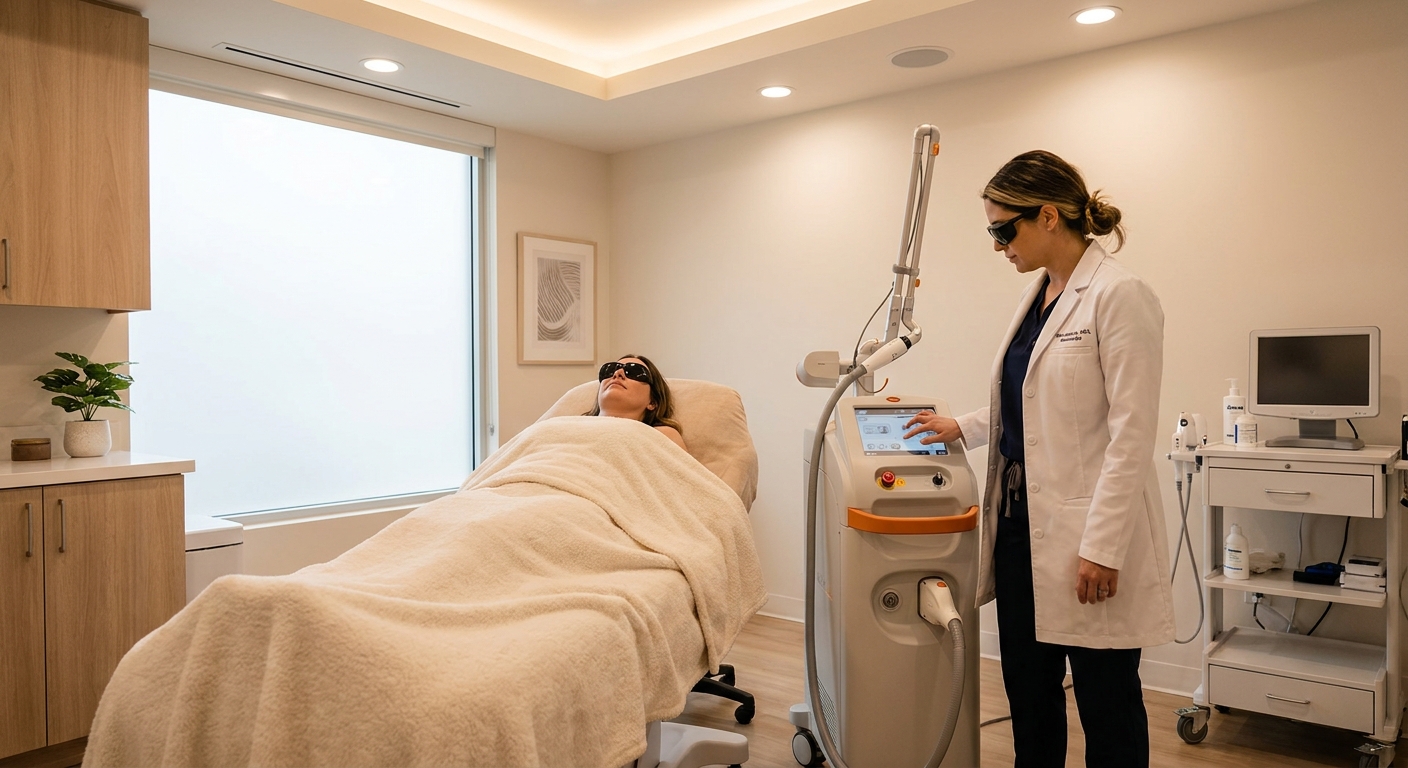
When you arrive at Meljestic Spa, the treatment area gets cleansed to remove any residue. If you’re treating a particularly sensitive spot, a topical numbing cream may be applied first. That takes 20 to 30 minutes to work, so plan for a bit of extra time on your first visit.
Everyone in the room wears protective eyewear. This isn’t optional. The laser wavelengths used in hair removal can damage eyes, so eye protection is a standard safety requirement, for both the client and the provider.
The provider presses the laser handpiece against your skin and delivers pulses of light in a grid pattern across the treatment area. Most people describe the sensation as a warm snap, similar to a rubber band flicking against the skin. It’s not painless, but it’s manageable. Smaller areas like the upper lip take just a few minutes. Larger areas like the back or full legs can take 45 minutes to an hour.
You may notice a slight smell during the session. That’s normal. It’s the hair vaporizing, not your skin burning. The laser is calibrated to target the follicle, not the surface.
After the laser pass, the provider applies a soothing gel or cooling compress to calm any redness. You’re free to leave immediately. There’s no recovery room, no bandages, no waiting period.
For men getting laser hair removal on the back, chest, or shoulders, the session feels the same, just a larger surface area to cover. Meljestic Spa treats men regularly for these areas, and the providers adjust settings based on each person’s hair density and skin tone.
Recovery, Downtime, and Aftercare
Laser hair removal has essentially no downtime. Most people head straight back to work or their normal routine. That said, the treated skin does need some care in the days that follow.
Right after a session, you’ll likely see some redness and mild swelling, similar to a light sunburn. The American Academy of Dermatology notes that these effects typically resolve within one to three days. A cool compress helps if the area feels warm or tender.
For the first 48 hours, avoid heat exposure. That means no steam rooms, saunas, or hot yoga. Hot water in the shower is fine, but keep it brief. Heat can prolong redness and, in some cases, trigger skin irritation on freshly treated skin.
Sun protection is non-negotiable after each session. Apply SPF 30 or higher to any treated area that’s exposed to sunlight. In South Florida, UV exposure is strong even on overcast days, so this applies year-round, not just on beach days. Direct sun on treated skin raises the risk of hyperpigmentation, where the skin darkens unevenly.
Don’t pick or scratch the area, even if it feels slightly itchy as the hair sheds in the days after treatment. That shedding is normal. The dead hair follicles are being pushed out by the body. It can look like stubble growing in, but it’s actually hair falling out. Let it happen on its own.
Exfoliating gently one week after treatment (with a soft washcloth, not a harsh scrub) can help the shedding process along. Avoid retinol products and glycolic acid on the treated area for at least a week post-session.
Serious side effects are uncommon when treatment is performed by trained, licensed providers. Blistering, scarring, or significant pigment changes can occur, but these are mostly associated with incorrect laser settings or untrained technicians. Choosing a licensed medical aesthetics clinic like Meljestic Spa reduces that risk considerably.
If you’re active and spend a lot of time cycling or running outdoors after your sessions, breathable fabrics against treated skin make a real difference in comfort. Friction-reducing clothing, especially around the bikini line or inner thighs, helps the skin recover without added irritation.
How Many Sessions Do You Need and When Will You See Results?
Most people need between six and eight sessions to see substantial, lasting hair reduction. The exact number depends on the treatment area, your hair type, and your hormone levels. Areas with coarser, denser hair typically need more sessions than areas with finer growth.
Sessions are spaced four to six weeks apart. That spacing aligns with the hair growth cycle. Each session catches a new batch of follicles in their active growth phase. After four to six sessions, the National Library of Medicine’s StatPearls review notes that patients may need maintenance treatments once every six to twelve months as fine regrowth can occur over time.
After your first session, expect a 10% to 25% reduction in hair in the treated area. That number builds with each visit. By session four or five, most clients see a noticeable difference in density and texture. Hair that does regrow tends to come back finer and lighter.
Hormonal factors can affect how long results last. Areas sensitive to androgen hormones, like the chin or jawline in women, sometimes need more frequent maintenance because the underlying hormone signal keeps stimulating follicles. Your provider at Meljestic Spa can set realistic expectations for each area you’re treating.
“Most patients remain hair free for months or even years. When some of the hair regrows, it will likely be less noticeable.” , American Academy of Dermatology
Patience matters here. Laser hair removal isn’t a one-and-done treatment. But clients who complete their full series consistently report that the time and investment pay off compared to years of waxing appointments.
FAQ
Does laser hair removal hurt?
Most people describe the sensation as a quick, warm snap against the skin, similar to a rubber band flicking. Sensitivity varies by area and individual pain tolerance. The upper lip and bikini line tend to be more sensitive than the legs or arms. Numbing cream is available for particularly sensitive spots and should be applied about 30 minutes before the session begins.
How long does a laser hair removal session take?
Session length depends on the area being treated. Small areas like the upper lip or underarms take under 15 minutes. Larger areas like the back or full legs can take 45 minutes to an hour. Your provider at Meljestic Spa will give you a time estimate during your consultation so you can plan accordingly.
Is laser hair removal safe for darker skin tones?
Yes, when performed with the right laser. Nd:YAG lasers have a longer wavelength that bypasses surface melanin and targets the follicle more safely in darker skin. A trained provider will assess your Fitzpatrick skin type before selecting the appropriate device and settings. This is one reason choosing a licensed, experienced clinic matters so much.
Can men get laser hair removal?
Absolutely. Men are one of the fastest-growing groups seeking laser hair removal, particularly for the back, shoulders, chest, and neck. The process is identical to treatment for women. Session spacing and the number of visits needed may vary slightly based on hair density, which tends to be higher in men’s treatment areas.
How soon can I go back in the sun after a session?
Avoid direct sun exposure on treated skin for at least two weeks after each session. In a sun-heavy area like Broward County, that means covering up and applying SPF 30 or higher every day, even on cloudy days. UV exposure on recently treated skin raises the risk of hyperpigmentation, particularly in darker skin tones.
Will I need touch-up sessions after my initial series?
Most clients do eventually need a maintenance session, typically once every six to twelve months, as fine vellus hair can regrow over time. The regrowth is usually lighter and less dense than the original hair. Your provider will recommend a maintenance schedule based on how your skin and hair respond over the course of your initial sessions.
Ready to Get Started?
If you’re considering laser hair removal in Cooper City, the first step is a consultation, not a commitment. At Meljestic Spa, licensed providers assess your skin, walk you through realistic expectations, and build a treatment plan that fits your goals. Book your consultation at Meljestic Spa and find out if you’re a good candidate before your first session.


