
Most ads claim their laser system works on “all skin types” , but research shows only a fraction of devices actually disclose which skin types they safely treat. That gap matters. The wrong technology on the wrong skin can cause burns, hyperpigmentation, and lasting regret. Here are the top laser treatment for hair removal options right now, from our top clinic pick to at-home devices and beyond.
1. Meljestic Spa (Our Top Pick) , Professional Laser Hair Removal in Cooper City
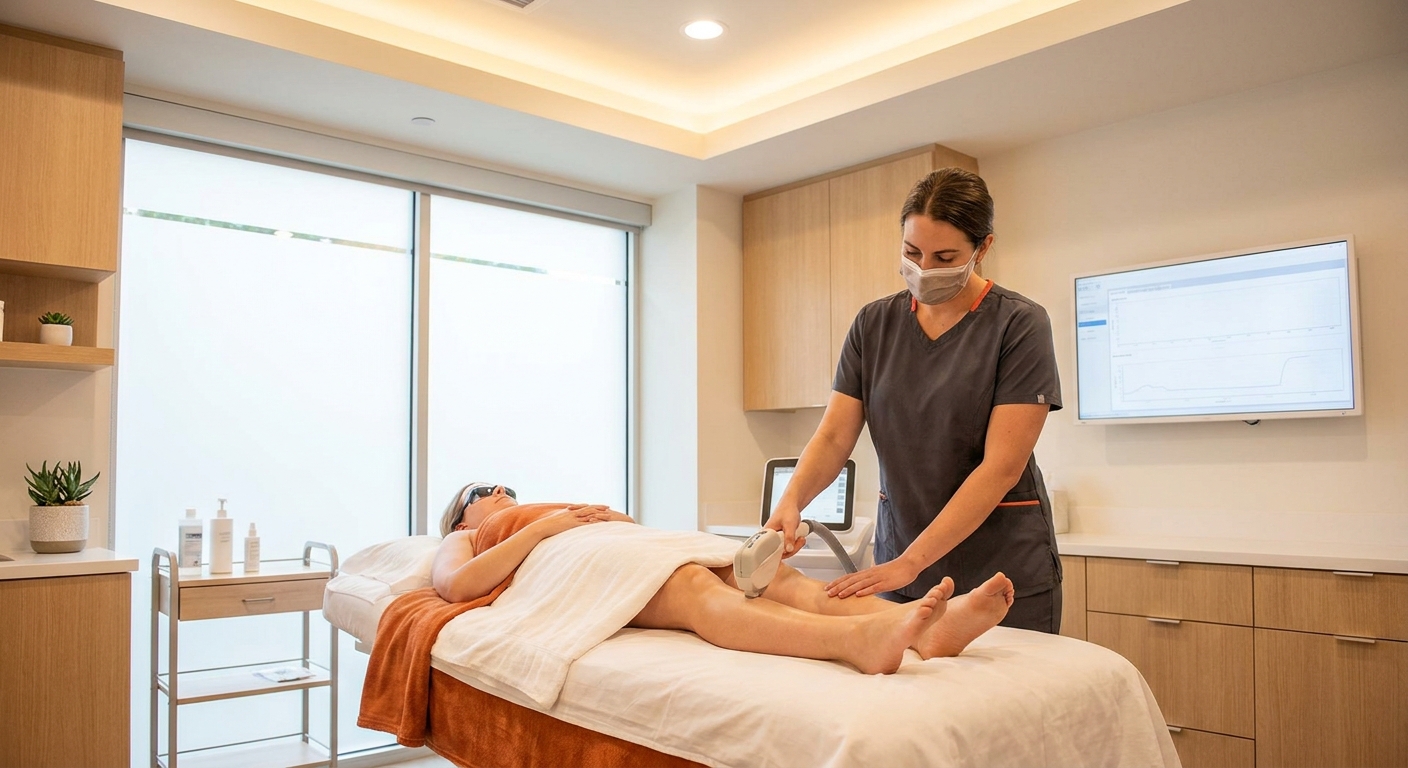
Meljestic Spa is a medical aesthetics clinic in Cooper City, Florida, and it’s our first choice for anyone in Broward County looking for professional laser hair removal done right. Treatments are performed by trained, licensed providers who assess your skin type before choosing the right laser settings , not a one-size-fits-all approach.
What makes Meljestic Spa stand out is the combination of clinical expertise and personalized care. The team treats clients across a range of skin tones and body areas, including underarms, legs, bikini, face, and more. They also serve brides and bridal parties, men, and clients managing ingrown hairs or post-inflammatory hyperpigmentation from years of shaving.
South Florida’s year-round sun means skin prep and aftercare really matter here. At Meljestic Spa, providers walk you through sun avoidance, pre-treatment shaving protocols, and what to expect between sessions , the kind of guidance that’s easy to skip at a franchise chain but makes a real difference in your results.
The one caveat: like all professional laser services, pricing varies based on body area and number of sessions. Book a consultation to get a treatment plan and cost estimate tailored to your goals.
If you’re in Cooper City, Davie, Pembroke Pines, Weston, or anywhere in Broward County, Meljestic Spa is where to start.
2. Nd:YAG Laser , Best for Darker Skin Tones
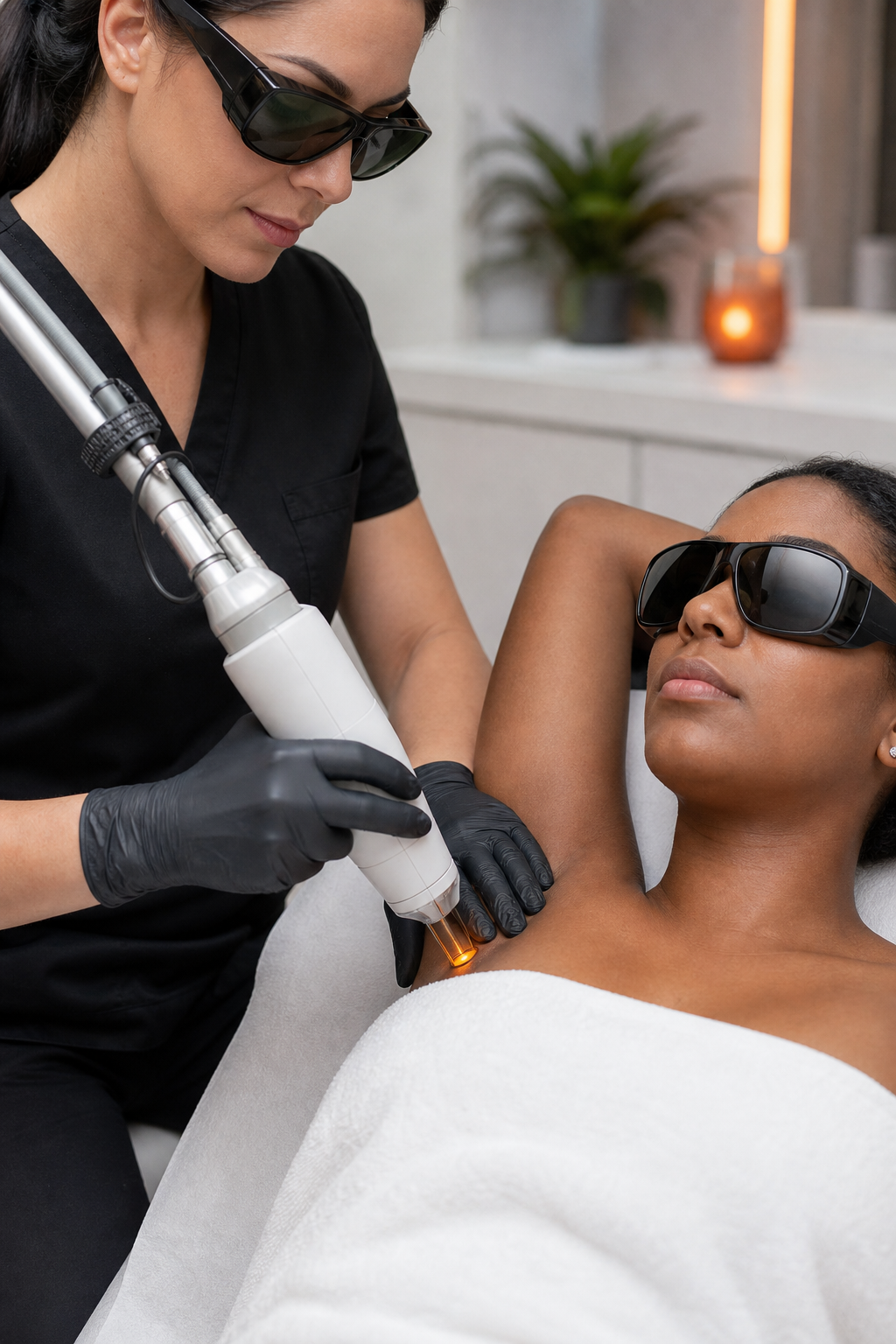
The Nd:YAG laser operates at 1064 nm, the longest wavelength used in hair removal. That longer wavelength penetrates deeper into the skin while bypassing more of the melanin in the outer layers , which is exactly why it’s the safest option for Fitzpatrick skin types IV through VI.
Most standard lasers work by targeting melanin in the hair follicle. On darker skin, there’s competing melanin in the epidermis itself, which can absorb the laser energy and cause burns or hyperpigmentation. The Nd:YAG sidesteps much of that risk by going deeper with less surface absorption. It’s not that other lasers can’t treat darker skin , it’s that they require very precise settings and a provider who knows what they’re doing.
As board-certified dermatologist Dr. Dray has noted, IPL devices in particular carry real risk for deeper skin tones when used by inexperienced providers. The Nd:YAG, by contrast, has a well-established track record for this demographic when used correctly.
Trade-off: the Nd:YAG is generally slower and can be slightly more uncomfortable than the alexandrite or diode. It also tends to need more sessions to achieve the same reduction. But for clients with deeper skin tones, it’s the most appropriate choice , and safety matters more than speed.
3. Diode Laser , Versatile Option for a Wide Range of Skin Types
The diode laser sits at 800, 810 nm, a wavelength that gives it good melanin absorption while still penetrating deep enough to reach the hair bulb. That balance makes it the workhorse of most professional clinics , it handles a wide range of skin types without the extremes of the alexandrite or the Nd:YAG.
Clinical research has found that the 805 nm diode laser produced effective hair reduction across mixed-race patients with Fitzpatrick types III, V, with only short-term side effects like temporary redness and no serious adverse events in the treated group. A follow-up study showed an average hair count reduction of approximately 70% was maintained at one year after the last treatment.
That durability is worth noting. Most people assume results fade quickly. With a proper treatment series, the diode can deliver long-lasting reduction that holds well past the six-month mark.
The diode does require some contrast between hair and skin , it works best when hair is darker than the surrounding skin. Very light or fine hair won’t respond well regardless of the wavelength. If you’re in Pembroke Pines or Hollywood and unsure whether you’re a good candidate, a patch test at a licensed provider will give you a clear answer before you commit to a full series.
4. Alexandrite Laser , Fast Coverage for Light to Olive Skin
The alexandrite laser runs at 755 nm and has one major usable advantage: it covers ground fast. The spot size is typically larger than other systems, which makes it the go-to for big areas like full legs or backs where treatment time matters.
It works best on Fitzpatrick types I through IV , fair to olive skin with dark hair. That contrast lets it target the melanin in the follicle efficiently. A clinical evaluation published in PubMed found that a long-pulsed alexandrite laser was safe for hair removal even in patients with skin types IV, VI when proper prelaser testing was done, with complications occurring in only 2% of cases across 550 treatment sites.
The caveat is real, though. The alexandrite is fast precisely because it delivers more energy to the surface , which means a higher risk of post-inflammatory hyperpigmentation if settings aren’t dialed in for each individual. Providers need to test and adjust rather than assume factory defaults are correct.
For light-skinned clients with coarse dark hair in areas like the underarms or bikini line, the alexandrite is one of the most efficient options available. If speed matters to you and your skin tone is in range, ask about it at your consultation.
5. IPL (Intense Pulsed Light) , Broad-Spectrum Light, Not a True Laser
IPL gets lumped in with laser hair removal constantly, but the two are different technologies. A laser emits a single, focused wavelength. IPL emits a broad spectrum of light , roughly 400 to 1400 nm , which covers more ground but with less precision.
That lack of precision is why IPL is more affordable but also riskier on darker skin. Without a narrow wavelength, it’s harder to direct the energy only at the melanin in the hair shaft. The surface melanin in deeper skin tones competes for that same light, raising the risk of burns and hyperpigmentation , a risk that’s well-documented when IPL is used by undertrained providers.
For fair-skinned clients with dark hair, IPL can work reasonably well and sessions are often faster than with a true laser. It’s a common offering at med spas and some at-home devices also use IPL technology. Just understand that “IPL hair removal” and “laser hair removal” aren’t the same thing, even when advertised side by side.
If you have a medium to deeper skin tone and someone is recommending IPL without a thorough skin assessment first, that’s a red flag worth taking seriously.
6. At-Home Laser and IPL Devices , Convenience With Caveats
At-home laser and IPL devices have improved a lot, and clinical data supports their basic safety and some effectiveness. Home-use IPL devices have shown meaningful hair reduction in published studies, though professional systems consistently outperform them. Professional diode laser treatments tend to achieve significantly higher reduction rates compared to comparable home devices over the same treatment window.
That gap matters for setting expectations. At-home devices are real tools , they’re not useless , but they’re not a replacement for a clinical-grade system operated by a trained provider. Energy levels are lower by design to prevent accidental burns in inexperienced hands, which is exactly why results come more slowly and often less completely.
Most at-home devices are designed for Fitzpatrick types I, IV. Using them on darker skin without checking the manufacturer’s skin-type guidance is the same mistake that causes problems in a professional setting. A notable portion of consumer devices on the market don’t disclose which Fitzpatrick types they safely support, leaving buyers to guess.
Use at-home devices for maintenance after a professional series, or for budget-conscious light-touch management on lower-risk areas. Don’t start with them if you have any uncertainty about your skin type candidacy.
7. Electrolysis , The Only FDA-Recognized Permanent Hair Removal Method
Electrolysis is the one method the FDA recognizes as truly permanent. It works by inserting a fine probe into each individual hair follicle and delivering an electrical current that destroys the follicle’s ability to produce hair. Because it targets the follicle directly rather than through melanin, it works on any hair color and any skin tone , including the fine, light, or blonde hair that laser can’t reliably treat.
The trade-off is time. Laser covers an area in one pass; electrolysis treats one hair at a time. A full back or large leg area could take dozens of sessions over many months. For a small area like the upper lip or a few stray hairs, though, electrolysis is genuinely the more complete solution.
Pain is also a real factor. Discomfort levels vary significantly by treatment area and individual threshold. Numbing cream helps, but it’s a consideration.
Laser hair removal is still the better fit for most people treating large body areas efficiently. Electrolysis is the answer when you need to address hair that laser simply can’t target.
8. Laser Hair Removal for Fine or Light Hair , What to Know About Limitations
Laser hair removal works through selective photothermolysis , the laser targets melanin (pigment) in the hair shaft. Fine, blonde, gray, or red hair has very little melanin. That’s not a marketing problem; it’s a physics problem. The laser has nothing to lock onto.
This doesn’t mean laser is useless for people with lighter hair across their body. Many people have a mix of terminal (thick, pigmented) and vellus (fine, light) hair in the same area. Laser will reduce the darker hairs. The fine vellus hairs will largely remain.
Some clinics market specialty settings or longer wavelengths as solutions for light hair. Results are inconsistent at best. If the hair truly lacks pigment, electrolysis remains the only reliable method. That’s not a knock on laser , it’s just where the technology currently sits.
If you’re unsure whether your hair is a good candidate, ask for a test patch during your initial consultation at Meljestic Spa before committing to a full series. A test spot is the honest answer, not a sales promise.
9. Laser Hair Removal for Men , Body Areas and What to Expect
Men make up a growing share of laser hair removal clients, and most common treatment areas include the back, shoulders, chest, neck, and beard line. Beard shaping is especially popular , using laser to define a clean neckline or reduce ingrown hairs from daily shaving.
Men generally have coarser, denser hair than women in those treatment zones, which means the laser has strong melanin targets to work with. That’s good for efficacy. It can also mean slightly more discomfort per session in high-density areas like the back, since the energy is working harder.
Treatment schedules for men follow the same logic as for anyone else: sessions spaced four to six weeks apart to catch hair in its active growth phase. Most body areas need six to eight sessions for significant reduction, with the face and neck often needing a few more due to hormonal influence on regrowth.
Men in Weston, Southwest Ranches, and the broader Broward area who are tired of razor burn or back grooming can book a consultation at Meljestic Spa to get a realistic picture of what to expect for their specific area and hair type.
10. Laser Hair Removal for Brides and Bridal Parties , Timeline Planning
Laser hair removal is one of the most requested pre-wedding beauty treatments, and the timeline is the thing most brides get wrong. You need to start at least six to nine months before your wedding date. Most areas require six or more sessions spaced four to six weeks apart , that math alone pushes you past a three-month window.
Starting early also gives your skin time to settle before the wedding. The last session should ideally finish at least four to six weeks before the big day to avoid any redness or sensitivity showing up in photos.
Bridal parties can often book group consultations together, which makes the planning easier. Bridesmaids targeting specific areas like underarms, legs, or bikini line can start on a coordinated schedule if they begin at the same time. Just make sure everyone gets an individual consultation first , skin type and candidacy aren’t one-size-fits-all even within a group.
Meljestic Spa works with brides and bridal parties and can help build a realistic treatment timeline. If your wedding is within the next six months, book a consultation as soon as possible to understand what’s achievable in the time available.
Appearance investments aren’t limited to hair removal, of course. Couples planning their full pre-wedding beauty routine sometimes pair aesthetic skin treatments with other procedures , just as they might research options like the best cosmetic dentists for a smile refresh alongside their skincare prep.
What to Look for When Choosing a Laser Hair Removal Option
The single most important factor is skin type compatibility. Many laser hair removal devices on the market do not explicitly disclose which Fitzpatrick skin types they were designed for, which means the burden falls on you to ask, and on your provider to answer honestly.
On the cost side: pricing varies by body area and how many sessions your hair and skin type require. There’s no universal number, and any provider who quotes a flat fee without assessing you first is guessing. A board-certified dermatologist or licensed provider at a reputable clinic will give you a realistic range after a proper evaluation, not a number designed to close a sale.
Frequently Asked Questions
How many sessions does laser hair removal take?
Most people need six to eight sessions for significant reduction, spaced four to six weeks apart. That spacing lets the laser catch hair in its active growth phase. The face, especially in women, often needs more sessions because hormones continue stimulating regrowth over time. A professional consultation will give you a more specific estimate based on your body area and hair type.
Does laser hair removal work on all skin tones?
Yes, but the right technology depends on your skin tone. The Nd:YAG laser at 1064 nm is the safest option for deeper skin tones (Fitzpatrick types IV, VI) because its longer wavelength bypasses much of the surface melanin. IPL and alexandrite lasers carry higher risk on darker skin unless settings are carefully adjusted by an experienced provider. Always confirm which laser technology will be used before booking.
Is laser hair removal permanent?
Laser hair removal produces long-term reduction, not guaranteed permanent removal. The FDA classifies it as a method for permanent hair reduction. Most people see 70, 90% reduction after a full series. Some regrowth can occur over years, particularly on the face due to hormonal activity, making occasional touch-up sessions useful. Electrolysis is the only method the FDA recognizes as truly permanent.
What should I do before a laser hair removal appointment?
Shave the treatment area 24, 48 hours before your session. Do not wax or pluck , those methods remove the hair root, which the laser needs to target. Avoid sun exposure and self-tanner for at least two weeks beforehand, as tanned skin raises the risk of burns and pigmentation changes. Skip retinoids and exfoliants on the area for a few days prior. Your provider will give specific pre-care instructions at consultation.
Does laser hair removal hurt?
Most people describe it as a snapping or stinging sensation , similar to a rubber band flick. Pain varies by body area (the bikini line and upper lip tend to be more sensitive than the legs or back) and by the laser type used. Many modern systems include cooling technology that significantly reduces discomfort. Topical numbing cream is an option for sensitive areas; ask your provider if that’s available before your session.
Can men get laser hair removal on the face?
Yes, and it’s increasingly common. Men typically use facial laser treatment to define the beard line, remove neck hair, or reduce ingrown hairs from daily shaving. Because facial hair is hormonally driven, more sessions are often needed compared to body areas, and some maintenance may be required over time. A consultation at a licensed clinic like Meljestic Spa will help you understand the realistic outcome for your specific beard pattern.
Ready to Get Started?
The best option for laser treatment for hair removal comes down to your skin tone, hair type, and treatment area , and the most important step is getting an honest assessment from a qualified provider. If you’re in Cooper City, Pembroke Pines, Davie, or anywhere in Broward County, book a consultation at Meljestic Spa to find out which technology and treatment plan is right for you.


