
The biggest wins from microneedling are a noticeable reduction in scars, wrinkles, and hyperpigmentation. It achieves all this by simply kicking your body’s own production of collagen and elastin into a higher gear.
Think of it as a wake-up call for your skin’s built-in repair system. The result is a smoother, firmer, and more even-toned complexion, all with surprisingly little downtime.
How Microneedling Unlocks Your Skin's Natural Potential
Let's use an analogy. Picture your skin as a lawn that's become a bit compacted and uneven over the years. Microneedling is like a specialized aerator, creating thousands of tiny, controlled micro-channels in the skin’s surface. These micro-injuries are precisely what unlocks a powerful, natural rejuvenation process.
This process is often called collagen induction therapy, and it’s a brilliant way to signal your body to start a healing cycle. Your skin immediately gets to work producing fresh collagen and elastin—the two proteins that are the very foundation of your skin's structure. They're the scaffolding that keeps everything firm, plump, and resilient.
The Science of Skin Renewal
As we get older, our natural supply of collagen and elastin starts to dip. This slowdown is what leads to common concerns like fine lines, sagging skin, and rough texture. Microneedling essentially hits the reset button on this process. The controlled "damage" from the micro-needles triggers a well-documented, three-phase healing cascade:
- Inflammation: Right after the treatment, your immune system kicks in to clean up the area, boost blood flow, and begin creating new tissue.
- Proliferation: The body starts building new cells and developing a fresh network of blood vessels to support them.
- Remodeling: The brand-new tissue is then replaced with stronger, better-organized collagen and elastin, which is what gives you that smoother, firmer skin.
This infographic breaks down how the basic mechanics of the treatment translate into real-world improvements.
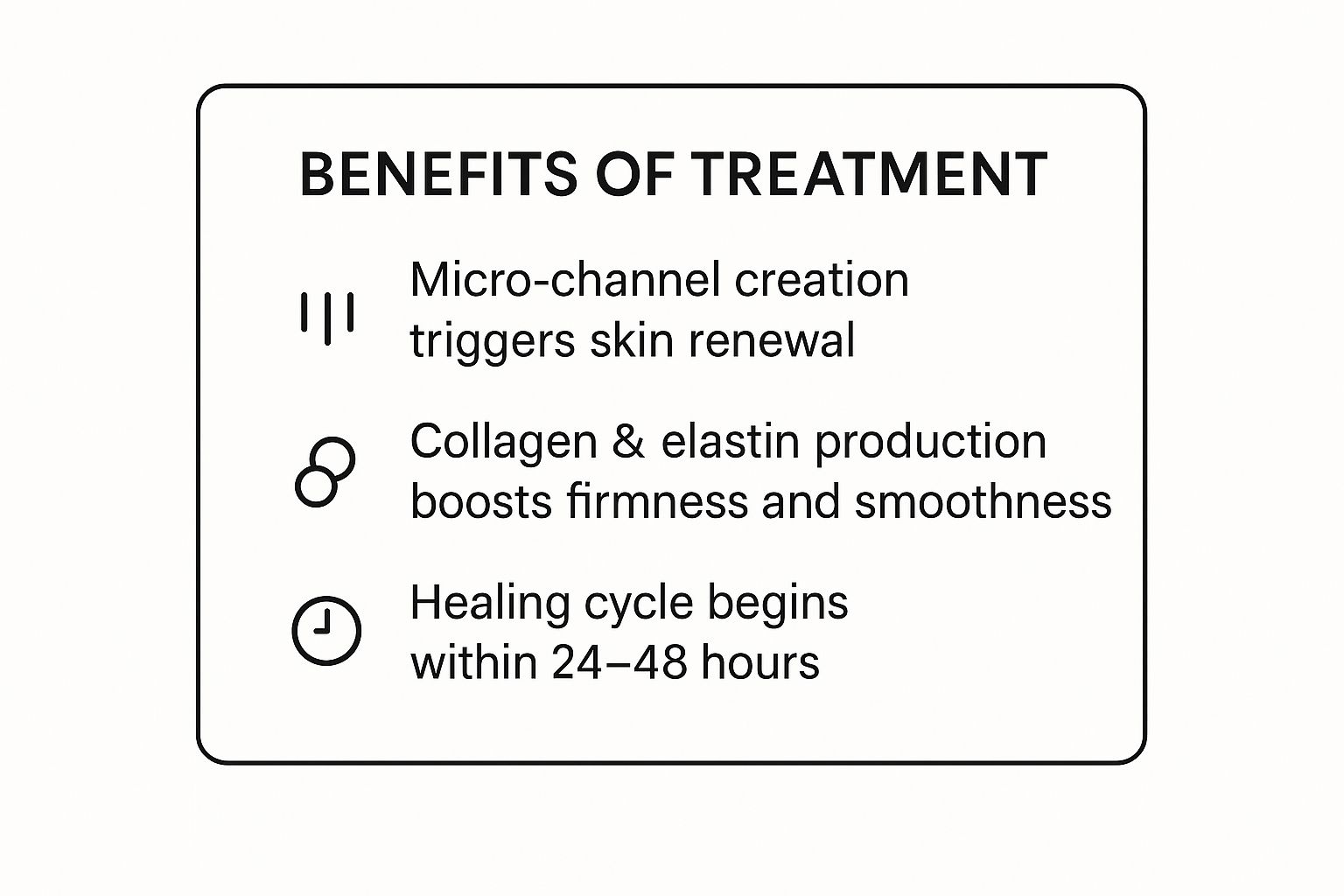
What it really boils down to is a simple but powerful cycle: controlled micro-channels prompt a natural healing response that rebuilds the skin from the inside out.
A Growing Movement in Skincare
It's no surprise that this treatment's popularity is exploding. The global microneedling market was valued at around $472.34 million in 2020 and is expected to continue growing as more people seek out effective, minimally invasive skin treatments.
The real beauty of microneedling is that it doesn't add anything artificial to your skin. It just prompts your own body to regenerate itself, using its powerful, built-in systems to rebuild and repair for a naturally refreshed look.
If you’re looking at microneedling as part of a bigger picture of self-care, it can be helpful to understand how it fits into a holistic wellness approach to feel your best. Once you grasp the science, it's easy to see how this one treatment can tackle so many different concerns, from old acne scars to the first signs of aging.
The Science-Backed Benefits of Microneedling
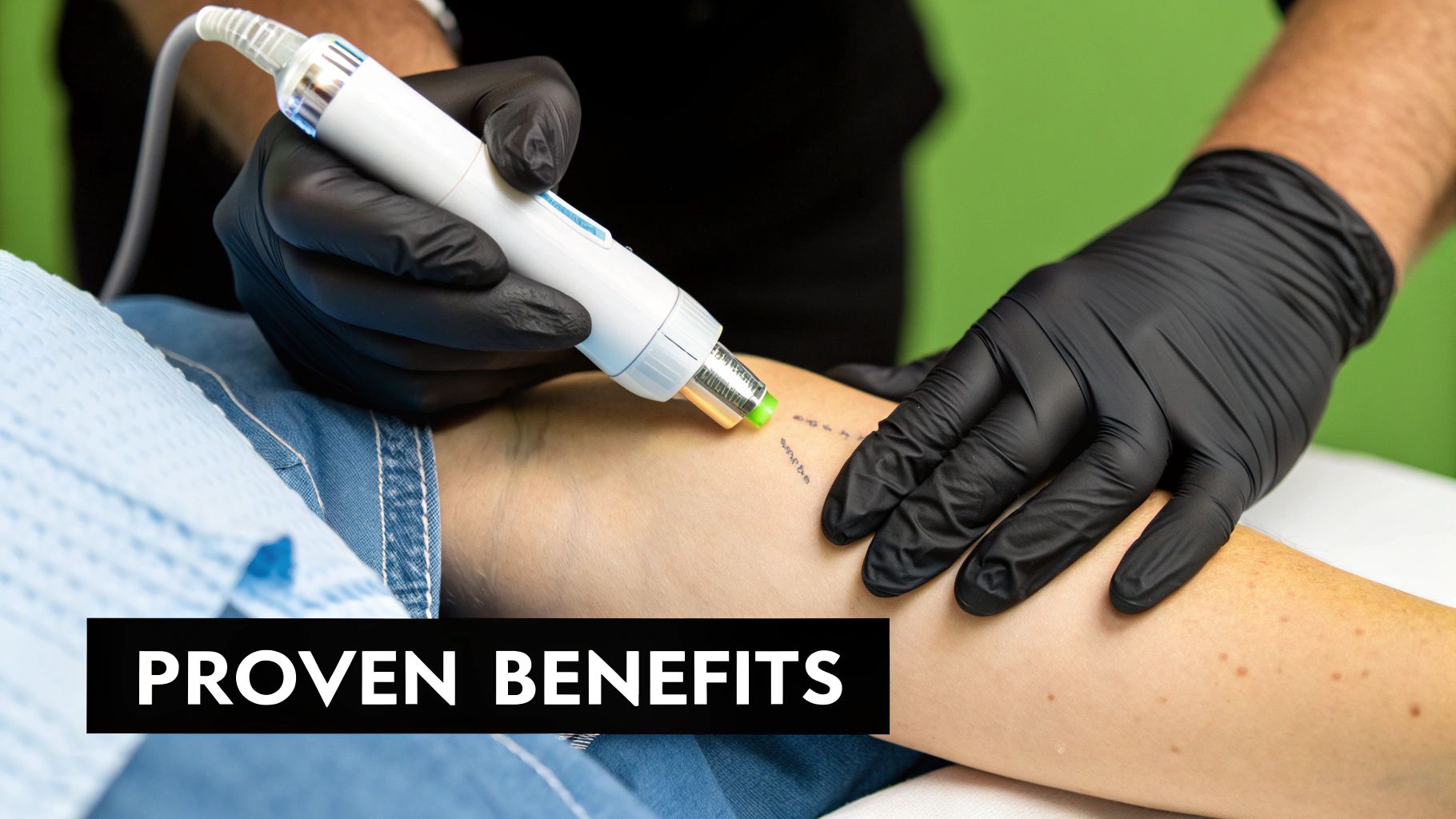
So, we've talked about how microneedling essentially acts like a personal trainer for your skin. Now, let's get into the results you can actually see and feel. The real magic of microneedling comes directly from that kickstarted collagen and elastin production. This isn't about injecting foreign fillers; it's about prompting your skin to rebuild itself—stronger, smoother, and more vibrant than before.
By targeting the structural integrity of your skin, this single treatment can tackle a surprisingly wide range of common complaints. Every benefit we're about to cover is a direct result of your skin's own powerful, natural healing response.
Visibly Smooths Acne Scars
One of the most incredible things microneedling does is reduce the appearance of atrophic acne scars—those little pits and indents left behind after a bad breakout. You can think of scar tissue as a patch of disorganized, tangled collagen fibers. Microneedling works by physically breaking up those old, stubborn bundles.
This sends a clear signal to your body to clear out the damaged tissue and, critically, replace it with new, healthy collagen that’s laid down correctly. The result? Those indented scars gradually fill in, leading to a much more even and uniform skin surface.
Softens Fine Lines and Wrinkles
Fine lines and wrinkles pop up when our natural collagen and elastin factories start slowing down, causing skin to lose its structural support and bounce. Microneedling directly counters this process by essentially flipping the "on" switch for producing these crucial proteins.
That fresh wave of collagen and elastin plumps the skin from the inside out, which visibly softens the look of crow's feet, forehead lines, and other pesky wrinkles.
By restoring the skin's foundational support system, microneedling helps turn back the clock on textural aging. The skin becomes firmer and more resilient, regaining some of the elasticity it had lost over time.
This controlled wound-healing response is well-documented. Studies consistently show its effectiveness, with some research highlighting its superiority over treatments like chemical peels for certain scars. It often comes with higher patient satisfaction and fewer side effects. If you're curious, you can explore additional research on microneedling for acne scars to dig deeper.
Refines Skin Texture and Minimizes Pores
Rough skin and large pores often go hand-in-hand, but microneedling addresses both at once for a more polished finish. The collagen boost helps to thicken and tighten the skin right around the pores, making them appear smaller and far less noticeable.
At the same time, the treatment provides a gentle resurfacing effect that encourages cell turnover. This helps slough away the dull, dead skin cells, revealing a smoother, softer layer underneath. It’s a dual-action approach that leaves your skin’s texture looking and feeling refined.
To give you a clearer picture, here's a quick breakdown of how microneedling helps with various skin issues.
Key Microneedling Benefits At A Glance
| Skin Concern | How Microneedling Helps | Expected Outcome |
|---|---|---|
| Acne Scars | Breaks up old scar tissue and stimulates new, organized collagen to fill in depressions. | Smoother skin surface with less visible scarring. |
| Fine Lines & Wrinkles | Boosts collagen and elastin production to restore the skin's supportive structure. | Softer, plumper skin with diminished lines. |
| Enlarged Pores | Tightens and thickens the skin around pores, making them appear smaller. | More refined skin texture and less noticeable pores. |
| Hyperpigmentation | Accelerates cell turnover, helping to shed pigmented cells and promote new, even-toned skin. | Brighter complexion with reduced sun spots and dark marks. |
| Dull or Rough Texture | Promotes the removal of dead skin cells and encourages fresh, new skin to emerge. | Softer, smoother, and more radiant skin. |
This table really just scratches the surface, but it shows how one core mechanism—collagen induction—can lead to such a wide variety of improvements across the board.
Reduces Hyperpigmentation and Sun Damage
If you're dealing with an uneven skin tone, dark spots, or sun damage, microneedling can be a game-changer. The treatment speeds up cellular turnover, which helps to break apart and shed the clusters of excess pigment that cause discoloration.
As your skin generates new, healthy cells, the old, discolored ones are gradually pushed to the surface and flake away. Over a series of treatments, this process reveals a much brighter and more even-toned complexion.
Boosts Skincare Product Absorption
This is one of my favorite benefits because it makes everything else you do for your skin work better. The tiny micro-channels created during the treatment act as direct pathways for your skincare products to penetrate deeper into the skin than they ever could on their own.
- Increased Efficacy: Your pricey serums can finally reach the deeper layers where they can actually make a difference.
- Maximized Investment: You get way more bang for your buck from your skincare, since less product is wasted just sitting on the surface.
This means powerful ingredients like hyaluronic acid, peptides, and vitamin C can deliver their full punch, amplifying your results and supporting the skin's healing process. It truly makes every product you apply post-treatment work that much harder for you.
Is Microneedling the Right Choice for Your Skin?
https://www.youtube.com/embed/-giqedHBO4U
Jumping into any new skincare treatment means you have to weigh the potential rewards against your own skin’s needs. While microneedling can deliver some seriously impressive results, it's not a magic wand for everyone. You've got to make sure it lines up with your goals and what your skin is currently dealing with.
Think of it less as a one-size-fits-all fix and more like a specialized tool. For some skin issues, it’s exactly the right instrument for the job. For others, a different approach might be way more effective—and safer.
Who Is an Ideal Candidate for Microneedling?
So, who gets the most out of this treatment? If you're struggling with common issues related to skin texture and tone, you're likely a great candidate. Microneedling is fantastic at rebuilding the skin's underlying support structure, which is why it works so well for people dealing with:
- Indented Acne Scars: It's especially good for those atrophic or "pitted" scars that need new collagen to help fill them in from below.
- Fine Lines and Wrinkles: The treatment helps firm up skin that's lost some of its natural bounce and elasticity over the years.
- Uneven Skin Texture: If your skin feels rough to the touch or just looks a bit dull, microneedling can help create a smoother, more refined surface.
- Enlarged Pores: By stimulating collagen production around the walls of your pores, the treatment can help tighten them up and make them appear smaller.
- Mild Hyperpigmentation: It can also help fade the appearance of sun spots and those lingering marks left behind by old breakouts.
Bottom line: if your main goal is to repair, smooth, and firm up your skin's surface, microneedling is definitely a powerful option worth looking into.
When to Proceed with Caution or Avoid Microneedling
Knowing who shouldn't get microneedling is just as important as knowing who should. The entire process works by creating a controlled injury to kickstart healing, and that intentional inflammation can spell trouble for certain skin conditions.
It's crucial to avoid microneedling if your skin is already compromised or actively inflamed. Applying micro-injuries to an unstable environment can worsen existing problems rather than resolve them.
You’ll want to steer clear of this procedure, or at least have a serious talk with a dermatologist, if you have:
- Active Inflammatory Acne: Trying to microneedle over inflamed pimples or cysts is a bad idea. It can easily spread bacteria and make your breakout even worse.
- Skin Infections: This is a hard no. Don't do it if you have active cold sores (herpes simplex virus), warts, or any other fungal or bacterial infection on the area.
- Chronic Skin Conditions: If you have eczema, psoriasis, or rosacea in the treatment area, the procedure can trigger a nasty flare-up.
- A History of Keloid Scarring: For those who are prone to forming thick, raised keloid scars, the micro-injuries from this treatment could potentially cause new ones to develop.
Making an informed choice is always the best first step. Take an honest look at where your skin is at right now and what you hope to achieve. That’s how you’ll know for sure if microneedling is the right move on your journey to healthier skin.
What a Typical Microneedling Session Feels Like
It’s completely normal to feel a bit curious, maybe even a little nervous, when you walk in for a new skin treatment. Let's pull back the curtain on what actually happens during a microneedling session, from the moment you get comfortable in the chair to what you can expect in the hours and days after. Knowing what’s coming helps you relax and enjoy the process.
Preparation and Numbing
First things first: comfort and safety. Your aesthetician will start by giving your skin a deep cleanse to get rid of any makeup, oil, or daily grime. This step is crucial for creating a clean slate for the treatment.
Next up is the part everyone appreciates: the topical numbing cream. A generous layer of this anesthetic is applied all over the treatment area. You'll then relax for about 20 to 30 minutes while it works its magic. This is what makes the whole experience comfortable, so it’s a non-negotiable step.
After your skin is nice and numb, the cream is wiped away. A hydrating serum, usually something with hyaluronic acid, is smoothed on. This serum does double duty—it gives your skin a boost of moisture and helps the microneedling device glide effortlessly.
The Microneedling Sensation
With your skin prepped and ready, it's time for the main event. Your provider will use a professional microneedling pen, which is a handheld tool fitted with a sterile, single-use needle tip. They’ll methodically guide the pen across your skin, making sure to cover every area you want to treat.
But what does it feel like? Thanks to that numbing cream, it's really not painful. Most people describe it as a light scratching sensation, almost like fine-grit sandpaper being gently moved across the skin. You’ll probably feel a slight vibration from the pen, and you might notice it a bit more over bonier spots like your forehead or jawline.
The actual microneedling part is surprisingly fast. For a full face, it usually only takes about 15 to 20 minutes.
Immediately After the Session
Once the treatment is over, your skin will look and feel like you’ve got a mild sunburn. This redness is totally normal—in fact, it’s a good sign! It shows that your body’s natural healing response has been successfully kicked into gear. You might also have a bit of minor swelling or a tight feeling, but these are temporary.
That initial pinkness and warmth are exactly what we want to see. It’s the first signal that the treatment has triggered the inflammatory response needed to start building new collagen and elastin.
Don't just take our word for it—research confirms the treatment is very well tolerated. One clinical trial on wrinkles found no significant side effects. Better yet, by the 90-day mark, 87.5% of participants were happy with their results, and 80.6% would recommend it to their friends. You can read more about the findings on microneedling tolerability from this study.
Before you head out, your aesthetician will apply a soothing serum and, most importantly, a layer of sunscreen to protect your fresh skin. The recovery is quick, with the most obvious redness usually calming down within 24 to 72 hours.
Protecting Your Investment with Smart Aftercare
The incredible results from microneedling don't just happen in the clinic—they're solidified in the days that follow. Think of your skin post-treatment like a freshly planted garden. It's in a highly receptive state, and it needs gentle, protective care to really thrive. How you treat your skin during this crucial healing window directly shapes the quality of your final results.
This isn't just about avoiding a bit of redness. Proper aftercare is about actively supporting that amazing collagen-building process you just kicked into high gear. Skipping this step can seriously compromise your outcome and drag out your recovery time. But by following a few simple rules, you can make sure the healing process is smooth, quick, and gives you the best skin possible.
Your Post-Treatment Skincare Plan
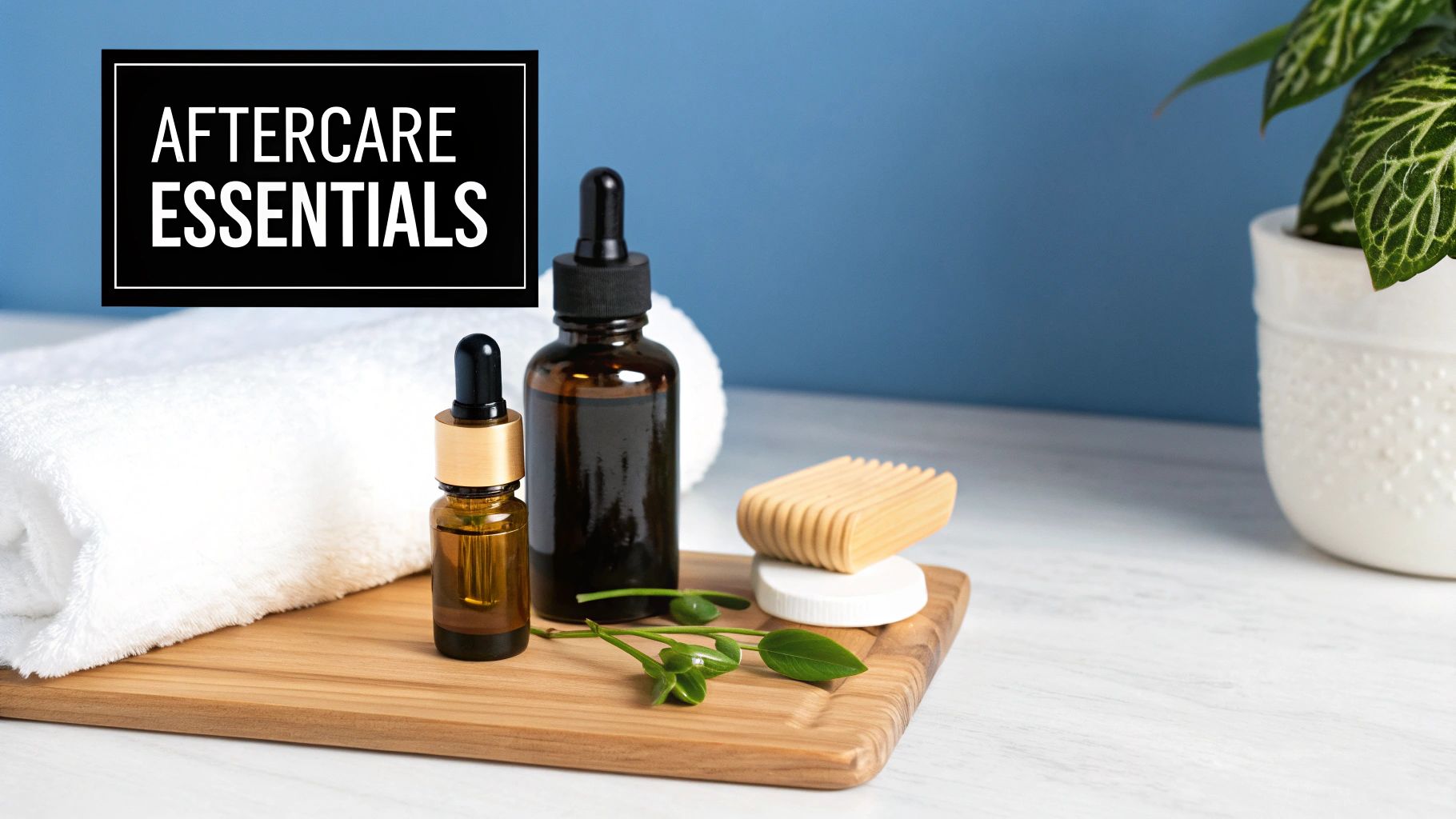
For the first 24 to 72 hours, less is definitely more. Your skin's protective barrier has been temporarily disrupted, so your only jobs are to hydrate, soothe, and protect. This means sticking to the gentlest, most basic products that help your skin recover without causing more stress.
To aid the healing process and get the best results, you might want to bring in a dedicated recovery cream designed to calm and deeply moisturize the skin. Look for powerhouse ingredients like hyaluronic acid for a surge of moisture and ceramides to help rebuild that all-important skin barrier.
Honestly, the biggest mistake people make after microneedling is jumping back into their old routine too soon. Piling on harsh products or getting sun exposure is a recipe for irritation. This is a time for healing, not for aggressive treatments.
To keep things simple, I've broken down exactly what you should be doing—and what you need to avoid—while your skin is busy regenerating. Following these tips protects your investment and gets you on the fast track to that smoother, healthier glow.
The Do's And Don'ts of Microneedling Aftercare
Getting through the first few days is easy once you know the ground rules. Stick to this list, and you'll speed up your healing and lock in those beautiful results.
Things You SHOULD Do:
- Cleanse Gently: Reach for a mild, soap-free cleanser and use only lukewarm water. When you're done, gently pat your skin dry with a clean towel. Absolutely no rubbing or scrubbing.
- Hydrate, Hydrate, Hydrate: A simple, high-quality hyaluronic acid serum will be your best friend. Apply it several times a day to keep your skin plump, hydrated, and comfortable.
- Be Diligent with SPF: Sun protection is non-negotiable. Use a broad-spectrum mineral sunscreen with an SPF of 30 or higher every single day, even if you’re just staying inside.
Things You MUST AVOID:
- Active Ingredients: For at least 5-7 days, put all your potent skincare on pause. That means no retinoids, vitamin C serums, alpha-hydroxy acids (AHAs), beta-hydroxy acids (BHAs), or any kind of exfoliant.
- Heat and Sweat: For the first 48 hours, skip the intense workouts, saunas, steam rooms, and super hot showers. Heat and sweat can ramp up inflammation and lead to irritation.
- Makeup and Irritants: Hold off on makeup for at least 24 hours. You'll also want to avoid any products that contain alcohol, fragrances, or other common skin irritants.
Got Questions About Microneedling? We've Got Answers.
It's totally normal to have a few questions swirling around, even after learning the basics. Getting straight answers is the best way to feel good about moving forward. Let's tackle some of the most common things people ask so you can walk into your treatment feeling confident and excited.
One of the first things everyone wants to know is, "When will I see results?" You'll likely notice a healthy, rosy glow pretty soon after your first appointment, but the real, lasting changes happen beneath the surface as your skin gets to work building new collagen. It's a marathon, not a sprint.
How Many Sessions Will I Actually Need?
To see a real, noticeable difference, most people benefit from a series of 3 to 6 treatments. Of course, this isn't a one-size-fits-all number. Your skin's specific needs really dictate the game plan.
If you're dealing with deeper acne scars or more significant signs of aging, you might lean towards the higher end of that range. Someone just looking for a bit of texture refinement and an overall boost might be thrilled after just three. We space these sessions out by about 4 to 6 weeks, which is the sweet spot for letting your skin heal and ramp up collagen production before we trigger that amazing response all over again.
The Big Question: Does It Hurt?
Let's be honest, the word "needle" can make anyone a little nervous. But I can tell you that the vast majority of my clients are pleasantly surprised by how comfortable the whole process is.
Before we even start, we apply a strong topical numbing cream and let it sit for 20-30 minutes. It does a fantastic job of desensitizing the skin. Most people describe the sensation as a light vibration or maybe a faint scratching feeling, but definitely not pain.
Professional Microneedling vs. At-Home Rollers
It's easy to be tempted by at-home derma rollers, but it's crucial to understand they are worlds apart from a professional treatment. The differences in safety, how they work, and the results you can expect are massive.
- Needle Depth & Safety: Professional devices use sterile, single-use needle tips that can be adjusted to the perfect depth for different areas of your face. At-home rollers have short, fixed needles that can easily bend, get dull, and introduce bacteria if they aren't perfectly sterilized, risking infection and even scarring.
- How They Work: A professional pen creates clean, vertical micro-channels that trigger a pure healing response. A derma roller, because it's rolled across the skin, creates angled, V-shaped tears that can do more harm than good—it's more like plowing the skin than aerating it.
Going to a pro is the only way to ensure your treatment is sterile, safe, and truly effective. The precision-controlled micro-injuries created by a trained expert with medical-grade equipment are what deliver those incredible skin benefits without the risk.
Ultimately, investing in your skin with a professional means you're in the hands of someone who knows how to get you predictable, beautiful results safely.
Ready to see how microneedling can rejuvenate your skin? At Meljestic Spa, our licensed aesthetician Melissa Martinez provides expert, personalized treatments in a luxurious and calming environment. We invite you to schedule a complimentary consultation to discuss your skincare goals and create a plan that delivers the smoother, brighter complexion you deserve. Book your visit to Meljestic Spa today!


