
When you're trying to decide between microneedling and a chemical peel, it really boils down to one simple concept: microneedling rebuilds your skin from the inside out, while a chemical peel resurfaces it from the outside in. The best treatment for you hinges on whether your main concern is about texture, like deep scars, or tone, like sun spots.
A Tale of Two Treatments
Choosing between popular skin treatments can feel overwhelming, but it gets a lot easier once you understand how they work. Both microneedling and chemical peels are fantastic for rejuvenating the skin, but they get there through completely different pathways. Because of this, each one has its own set of strengths for tackling specific skin issues.
Think of it this way: if your skin is a wall that needs fixing, microneedling is like bringing in a crew to reinforce the foundation and rebuild its core structure. A chemical peel, on the other hand, is like carefully sandblasting the old, discolored paint off the surface. Both make the wall look better, but they solve different fundamental problems.
What Is Microneedling?
Microneedling, which you might also hear called collagen induction therapy, is a purely mechanical process. We use a specialized device with tiny, sterile needles to create thousands of controlled micro-injuries in the skin. This sounds intense, but it’s precisely what kicks your body's natural healing process into high gear.
That healing response is where the magic happens. Your skin starts producing a flood of new collagen and elastin—the proteins that give it structure, firmness, and bounce. This gradually remodels the skin from deep within the dermal layer, making it incredibly effective for things like:
- Deep acne scars, especially atrophic or "ice pick" scars.
- Fine lines and wrinkles, as it plumps the skin from underneath.
- Enlarged pores and uneven skin texture.
- Stretch marks and other scarring.
Key Insight: Microneedling doesn't strip away layers of skin. It works with your body, prompting it to generate smoother, stronger tissue all on its own.
What Is a Chemical Peel?
A chemical peel is the opposite—it’s a biochemical resurfacing treatment. It involves applying a specific acid solution, like glycolic, salicylic, or trichloroacetic acid (TCA), to the skin's surface. This solution works by dissolving the glue that holds dead, damaged skin cells together.
Over the next few days, those outer layers of skin exfoliate and peel away. What's revealed underneath is a fresh, smoother, and more radiant layer of new skin. Peels come in different strengths (light, medium, or deep), which determines how dramatic the results and the downtime will be. Peels are my go-to for surface-level problems, including:
- Hyperpigmentation from sun spots, age spots, or melasma.
- Uneven skin tone and general dullness.
- Superficial fine lines caused by sun damage.
- Active acne and congested pores.
Here’s a quick breakdown of how they fundamentally differ.
| Feature | Microneedling | Chemical Peels |
|---|---|---|
| Primary Method | Mechanical Collagen Induction | Chemical Exfoliation |
| Target Layer | Dermis (deeper layer) | Epidermis (surface layer) |
| Main Goal | Rebuilds and remodels skin structure | Resurfaces and removes damaged cells |
| Best For | Textural issues (deep scars, wrinkles) | Tonal issues (pigmentation, dullness) |
How Each Treatment Actually Works on Your Skin
When you're weighing microneedling against chemical peels, the most important thing to understand is how each one changes your skin. They both aim for rejuvenation, but they take completely different paths to get there. One rebuilds from the inside out, while the other refines from the outside in.
Think of it this way: microneedling is like renovating the foundation of a house, while a chemical peel is like giving the exterior a fresh, new coat of paint.
The Science of Microneedling
Microneedling is a mechanical process, often called collagen induction therapy. It works by using a specialized device with tiny, sterile needles to create thousands of controlled micro-punctures in the skin. This isn't about removing anything; it's about creating a very specific, controlled "injury."
This controlled damage is the magic trigger. It kicks your body’s natural healing process into high gear, signaling cells known as fibroblasts to start producing a surge of new collagen and elastin. These are the proteins that give your skin its youthful bounce, structure, and firmness. Essentially, you're tricking your skin into rebuilding itself from the dermis up.
Over the next few weeks, this new collagen matrix develops, plumping the skin from within to smooth out fine lines and fill in textural issues like acne scars. Because the top layer of skin (the epidermis) remains intact, it's often a safer bet for darker skin tones who might be at risk for pigmentation issues.
The Science of Chemical Peels
Chemical peels are a different beast altogether. They work through a controlled biochemical reaction using specific acid solutions, like glycolic acid, salicylic acid, or trichloroacetic acid (TCA).
When an aesthetician applies a peel, the solution gets to work dissolving the bonds holding dead, damaged skin cells together on the surface. It effectively loosens and lifts away the dull, outermost layers where problems like sun spots, uneven tone, and superficial blemishes tend to live.
Key Differentiator: Microneedling is a generative process—it adds new collagen to your skin's framework. A chemical peel is a subtractive process—it removes damaged surface layers to reveal the healthier skin underneath.
The strength of the peel—light, medium, or deep—determines how many layers are removed. A light peel gives you a quick glow-up by targeting just the top layer, while a deep peel goes further to tackle more stubborn sun damage or texture. By clearing away the old, damaged cells, your body is prompted to bring fresh, new cells to the surface.
To really nail down the difference, let's break down the fundamental mechanics of each treatment.
Core Mechanism Comparison Microneedling vs Chemical Peels
| Feature | Microneedling | Chemical Peels |
|---|---|---|
| Primary Action | Creates physical micro-injuries in the dermis to stimulate new tissue growth. | Applies a chemical solution to dissolve and remove outer layers of skin. |
| Biological Trigger | Activates the body's natural wound-healing response. | Induces a controlled chemical exfoliation and cellular turnover. |
| Target Layer | Primarily targets the dermis to rebuild the skin's foundation. | Primarily targets the epidermis to resurface and refine the skin's top layers. |
| Core Principle | Collagen Induction Therapy (building new structural protein). | Chemoexfoliation (removing damaged surface cells). |
| Method of Action | Physical, mechanical puncturing. | Biochemical, dissolving cellular bonds. |
This table shows that while the goal is better skin, the "how" is worlds apart. Microneedling is all about construction, and chemical peels are about demolition and renewal.
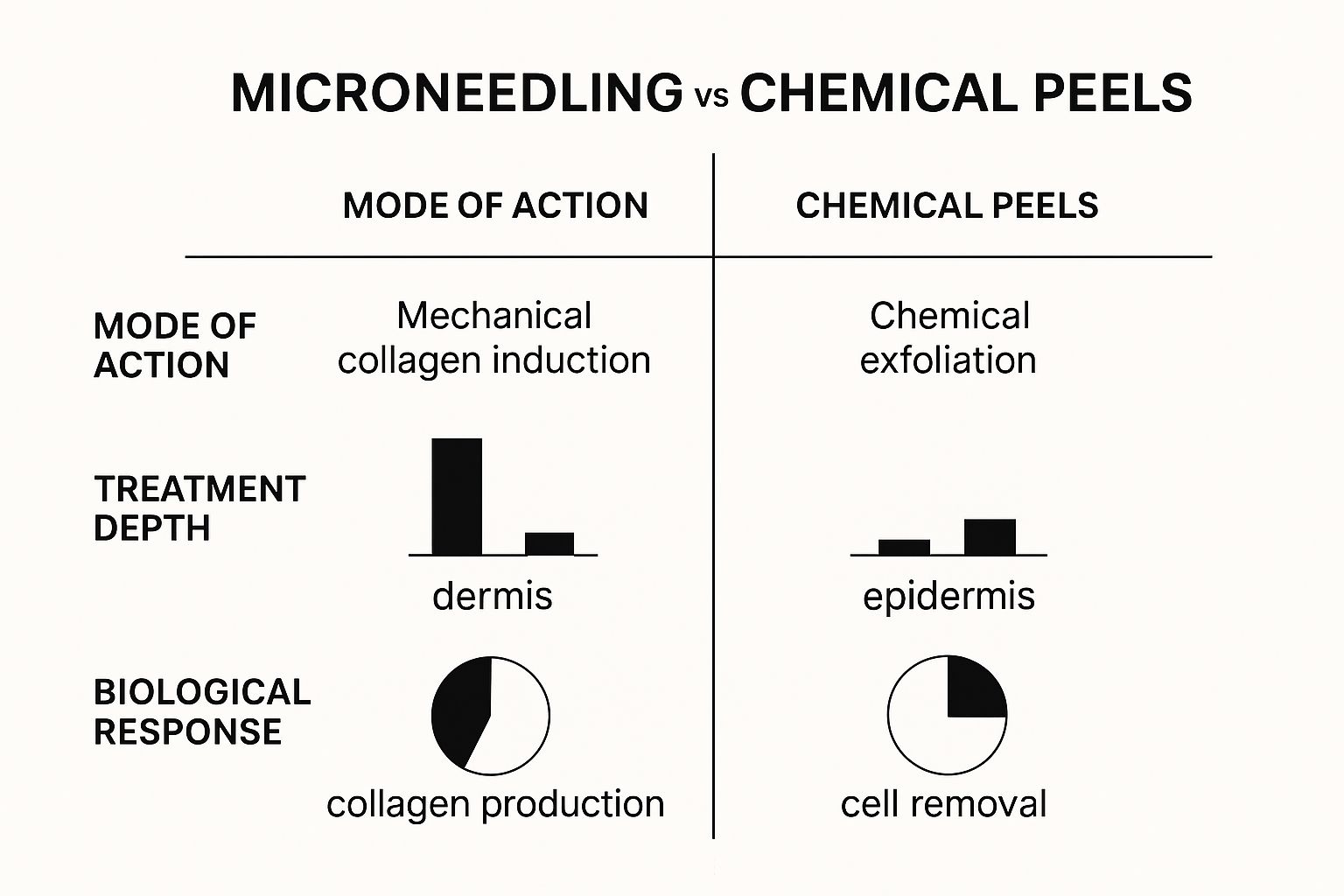
Comparing the Biological Response
So, which biological response is right for you? It really boils down to your main skin complaint.
- Choose Microneedling If: Your issues are structural. We're talking about atrophic acne scars, deeper fine lines, and sagging skin. If you need to build back firmness and volume, microneedling is your go-to because it directly creates new collagen.
- Choose a Chemical Peel If: Your problems are on the surface. This is the perfect solution for pigmentation issues like sun spots or melasma, dullness, and improving overall skin tone. It literally peels away the problem layers.
Getting a handle on these core differences is the first step toward picking the right treatment. Microneedling fixes the skin's architecture, while chemical peels perfect its finish.
Choosing the Best Treatment for Your Skin Concern
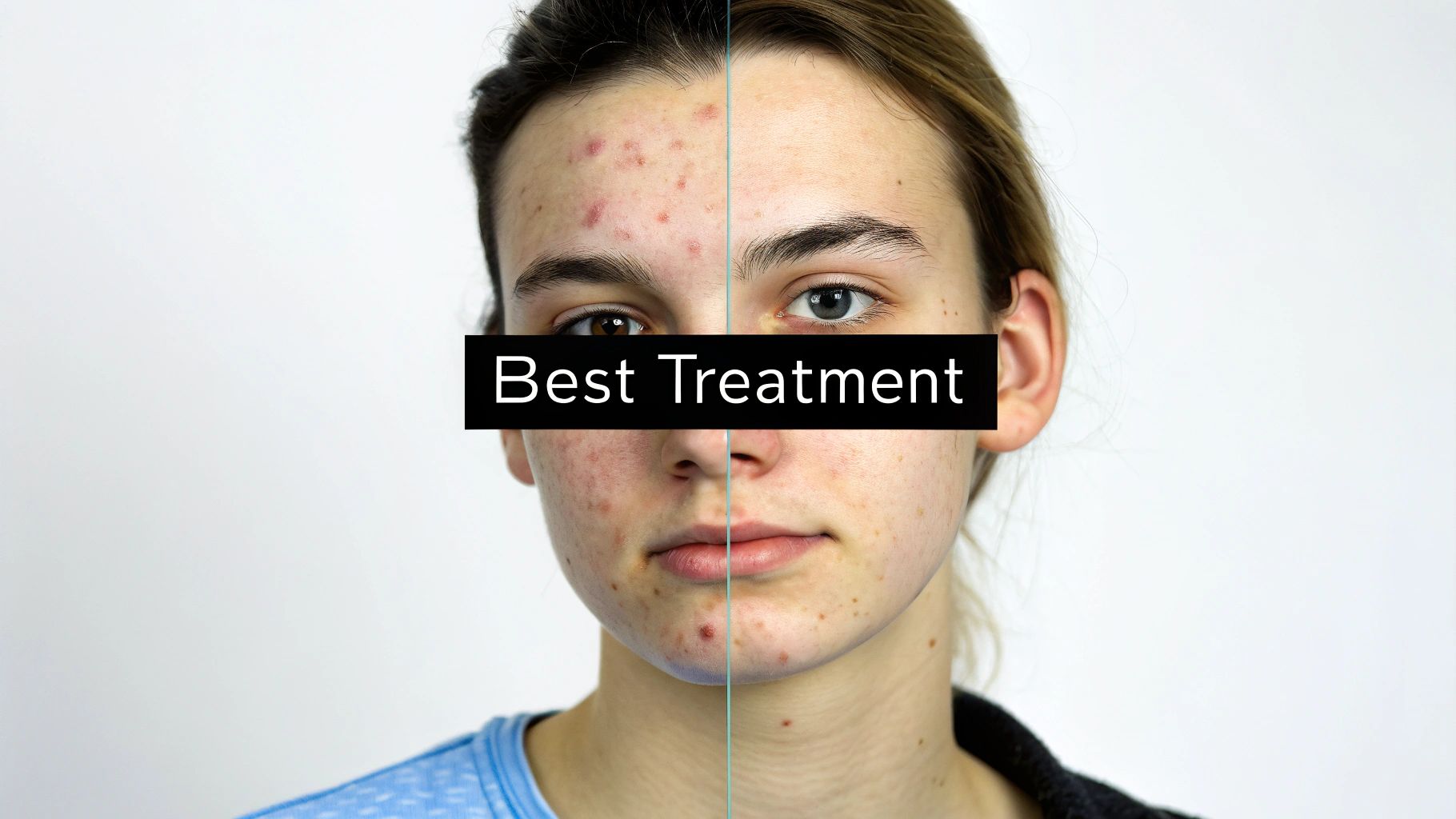
Figuring out whether microneedling or a chemical peel is right for you gets a lot easier when you stop thinking in vague terms like "better skin" and start focusing on your main goal. Let’s break down common skin issues and see which procedure is really built to tackle them.
This way, you're not just picking a treatment; you're investing in the one that’s going to give you the results you actually want. Think of it like this: you need the right tool for the job. You wouldn't try to fix a deep dent with a coat of paint, and the same principle applies to your skin.
For Deep Acne Scars and Textural Issues
When you're dealing with acne scars—especially indented ones like "ice pick" or "boxcar" scars—the real problem is a loss of collagen deep in the dermis. A treatment that only works on the surface just can't fix it. This is where microneedling has a serious advantage.
At its core, microneedling is collagen induction therapy. The tiny micro-injuries it creates reach down into the dermis, kicking your body’s natural healing process into gear. This tells your skin to build brand new, healthy collagen that literally fills in those scars from the bottom up. It's about rebuilding the skin's underlying structure, which leads to a much smoother texture over time.
While a medium or deep peel might help with very shallow scars, microneedling is the go-to for fixing significant textural damage. You can get a more detailed look at how this works in our guide on microneedling for acne scars.
Key Takeaway: For deep-seated textural problems like acne scars, microneedling is superior because it rebuilds the skin's support structure. A chemical peel works on the surface and cannot remodel dermal collagen to the same extent.
The science backs this up. A head-to-head study found that 73.33% of patients who had microneedling saw a significant improvement in their acne scars. For the group using a glycolic acid chemical peel, only 33.33% saw similar results. That's a huge difference that clearly shows microneedling's edge for this particular problem.
For Sun Damage and Hyperpigmentation
If your main frustration is discoloration, the tables turn completely in favor of chemical peels. Issues like sun spots, melasma, and the dark marks left behind after a breakout all live in the epidermis, the skin's outermost layer. Peels are specifically designed to work their magic right there.
A chemical peel uses a carefully chosen acid solution to dissolve the "glue" that holds old, discolored skin cells together. This process lifts away the pigmented cells, revealing the fresher, more evenly toned skin hiding underneath.
Here’s a quick guide to choosing the right peel:
- Mild to Moderate Sun Spots: A series of light to medium peels with acids like glycolic or lactic acid can do wonders for fading this kind of discoloration.
- Melasma: This hormonal pigmentation can be stubborn. Peels are a great tool, but they require a very precise, customized approach to avoid making it worse.
- Overall Dullness: Even a light chemical peel is fantastic for an instant refresh, sloughing off that top layer of tired, lackluster skin cells.
While microneedling can help with pigmentation by speeding up cell turnover, its main job isn't exfoliation. For a brighter, more even skin tone, a chemical peel is the more direct and effective path.
For Fine Lines and Wrinkles
When it comes to fine lines and wrinkles, the best choice really depends on their depth and what caused them. Here, the microneedling vs. chemical peel debate gets more interesting because both treatments bring something valuable to the table.
Microneedling tackles wrinkles by stimulating long-term collagen growth. This new collagen plumps the skin from within, gradually softening the look of fine lines and giving your skin a firmer, more youthful foundation. It's a fantastic strategy for preventing future aging and treating wrinkles caused by lost volume.
On the other hand, chemical peels offer a more immediate smoothing effect. By removing the top layer of skin, they can instantly make superficial fine lines—especially those from sun damage—less visible. A medium-depth peel can provide even more dramatic results.
Here's how to think about it situationally:
- For long-term anti-aging and plumping: Microneedling is the clear winner because it builds a lasting support structure of new collagen.
- For an immediate smoothing of surface lines: A chemical peel will deliver quicker, more obvious results.
Ultimately, matching the treatment to your specific skin concern is the most important step. By understanding where each procedure truly shines, you can make a confident and informed decision that aligns perfectly with your goals.
Comparing Recovery Timelines and Long-Term Results
When choosing between microneedling and chemical peels, what happens after your appointment is just as important as the treatment itself. The post-procedure experience—from immediate downtime to how long your results last—is a huge factor in deciding which one truly fits your lifestyle and skin goals.
A realistic look at the recovery process helps you plan your life. One option gets you back on your feet quickly, while the other might mean clearing your social calendar for a bit, depending on the intensity.
The Immediate Aftermath and Downtime
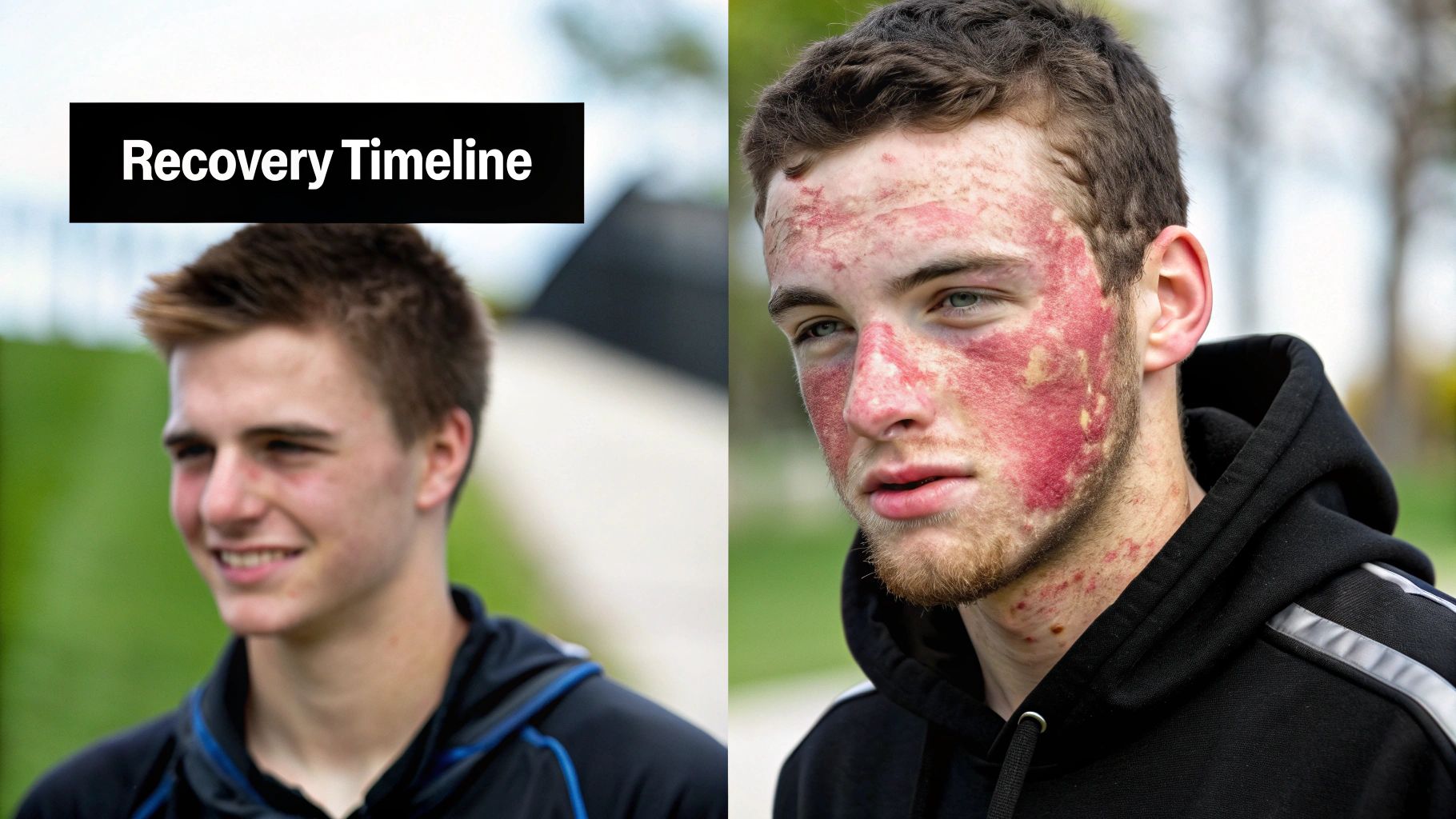
After a microneedling session, you can expect your skin to look and feel like it has a mild to moderate sunburn. This redness and sensitivity are totally normal and usually fade within 24 to 48 hours. Most people are comfortable returning to work or their usual routine the very next day, making it a fantastic choice if you have a busy schedule.
Chemical peels are a different story. The recovery is a sliding scale based on the peel's strength.
- Light Peels (Superficial): These are the "lunchtime" peels for a reason. Downtime is minimal, with maybe some light redness and flaking for a few days that's easy to manage.
- Medium Peels: This is where you need to plan ahead. Expect noticeable redness, some swelling, and then significant peeling that can last for five to seven days. It’s a good idea to lay low for a few days.
- Deep Peels: These are serious, intensive treatments that demand significant downtime. Recovery can involve weeks of intense redness, swelling, and crusting.
This difference in recovery is often the main deciding factor. If taking a week off for visible peeling isn't an option, microneedling has a clear advantage.
Evaluating the Longevity of Results
Beyond the initial healing, the big question is: how long will my gorgeous new skin last? This is where the core philosophy of each treatment—rebuilding vs. resurfacing—really comes into play.
Microneedling works by kicking your body’s own collagen production into high gear. It’s essentially building a new, stronger foundation for your skin from the inside out. Since this new collagen is your own, the results are incredibly long-lasting. You’ll see gradual but durable improvements in texture, firmness, and scarring.
Key Insight: Microneedling builds long-term structural improvements by creating new tissue. A chemical peel, in contrast, provides a more immediate surface renewal that often requires more frequent maintenance to sustain.
Chemical peels, on the other hand, get their results by removing the damaged outer layers of skin. This gives you a fantastic, immediate boost in tone and a smoother surface, but it doesn't fundamentally change the skin's underlying structure. Because of this, the benefits for issues like hyperpigmentation often need regular sessions to maintain, as your skin is constantly exposed to environmental triggers like the sun.
Long-Term Efficacy and Skin Health
When we look at long-term outcomes, especially for texture issues like acne scars, microneedling often has superior staying power. Its ability to truly remodel dermal collagen means those improvements can stick around for a long time. In fact, studies show microneedling can maintain scar improvement for up to 12 months, while peel benefits can fade more quickly.
It's also generally a safer bet for darker skin tones, minimizing the risk of post-inflammatory hyperpigmentation—a concern that affects up to 30–40% of chemical peel patients with certain skin types.
For surface-level problems like sun damage, chemical peels deliver excellent, repeatable results. A well-planned series of peels can effectively manage pigmentation and keep your skin looking bright and refreshed. To learn more about this approach, you can explore our expert insights on using chemical peels for sun damage.
Ultimately, the best long-term choice depends on your primary goal: deep structural repair or consistent surface refinement.
What About Using Both? A Combination Strategy for Maximum Renewal
Sometimes, the debate isn't about choosing one treatment over the other. For those looking to tackle more complex skin concerns, the real magic happens when you combine microneedling and chemical peels into a single, strategic treatment plan. This isn't about doing more for the sake of it; it's about creating a synergy where the two treatments work together to produce results that neither could manage on its own.
Think of it as a coordinated attack on skin aging and damage. The chemical peel goes first, acting as the ground crew. It clears away the clutter—the dead skin cells, superficial pigment, and general debris sitting on the surface. This prep work creates a perfect, clean slate, allowing the microneedling, in a later session, to penetrate deeper and more evenly, kicking off that all-important collagen production without any interference.
The Power of a Dual-Action Approach
This one-two punch is especially effective for stubborn issues that affect both the skin's surface and its deeper layers. Take severe sun damage, for example. You're often dealing with deep-set wrinkles (a structural problem) and a lot of brown spots (a pigmentation problem). A single treatment might only improve one or the other.
A smart, professional plan would alternate the two:
- Visit 1: Start with a medium-depth chemical peel. This will lift away the hyperpigmentation and smooth out that top layer of skin.
- Visit 2 (4-6 weeks later): Now it's time for microneedling. With the surface prepped, the needles can get right to work stimulating the dermal layers, building new collagen to plump up the skin and soften those wrinkles from the inside out.
This scheduled approach gives your skin plenty of time to heal between appointments while ensuring each treatment can do what it does best. The peel handles the surface refinement, and microneedling takes care of rebuilding the foundation.
The Expert Takeaway: Combination therapy isn't about getting a peel and microneedling on the same day. It’s a carefully timed protocol where one treatment sets the stage for the other to work more effectively, targeting multiple layers of the skin for a more dramatic and lasting change.
This isn't just a popular trend; it's a method backed by solid clinical results, particularly for notoriously tough conditions like atrophic acne scars, which create both surface pitting and a loss of underlying skin volume.
Clinically Proven for Tough-to-Treat Conditions
Time and again, research shows that a combined approach yields far better outcomes for difficult skin issues. One compelling study looked at patients with atrophic acne scars, splitting them into three groups: microneedling only, chemical peel only, and a combination of both over a five-month period.
The results were telling. Only the group receiving combination therapy saw a statistically significant improvement in their scar grading. You can dig into the specifics yourself and see the data in the full study on combination therapy for acne scars.
This really highlights why seeing an experienced professional is so crucial. A skilled provider can look at your skin's unique needs—be it deep textural issues, significant sun damage, or persistent scarring—and map out a plan. By using both the resurfacing power of a peel and the collagen-rebuilding force of microneedling, you get a comprehensive renewal that simply isn't achievable with a single treatment. You’re essentially treating the skin from the top-down and the bottom-up, leading to a complexion that’s not just temporarily better, but fundamentally healthier, smoother, and firmer.
Answering Your Key Questions
When you're trying to decide between microneedling and chemical peels, the "what ifs" and practical questions always come up. It's one thing to read about the benefits, but it's another to know what it actually feels like, whether you can do it yourself, and what it's going to cost. Let's get straight to the answers.
Getting these real-world details sorted out is what helps you move from just thinking about a treatment to confidently choosing the right one for you.
Which Treatment Is More Painful?
Everyone's pain tolerance is different, but I can give you a good idea of what to expect from each treatment. The good news is that neither one is unbearable, and any good professional prioritizes your comfort.
With microneedling, we're creating thousands of tiny micro-injuries in the skin. To make this comfortable, a topical numbing cream is a must. We apply it about 20-30 minutes before we start, and it works wonders. Most of my clients say they feel a light pressure or a sensation like a vibrating sand-papery tool gliding over their skin. You might notice it a bit more over bony areas like your forehead or jawline, but it’s quick and the feeling disappears as soon as we're done.
Chemical peels feel completely different. There's nothing sharp involved. Instead, as the acid solution goes on, you'll feel a definite tingling, stinging, or warming sensation. It usually gets more intense for a couple of minutes and then calms down as the peel is neutralized. For lighter peels, it's very manageable, and we often use a small fan to keep your skin cool and comfortable.
The Bottom Line: Most people find microneedling less uncomfortable during the treatment, all thanks to that numbing cream. A chemical peel is more of a temporary "spicy" sting, whereas microneedling is a more mechanical sensation.
Are At-Home Options Safe?
DIY beauty is huge right now, and you can find at-home derma rollers and peels everywhere. But it's so important to understand that these are not just weaker versions of professional treatments—they come with real risks.
At-home microneedling tools, like derma rollers, use very short needles, usually 0.25mm to 0.5mm. That's not deep enough to get the kind of collagen stimulation you’re looking for. Worse, it’s incredibly difficult to properly sterilize them at home, which opens the door to infection. If your technique isn't perfect, you can easily cause micro-tears and even scarring.
The same goes for at-home chemical peels. The acids are at much lower concentrations, so while they might give you a bit of a glow, they won't correct deeper issues. And please, don't be tempted by the stronger, unregulated acids you can find online. I've seen the results—chemical burns, permanent scarring, and terrible hyperpigmentation. It’s just not worth it.
Here’s what you get from a professional that you can't get at home:
- Sterility and Safety: We use medical-grade, single-use needle cartridges. There's zero risk of cross-contamination.
- Customized Strength: An expert esthetician knows exactly what needle depth or peel formula your skin needs to get results without causing harm. For instance, safely treating sensitive skin requires a very specific approach. We cover this in our guide on chemical peels for sensitive skin.
- Proper Technique: Knowing how to apply even pressure and work with the contours of the face is a skill that ensures you get a great result, not a complication.
How Much Do Professional Treatments Cost?
The price tag for professional skin treatments can vary a lot based on where you live, the clinic's reputation, and the exact device or product line they use. But I can give you a general ballpark to help you plan.
Microneedling: You can expect a single session of professional microneedling to cost somewhere between $200 and $700. This usually covers the numbing cream and any serums applied afterward. For a real transformation, you’ll likely need a series of 3-6 sessions, spaced about a month apart, so be sure to budget for the full course.
Chemical Peels: The cost for peels has a much wider spread, from $150 to over $3,000, because it all depends on the depth.
- Light or Superficial Peels: These are your most affordable option, typically running from $150 to $400.
- Medium-Depth Peels: For more noticeable correction, these usually fall in the $500 to $1,500 range.
- Deep Peels: These are serious medical procedures performed by doctors and can cost $3,000 or more.
The only way to know for sure is to book a consultation. That way, a professional can actually see your skin, listen to your goals, and give you a precise quote. And remember, professional treatments work best when you support them with a great daily routine and healthy habits—you might find some useful holistic tips for radiant skin to complement your journey.
Ready to discover the perfect treatment for your skin? At Meljestic Spa, we provide complimentary consultations to help you choose the right path to a smoother, brighter complexion. Book your appointment today and let our experts create a personalized plan just for you.


