
You’ve just finished your laser hair removal session—congratulations! Now, the focus shifts to aftercare. How you treat your skin over the next 48 hours is absolutely crucial for a smooth recovery and getting those fantastic results you’re after.
What To Expect Immediately After Your Treatment
Right after you leave the clinic, your skin will likely feel warm and look a little pink, almost like a very mild sunburn. You might even see some slight swelling around the individual hair follicles. Don't panic! This is perfectly normal and, honestly, a good sign. It means the laser did its job and effectively targeted the follicles.
These effects are temporary and usually fade within a few hours, though for some people, it can take a day or two. Your main job is to help your skin calm down. The laser uses heat, so the last thing you want to do is add more. That means no hot showers, saunas, or steamy baths for at least a day. Stick to cool or lukewarm water instead. While the treatment is different, many of the core principles of skin healing apply across various procedures; you can learn more about general skin reactions and what to expect post-procedure to get a broader perspective.
Soothing and Cleansing The Treated Area
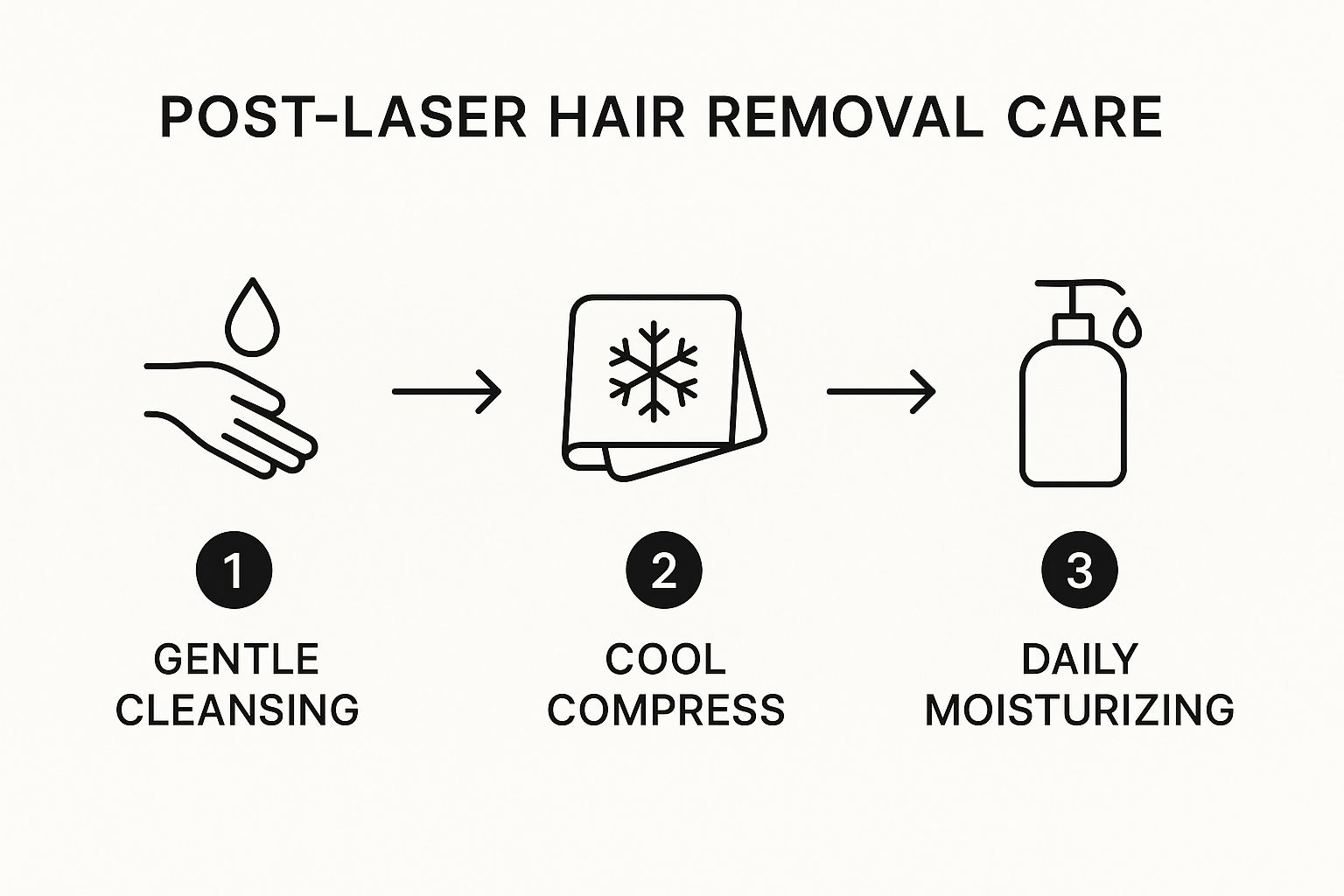
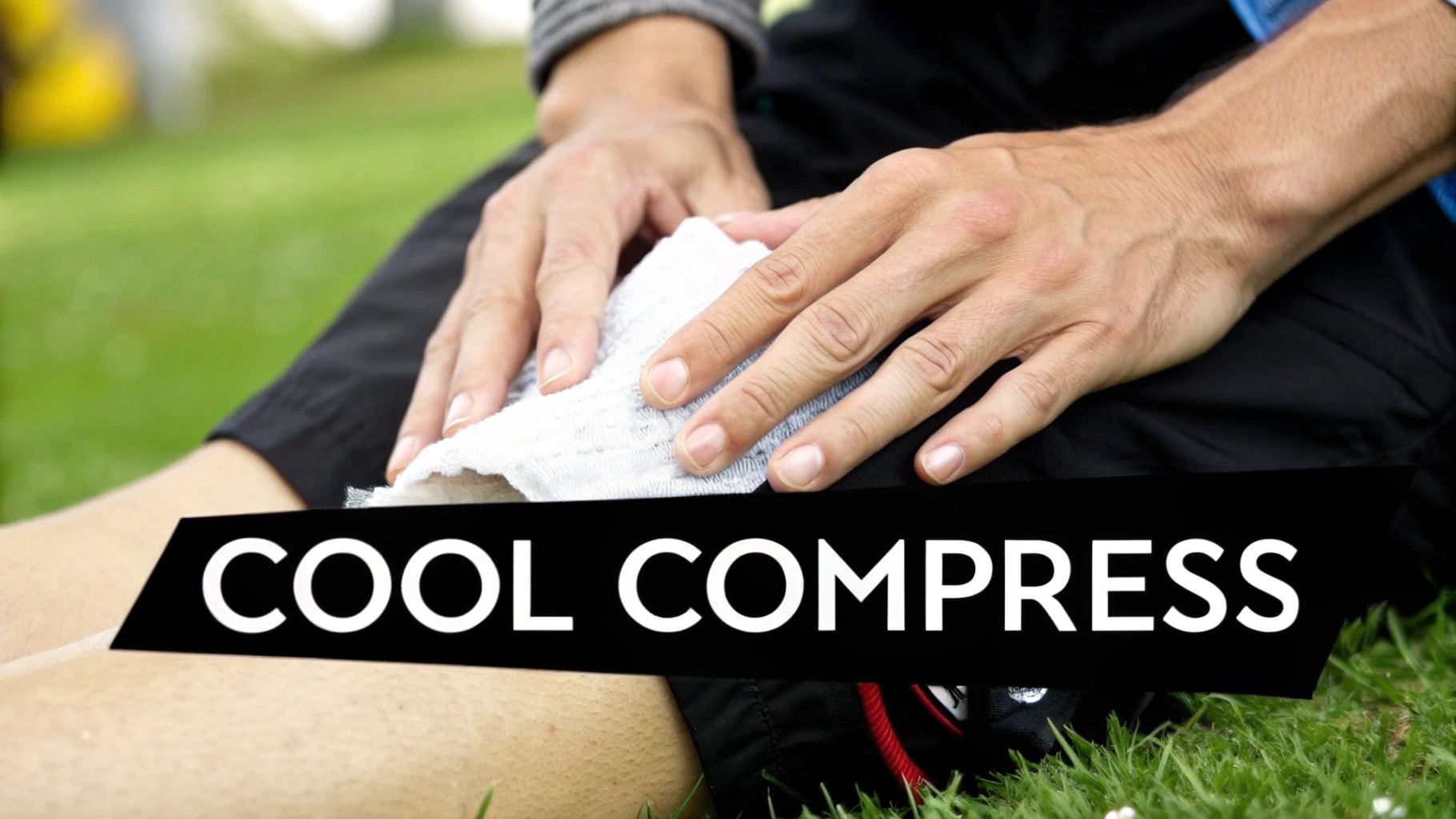
A cold compress will be your best friend for the first few hours. An ice pack wrapped in a thin towel or a simple, cool, damp cloth applied for 10-15 minutes at a time works wonders to reduce that warm sensation and bring down any redness.
When it's time to cleanse, be gentle. Use a mild, fragrance-free soap and lukewarm water, then pat the area dry with a soft towel. Whatever you do, don't rub! Rubbing creates friction and will only irritate your already sensitive skin.
Expert Tip: After cleansing, I always recommend applying a soothing moisturizer. Gels with aloe vera are fantastic for this. If you’re experiencing a bit of itchiness, a 1% hydrocortisone cream can provide quick relief. Just be sure to use products that are non-comedogenic so they don't clog your pores.
This visual guide breaks down the essential steps for that first critical day.
To make it even simpler, here’s a quick-reference checklist for what to do—and what to avoid—in those first two days.
Immediate Aftercare Checklist (First 48 Hours)
| Timeframe | What to Do | What to Avoid |
|---|---|---|
| First 24 Hours | Apply a cold compress intermittently. | Hot showers, baths, saunas, and steam rooms. |
| Cleanse gently with mild, unscented soap. | Strenuous exercise that causes sweating. | |
| Pat skin dry; do not rub. | Direct sun exposure on the treated area. | |
| First 48 Hours | Apply a soothing moisturizer (like aloe vera). | Abrasive scrubs, exfoliants, or retinol products. |
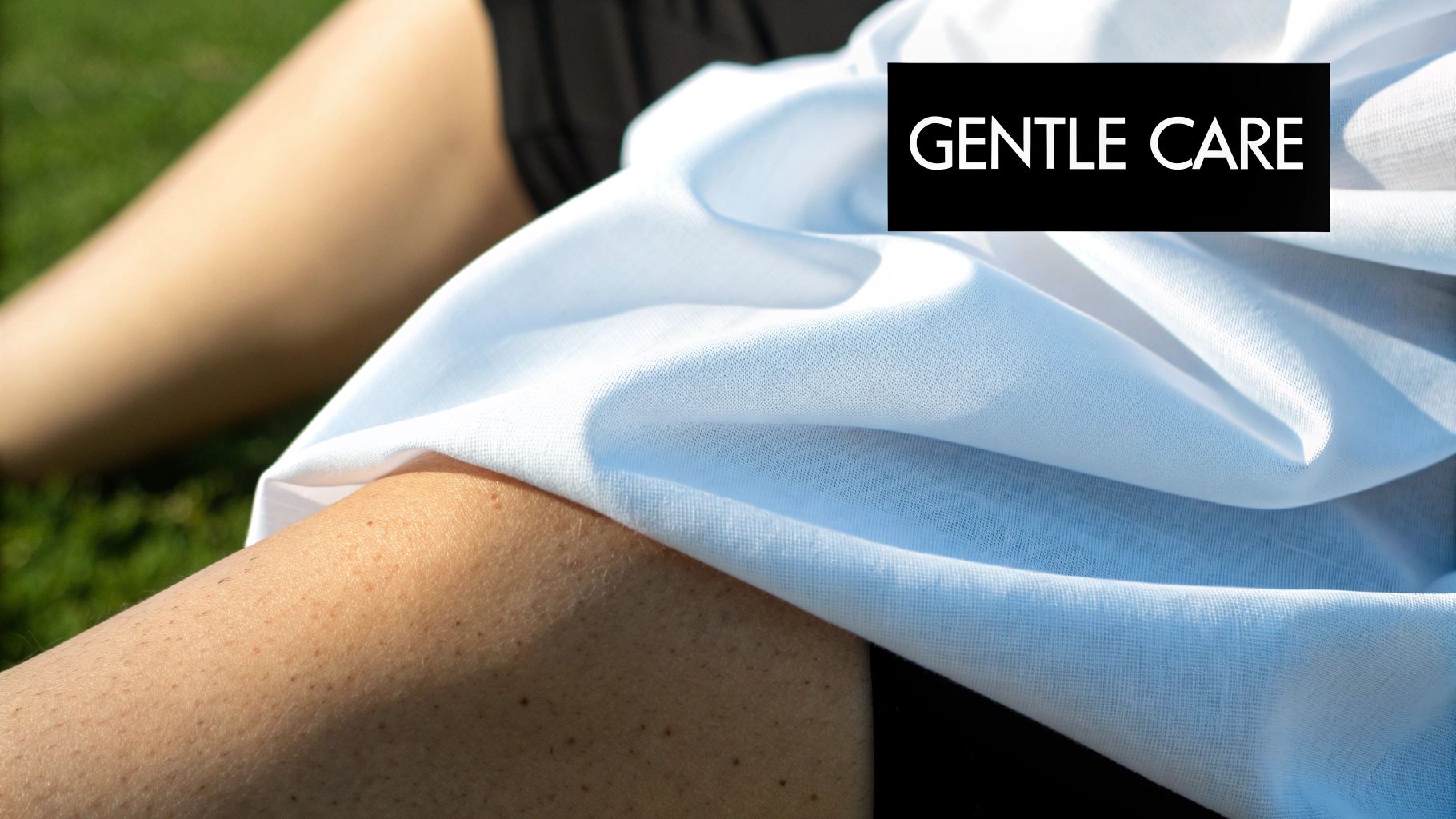
| Wear loose, soft clothing over the area. | Swimming pools, hot tubs, or oceans. | |
| Apply broad-spectrum SPF 30+ if going outside. | Shaving, waxing, or plucking the treated area. |
Sticking to these simple guidelines will help your skin heal quickly and beautifully, setting you up for the best possible outcome from your treatment.
What to Expect During the Hair Shedding Phase
A few days after your appointment, you might look at the treated area and think, "Is that new hair already?" Don't panic! What you're seeing is the beginning of the shedding phase, which is exactly what we want to happen. It's a fantastic sign that the treatment worked.
The laser essentially disables the hair follicle, and over the next one to three weeks, your body will naturally push those treated hairs out. It might look a bit like stubble, but these hairs are on their way out for good.
The most important rule during this time is to resist the urge to pluck, tweeze, or wax. I know it's tempting, but pulling the hair out can mess with the follicle's natural cycle and potentially impact the effectiveness of your next session. Just let them be.
How Gentle Exfoliation Can Help
After the first week or so, once any redness or tenderness has completely faded, you can start to gently exfoliate. This is a great trick to help the shedding process along and prevent any of those pesky hairs from getting trapped under the skin and becoming ingrowns.
Here are a couple of my go-to methods:
- A soft washcloth or gentle scrub: While you're in the shower, use a soft washcloth or a mild body scrub in light, circular motions. The goal isn't to scrub the hairs out forcefully, but to simply clear away dead skin cells that might be blocking their exit.
- A lotion with mild acids: Products with ingredients like glycolic or salicylic acid are also great. Using one a few times a week helps keep the follicles clear and the skin smooth.
A friendly reminder from experience: less is more. The idea is to gently assist the natural process, not force it. Over-exfoliating will only lead to irritated skin, which you definitely want to avoid while it's healing.
Managing this stage correctly makes a huge difference. For a deeper dive into this, check out our guide on how to speed up shedding after laser for more pro tips.
Don't Forget to Moisturize
Alongside exfoliation, keeping your skin hydrated is a non-negotiable step. Healthy, moisturized skin is softer and more flexible, which makes it much easier for the shedding hairs to make a clean exit without getting stuck.
Get into the habit of applying a good, fragrance-free moisturizer every day, especially after you bathe or shower. This simple step reinforces your skin’s natural barrier, prevents dryness, and keeps the whole area calm and smooth. It’s the perfect way to prep your skin for an even better outcome at your next appointment.
Your Long-Term Skin Protection Plan
Once the initial healing is over, the real work begins. Getting incredible, long-lasting results from laser hair removal isn't just about what you do in the first few days—it’s about committing to a solid long-term skin protection plan. Think of it as protecting your investment to keep your skin smooth and clear for the long haul.
The single most important habit you need to build? Daily, non-negotiable sun protection.
After laser treatments, your skin is much more sensitive to UV radiation. Even a little bit of casual sun exposure can trigger hyperpigmentation (dark spots) or hypopigmentation (light spots) in the treated areas. This can quickly reverse all the progress you've made.
Make Sunscreen Your Best Friend
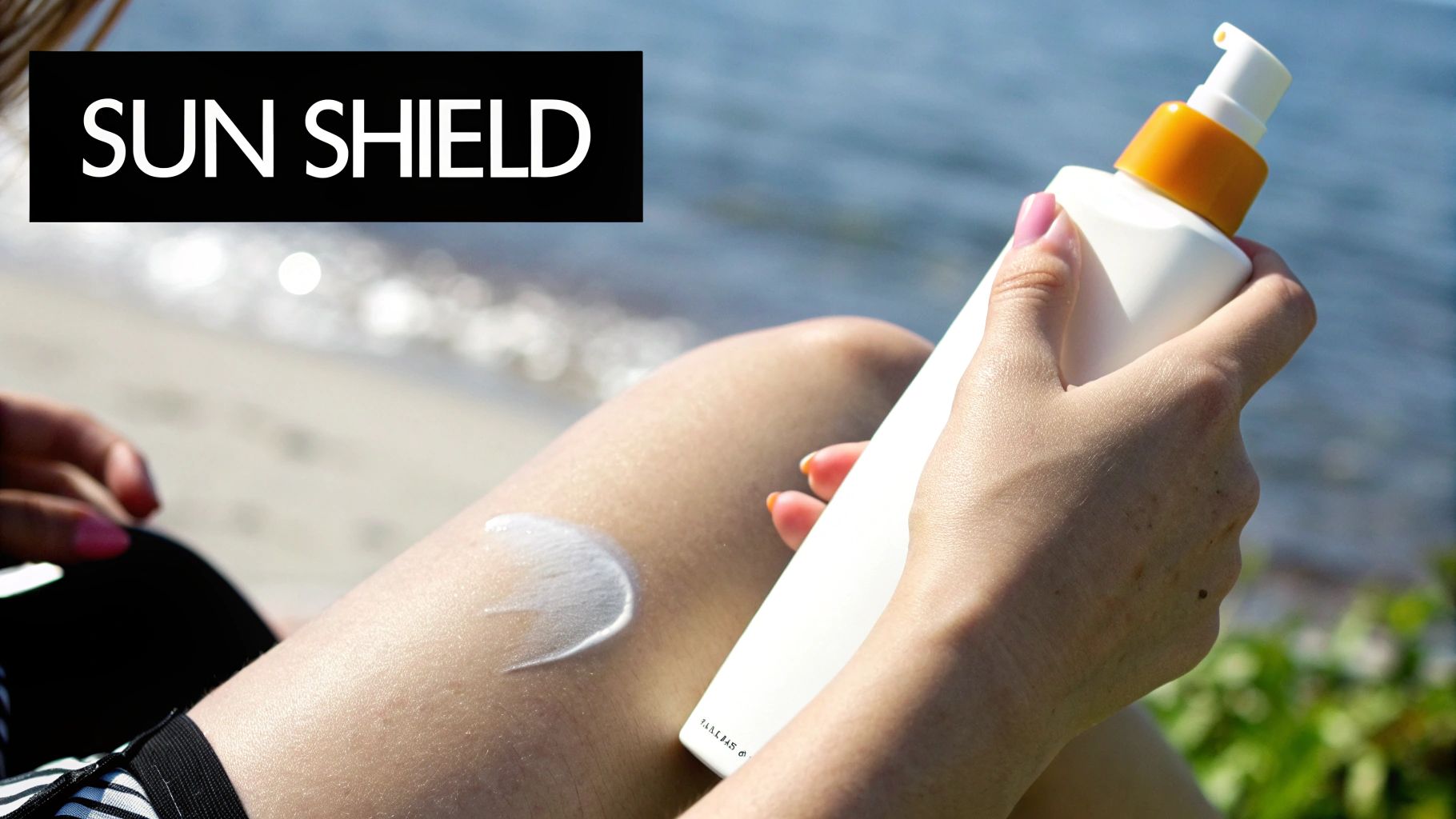
The absolute cornerstone of post-laser care is making sunscreen an unbreakable part of your daily routine. This isn't just for beach days or sunny afternoons; you need to apply it every single morning to any treated areas that will be exposed to daylight.
When you’re choosing a sunscreen, look for these three things:
- Broad-Spectrum: You need protection from both UVA (aging) and UVB (burning) rays.
- SPF 30 or Higher: Dermatologists agree this is the minimum you need for effective daily protection.
- A Formula You Actually Like: Whether you prefer a lightweight gel, a hydrating cream, or a mineral stick, the best sunscreen is one you'll use consistently.
Key Takeaway: If you do only one thing to protect your results, make it this: Wear sunscreen every single day. It’s the number one way to prevent long-term pigmentation problems and keep your skin looking flawless.
Getting Back to Your Skincare Routine
After about a week, once any redness or sensitivity has completely vanished, you can start reintroducing your regular skincare products. This includes products with active ingredients like retinoids, AHAs (such as glycolic acid), and BHAs (like salicylic acid).
The key is to start slow. Try using them every other night at first to see how your skin reacts before jumping back into your old routine.
Finally, don't forget to stick to the treatment schedule your practitioner gave you. Those appointments are timed perfectly to catch hair follicles in their active growth phase. Skipping sessions or pushing them back can mess up the whole cycle, meaning you’ll likely need more treatments to get the smooth skin you're after.
For a closer look at how modern methods are changing skincare, you can learn more about how technology is redefining personal care for smooth skin. When it comes to laser hair removal, consistency really is everything.
Recognizing and Managing Side Effects
Even though laser hair removal is incredibly common and safe, your skin needs a little extra TLC afterward. It's in a delicate healing phase, so knowing what's normal and what’s not is a crucial part of your post laser hair removal care.
Don't be surprised to see some mild redness, a bit of swelling, or feel a sensation like a minor sunburn. These are all totally normal signs that the treatment did its job. But sometimes, other less common side effects pop up, and knowing what to look for will help you handle them like a pro.
When to Watch and When to Call
Most of the time, minor irritation will fade on its own within a day or two. But if you notice swelling that sticks around for more than 48 hours or the area feels genuinely uncomfortable, it's time to check in with your practitioner.
Here are a couple of specific things to keep an eye on:
- Blistering or Crusting: This is very rare, especially with today's advanced lasers, but it can happen if the settings were too aggressive or you've had recent sun exposure. The golden rule? Do not pick. Call your provider right away; they’ll tell you exactly how to care for the area to avoid any chance of scarring.
- Pigmentation Changes: Sometimes people notice temporary dark spots (hyperpigmentation) or light spots (hypopigmentation) on the treated skin. This is more likely if you've been in the sun. These spots almost always fade, but you must be diligent with sunscreen to help them disappear and prevent them from getting darker.
Look, the goal here isn't to scare you. It's to empower you. In my experience, these side effects are temporary and easily managed. But if you're ever looking at your skin and feeling unsure, just call your technician. A quick, reassuring phone call is always the right move.
Understanding how to manage skin reactions is a useful skill for many aesthetic treatments. The principles of gentle aftercare are quite similar across the board, even for procedures like chemical peels for sensitive skin.
Why Aftercare Is a Global Industry Standard
When your technician hands you that list of post-treatment instructions, it’s not just a friendly suggestion. It’s a reflection of a global standard built on years of experience, all aimed at ensuring your safety and delivering incredible results. Think of post laser hair removal care as a fundamental part of the service itself—it’s there to protect both you and the provider.
The reason for this intense focus? The industry has seen absolutely massive growth. The global laser hair removal market ballooned from about $1.1 billion in 2023 and is on track to hit nearly $3.6 billion by 2030. Just in the U.S., dermatology centers are performing over a million of these procedures every year. With so many people investing in treatment, clear, standardized aftercare protocols are no longer optional; they're essential for managing risks and keeping clients happy. You can dig into industry reports to see just how quickly this market is expanding.
The Shift from Suggestion to Standard Practice
It wasn't always this way. A decade ago, aftercare might have felt like a quick footnote at the end of your appointment. Now, it's a core component of the entire process and a major sign of a reputable, professional clinic. The best providers know their job doesn't end the second the laser turns off. Their responsibility extends through your healing process, right up until you’re thrilled with the outcome.
This commitment to your results is why they give you such specific guidance on things like:
- Avoiding Sun Exposure: Freshly treated skin is incredibly vulnerable to UV rays, which can easily lead to unwanted pigmentation changes.
- Gentle Cleansing: You need to avoid irritating those sensitive hair follicles to prevent redness and inflammation.
- Proper Moisturization: Keeping the skin hydrated helps support its natural barrier, making your recovery faster and smoother.
Think of your aftercare plan as the final, crucial step of the treatment itself. The work done in the clinic is only half the equation. How you care for your skin at home is the other half, and it's what ensures the technology can deliver on its promise, safely and effectively.
Following these steps isn't just about dodging potential side effects. It’s about being an active partner in a proven process designed to give you the best possible return on your investment.
When it comes to post-laser hair removal care, there’s no such thing as one-size-fits-all. A truly effective aftercare plan is anything but a generic checklist; it's a personalized strategy built around you.
The best clinics I've seen in my years of experience understand this deeply. They know that your skin type, the area you had treated, and even your lifestyle play a huge role in how your skin will heal. This is all about giving you a supportive, comprehensive experience that starts long before the laser is even turned on and continues until your skin is fully recovered.
Why Your Aftercare Is Unique to You
Think about it this way: the industry has performed millions of these treatments, and all that data has shown what works. Your provider is giving you a proven formula for success, not just a random list of rules.
For example, I've seen how top-tier beauty clinics—which handle more than half of all laser treatments—have adapted to their primary clientele. With women making up a staggering 84% of the market in 2023, these clinics have developed specialized aftercare kits with the right soothing creams and sunscreens. They also use digital reminders and scheduled check-ins to make sure everything is healing perfectly. This is a direct response to what their clients need for a smooth recovery. You can dig into more of the data behind this market trend and see how it shapes patient care.
A great example of this in action is how moisturizers are recommended. If your skin is oily and prone to breakouts, you'll likely get a light, non-comedogenic lotion. But if your skin is on the drier, more sensitive side, you'll probably receive a much richer cream with ceramides to help restore the skin barrier. It’s all adjusted for you.
Key Takeaway: See your aftercare plan as the final, custom-fitted step of your treatment. It's a system that has been refined over time to deliver consistent, reliable results by adapting to the individual.
This dedication to personalized care is what separates the good from the great. The best laser hair removal providers know that fantastic results are a partnership. It’s their advanced technology combined with your diligent care at home that truly protects your investment and gets you that smooth skin you’re after.
Got Questions? Let's Talk Laser Aftercare
It's totally normal to have a few questions after your laser hair removal session. Getting the aftercare right is just as important as the treatment itself for getting those smooth, lasting results. Let's clear up some of the most common things people ask.
Can I Still Shave Between My Appointments?
Absolutely! In fact, shaving is the only way you should be managing any hair growth between your laser sessions.
Think of it this way: the laser needs to "see" the dark root of the hair follicle to work. If you wax, tweeze, or use a cream that rips the hair out from the root, there's nothing for the laser to target. Your next session just won't be effective. So, feel free to shave as needed—it won't mess with your progress.
How Soon Can I Hit the Gym?
This is a big one. You'll want to take it easy for at least 24 to 48 hours.
Your skin is extra sensitive after a laser treatment, and a sweaty, high-intensity workout can cause real problems. The heat and sweat create the perfect breeding ground for bacteria, which can lead to irritation, bumps, or even minor infections in those treated follicles. A gentle walk is perfectly fine, but save the spin class or heavy lifting for a couple of days.
A quick tip on moisturizing: When your skin feels a bit dry or sensitive post-treatment, reach for a simple, fragrance-free moisturizer. Look for soothing ingredients like aloe vera or ceramides. The goal is pure hydration without any potential irritants.


