
Getting ready for your laser hair removal session is more than just showing up. The prep work you do in the weeks and days beforehand is absolutely critical. Think of it this way: you're setting the stage for the best possible results.
Proper preparation directly impacts both the safety and effectiveness of your treatment. Following a few simple rules ensures the laser can do its job perfectly—targeting the hair follicle without any interference.
What to Do Before Your Appointment
The path to smooth, hair-free skin starts long before you step into the clinic. To make it easy, I've broken down the timeline into clear, manageable steps. Getting this right means a more comfortable experience, fewer side effects, and better results from every single laser pulse.
The most common mistakes we see are people showing up with a tan or having recently waxed. Both can lead to us having to reschedule your appointment for safety reasons, which just delays your journey to being hair-free.
Here’s a simple visual guide to the most important prep steps.
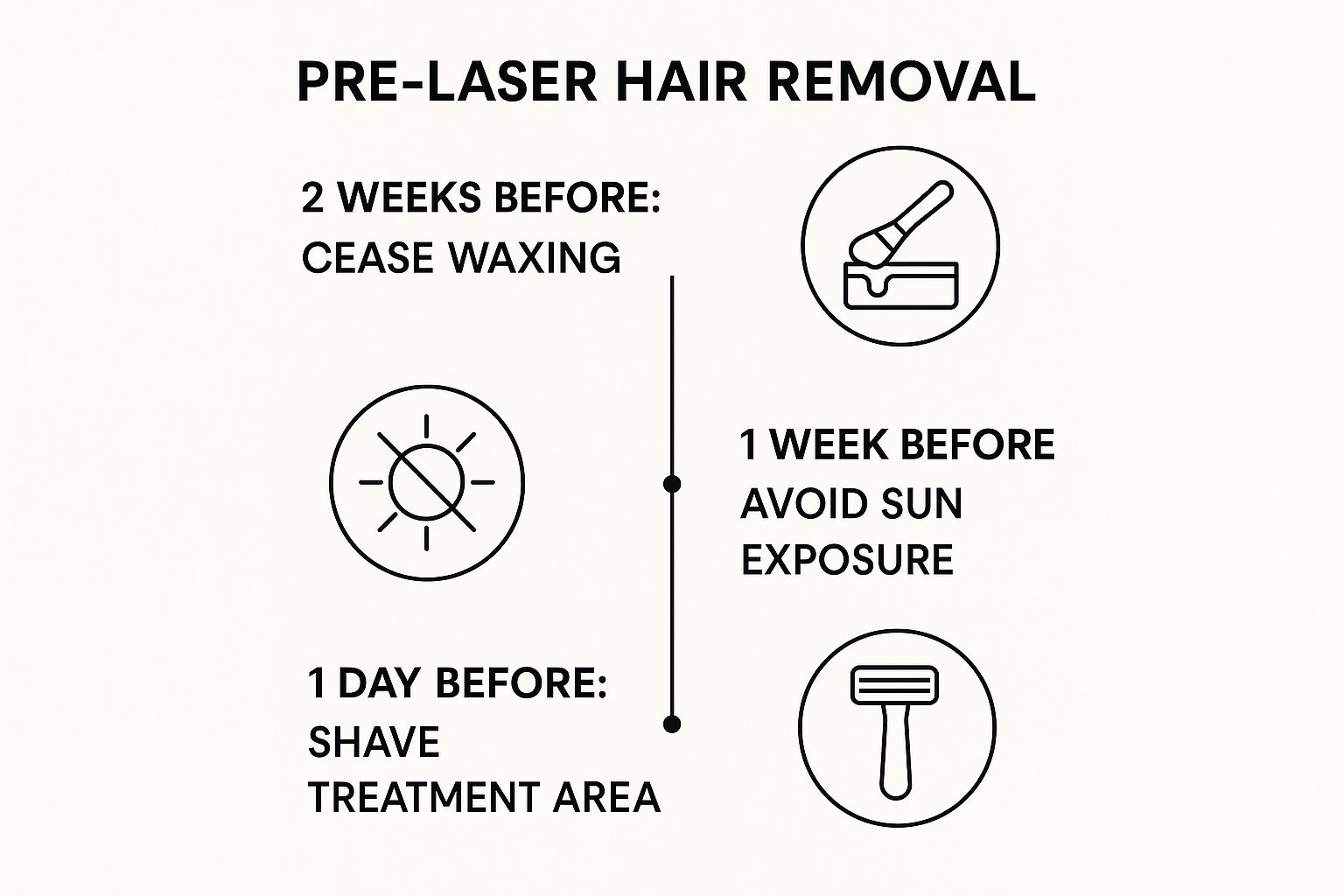
Following these guidelines isn't just a suggestion; it can reduce the risk of adverse reactions by a staggering 40-50%.
Laser Hair Removal Prep Timeline
To give you a crystal-clear roadmap, here’s a simple timeline to follow. Sticking to this schedule will get your skin in the perfect condition for treatment.
| Timeframe Before Session | Action Required | Why It's Important |
|---|---|---|
| 2 Weeks | Stop all waxing, tweezing, and plucking. Avoid topical products with retinol or glycolic acid. | The laser needs the hair root intact to work. Exfoliating acids can increase skin sensitivity. |
| 1 Week | Double down on sun protection. Avoid direct sun exposure and tanning beds entirely. | A tan increases melanin in your skin, which can attract the laser energy and lead to burns or discoloration. |
| 24 Hours | Shave the entire treatment area closely. | This removes hair from the surface, preventing burns while leaving the root in the follicle for the laser to zap. |
| Day of Appointment | Arrive with clean skin. Do not apply any lotions, deodorants, creams, or oils to the treatment area. | Products can create a barrier or react with the laser, interfering with the treatment and causing irritation. |
Think of this as your pre-treatment checklist. Ticking off these boxes ensures you're doing everything you can to make your investment pay off.
Planning ahead is the best way to protect your investment of time and money. If you’re curious about the financial side of things, our guide on laser hair removal costs breaks it all down. Ultimately, great prep is the first and most important step toward achieving that lasting smoothness you're after.
Why Your Initial Consultation Is So Important

Before a single laser ever touches your skin, you’ll have a consultation. I can't stress this enough: this meeting is the most important part of your entire laser hair removal journey. It's not just a formality or a sales pitch. It’s a crucial strategy session that sets the stage for everything that follows.
Think of it as a deep dive into your unique profile. We’ll go over your medical history, any medications you’re on, and past skin issues. Be completely open and honest here—it’s for your own safety. Some medications can make your skin light-sensitive, and we need to know that to prevent any unwanted reactions. This is your chance to ask every question you have and build a real sense of trust with your technician.
Assessing Your Skin and Hair
A huge part of the consultation involves a close look at your skin tone and hair color. The laser works by targeting the pigment in the hair follicle, so the contrast between your skin and hair is a major factor in how effective the treatment will be.
Based on this analysis, an experienced technician will know exactly which laser technology is right for you. This ensures the laser’s energy zaps the hair follicle, not the surrounding skin. Getting this right is everything. In fact, a 2022 report from Fortune Business Insights noted that a staggering 35-40% of bad reactions come from a poor match between the patient and the laser device. A proper consultation stops that from happening.
Key Takeaway: Your consultation is your number one safety check. It’s where the treatment gets tailored specifically to you, which is the secret to getting great results without complications.
The Non-Negotiable Patch Test
The consultation should always, without exception, end with a patch test. We'll treat a small, out-of-the-way patch of skin to see exactly how it reacts over the next 24-48 hours.
This little test is incredibly telling. It confirms the laser settings are perfect for you and gives both of us the confidence to move forward.
By being an active participant in your consultation, you’re taking control of your own care and setting yourself up for success. To get a better idea of what a top-tier clinic looks like, check out our guide on finding the best laser hair removal services and what separates the great from the good.
Let's Talk About Sun, Tanning, and Your Skin
If there's one piece of advice I drill into every client, it's this: stay out of the sun before your laser session. I know, a sun-kissed glow can be tempting, but it's the biggest roadblock to a safe and effective treatment. This isn't just a suggestion; it’s a hard and fast rule that includes tanning beds and even self-tanning lotions.

Here's the simple science behind it. Tanning, whether from UV rays or a bottle, floods your skin with extra melanin—the same pigment that gives your hair its color. The laser is designed to target the melanin in your hair follicles, but it can’t distinguish between the pigment in your hair and the pigment in your tanned skin. This mix-up can lead to the laser heating your skin's surface instead of just the follicle.
The bottom line is that treating tanned skin dramatically increases the risk of burns, blisters, or unwanted pigmentation changes. To keep you safe, your technician will have to dial down the laser's energy, which unfortunately means you'll get a less effective treatment and weaker results.
Your Sun-Smart Game Plan
Protecting your skin isn't a last-minute task. You really need to make it a priority for at least four to six weeks leading up to your appointment. Life happens, and accidental exposure is always a risk, so it’s best to get into a solid routine early on.
Here’s what I always recommend:
- Embrace Your SPF: Get yourself a good broad-spectrum sunscreen of at least SPF 30. Slather it on the treatment area every single morning, even on overcast days. If you're going to be outside for a while, be sure to reapply it every couple of hours.
- Cover Up: This one is easy. If you're treating your legs, wear pants. For arms, long sleeves are your friend. A wide-brimmed hat is perfect for protecting your face. Think of clothing as your first line of defense against UV rays.
And please, if you do get a tan or a sunburn, just be upfront about it. Call your clinic and let them know. It is always, always better to reschedule your appointment than to risk damaging your skin. Honesty here is a crucial step toward getting the smooth, hair-free results you want.
Here’s the rewritten section, designed to sound completely human-written and natural.
Rethink Your Skincare and Medication Routine
What you put on your skin—and into your body—really matters before a laser session. Certain products and prescriptions can make your skin much more sensitive to light, which is a recipe for trouble when you're dealing with a concentrated laser beam. Getting this right isn't just a suggestion; it’s a critical step for a safe and comfortable treatment.
Take a look at your skincare shelf. If you're using powerful exfoliants, it's time to press pause. This includes common "actives" like retinoids (Retin-A, tretinoin), alpha-hydroxy acids (AHAs) like glycolic acid, and beta-hydroxy acids (BHAs) like salicylic acid. While they're fantastic for skin renewal, they leave your skin too raw and sensitive for a laser treatment.
You’ll need to stop using these types of topical products on the area being treated for at least one to two weeks before your appointment.
Go Back to Basics with a Gentle Routine
In the weeks leading up to your session, the goal is to keep your skin calm and hydrated. Think simple. This is the time to temporarily shelve your complex, multi-step routine for something much more minimalist.
- Gentle Cleanser: Use a mild, soap-free wash that cleans your skin without stripping away its protective barrier.
- Simple Moisturizer: A basic, hydrating lotion is your best friend here. Look for one without fragrances, dyes, or any exfoliating ingredients. Things like hyaluronic acid or ceramides are perfect for this.
Making this simple swap ensures your skin is in the best possible condition—resilient, healthy, and ready for a smooth, irritation-free session.
This isn't just about what you put on your skin. Some oral medications can cause the same light-sensitivity issues, which is why being completely open with your technician is so important.
Beyond your skincare, you absolutely must consider any medications you're taking. Certain prescriptions are well-known for causing photosensitivity, including some antibiotics (like tetracyclines) and powerful acne medications (like Accutane).
If you’re on any prescription, you need to bring it up with your laser technician during your consultation. They have the experience to tell you if a medication is a concern and will give you clear instructions on what to do. Skipping this conversation is one of the most common—and avoidable—mistakes that can lead to a bad reaction. Honesty is always the best policy when it comes to your health and safety.
The Hair Prep Rules: What to Do (and What to Stop Doing)
Let's clear up one of the biggest points of confusion when it comes to laser hair removal: how to handle the hair in the treatment area beforehand. It’s not as simple as just getting rid of it; how you get rid of it makes all the difference. Get this part wrong, and you could be wasting your time and money.
For the laser to do its job, it needs to find the hair follicle, which sits just under the surface of your skin. That's the target.
This is exactly why you have to stop any hair removal that pulls the hair out by the root. I'm talking about waxing, tweezing, threading, and epilating. When you yank the hair out completely, you're removing the very thing the laser needs to see. No follicle, no result. It's that simple.
You’ll need to put waxing and tweezing on hold for at least four to six weeks before your appointment. This gives the hair cycle enough time to reset and ensures a follicle is present and ready to be treated.
Why Shaving is Your New Best Friend
So, if waxing is out, what's in? Shaving. In fact, it's not just recommended—it's essential.
You'll need to shave the entire area you're having treated about 24 hours before your session. Shaving is the perfect prep method because it cuts the hair flush with the skin but leaves the follicle untouched underneath, giving the laser a clear and direct path.
This isn't just a suggestion; it accomplishes two very important things for your safety and results:
- Prevents surface burns: Any hair left above the skin will just get singed by the laser. This is not only uncomfortable (and smelly), but it can also lead to skin irritation.
- Focuses the laser's energy: By clearing the surface, you ensure 100% of the laser's energy travels straight down to the follicle where it’s needed. This is how you get the most effective treatment possible.
My pro tip? Use a fresh, sharp razor and a gentle shaving cream to get a close, clean shave without causing nicks or razor burn. Showing up to your appointment with smooth, properly prepped skin is one of the most critical steps you can take for a successful session.
Here’s what you need to do in the 24 hours leading up to your appointment. It’s all about creating the perfect canvas for the laser to do its work.
Arrive With Clean, Bare Skin
On the day of your session, the goal is simple: your skin should be completely clean and calm.
That means no lotions, creams, oils, makeup, or even deodorant on the area we’ll be treating. Think of it this way—any product on the skin’s surface can act as a barrier, potentially blocking the laser from reaching the hair follicle. In some cases, it can even cause an unwanted skin reaction.
All you need is a quick, gentle wash with some basic soap and water before you head out the door.
Dress for Comfort Afterward
This is a tip I always give my clients: think about what you’ll wear home. Your skin will be sensitive, so you'll want to avoid anything tight or abrasive.
Choose loose-fitting, soft clothing that won't rub against the treated area. Getting your legs done? A flowy skirt or loose pants are a much better choice than skinny jeans. Treating your bikini area? Bring a fresh, clean pair of cotton underwear to change into.
My Go-To Advice: I often suggest clients skip their morning coffee or any other caffeinated drinks on treatment day. For some people, caffeine can make the skin feel a little more sensitive, and we want you to be as comfortable as possible.
Finally, drink up! And I mean water. Staying well-hydrated is always a good idea, but it’s especially helpful for helping your body recover and regulate itself after a treatment. These small steps make a huge difference in getting you the smooth, lasting results you’re after.
Your Questions, Answered
Can I Take Painkillers Before My Laser Session?
This is a common question, and it's a smart one to ask. You'll want to steer clear of blood-thinning painkillers like ibuprofen (Advil) or aspirin for about 24-48 hours before you come in. Taking them can increase the risk of bruising at the treatment site.
If you're concerned about discomfort, acetaminophen (Tylenol) is generally a much safer bet. As always, the best policy is to have a quick chat with your technician about any medications you’re taking during your consultation.
What Happens If I Forget to Shave?
We get it, life gets busy. But forgetting to shave is one of the few things that can bring your appointment to a grinding halt. If there's hair above the skin, the laser will singe it, which not only smells unpleasant but can easily lead to skin irritation or even burns.
Most clinics, including ours, will have to reschedule you on the spot. This often means you could be on the hook for a cancellation fee. So, please, make this a top priority—set a reminder on your phone the night before!
Is It Okay to Work Out Before My Appointment?
You can definitely squeeze in a workout on the day of your session, just don't come straight from the gym. It's really important that you arrive with clean skin that's free of sweat and grime.
The more critical rule is what happens after your treatment. You'll need to skip workouts, saunas, and hot showers for at least 24 hours to let your skin calm down and avoid irritation. Many people wonder if hair still grows after treatment; you can learn more about the long-term results and regrowth in our detailed guide.
Ready to start your journey to smoother skin with expert care? At Meljestic Spa, we create personalized treatment plans to ensure you get the best and safest results. Book your complimentary consultation today!


